Installing a safe and attractive pool fence on a sloped or hillside yard in the Inland Empire takes more than a standard approach. The region’s varied terrain—stretching from Riverside and Redlands to Temecula, Menifee, and Rancho Cucamonga—means every yard brings its own challenges. A proper hillside pool fence must follow California’s strict safety laws while adapting to uneven ground to keep your family protected and your property compliant.
You face factors like grading, soil movement, and water flow that affect fence stability. These details influence how contractors design and install barriers that meet local standards, including those required by the California Swimming Pool Safety Act. A custom plan ensures gates, posts, and panels align correctly even when the land doesn’t.
As you explore how professionals in Southern California—such as All Counties Fence & Supply and certified installers like Inland Empire Pool Guard—tackle sloped yard fencing, you’ll gain insight into what makes these solutions durable and code-compliant. This guidance will help you choose safe, lasting fence designs that work seamlessly with your hillside landscape.
Why Sloped Yards Change Pool Fence Requirements
Uneven ground affects how your fence sits, how gates function, and how inspectors measure barrier height around the pool. Soil stability, drainage patterns, and retaining walls all determine how your fence must be anchored and aligned to meet local safety codes.
Hillside Backyards Common In Inland Empire Neighborhoods
Many Inland Empire properties sit on hills or within terraced developments where flat space is limited. Yards often have a grade drop of several feet from one side to the other, which changes how a pool fence is measured for height compliance. Inspectors usually measure from the outside grade, so a slope can unintentionally make one section of your fence too low.
You may need extra fence height on the downhill side or additional grading to stay within California pool barrier standards. Local regulations often require a continuous, non-climbable surface of at least 60 inches, even when the ground varies. Soil erosion, irrigation, or hillside movement can also shift fence posts over time. Using concrete footings or deeper post embeds helps maintain stability and compliance despite soil changes.
A professional survey or elevation plan ensures you understand the grade difference before construction. This step reduces costly redesigns later.
Pools Cut Into Slopes Vs Pools Built Above Grade
Pools formed into a slope behave differently than those built above it. When a pool is cut into a hill, part of the pool deck may sit below the natural ground line. In this case, your fence may need to sit along the upper grade to block access from above, ensuring the barrier encloses the pool from all directions.
For raised or above-grade pools, the opposite concern applies. The fill material around the pool can create steep drop-offs, requiring additional railing or fencing along exposed edges for safety. The structural support must handle both soil pressure and water runoff from rainfall.
| Pool Position | Common Issues | Typical Solutions |
|---|---|---|
| Cut into slope | Upper access points unprotected | Fence along top slope, secure gate access |
| Built above grade | Soil erosion, exposed drop-offs | Reinforced retaining wall, drainage control |
Coordinating with both pool and fence contractors ensures each grade level remains secure and code-compliant.
Retaining Walls, Terraces, And Split-Level Yards
Hillside yards in cities like Riverside or Rancho Cucamonga often use retaining walls and terraces to create multiple levels. These structures impact where fences can be placed because California codes treat each level separately. If someone can climb from a lower terrace onto a wall, that section must still meet safety height standards.
For split-level yards, you may need fencing on more than one tier. A retaining wall alone does not qualify as a pool barrier unless it meets the minimum height requirement and has no climbable features like ledges or decorative stonework. Inspectors often check for gaps larger than 4 inches or footholds that allow easy access.
Drainage channels along retaining walls also affect fence placement. You might need short sections of step fencing to follow the grade or additional posts on raised pads to maintain a continuous height line. Careful planning with your contractor helps align each fence segment safely while preserving the yard’s appearance and functionality.
Is Your Pool Built On A Slope Or Uneven Grade?
If your swimming pool sits on a slope or uneven grade, you’ll need to pay close attention to stability and drainage. Sloped ground affects how water flows, how soil settles, and how pressure builds against retaining walls or the pool shell. Ignoring these factors can lead to shifting, cracking, or erosion around your pool area.
Before installing or modifying fencing, assess your yard’s land grade and soil composition. Sandy or loose soil may require reinforcement, while dense clay soil typically offers better support. In many cases, professional grading or retaining walls help create a level base for both the pool and fence.
Proper drainage also matters. You may need to install a French drain or similar system to redirect runoff away from the pool and fence posts. Standing water weakens support structures over time and increases maintenance needs.
When your pool is on a slope, both the pool and fences are subject to uneven pressure from wind, soil, and water—especially during heavy rain. You may find this quick reference useful:
| Condition | Common Concern | Recommended Solution |
|---|---|---|
| Steep slope | Soil erosion | Add retaining wall or terracing |
| Mild uneven area | Water runoff | Install drainage channels |
| Loose soil | Shifting fence posts | Use concrete footing or anchors |
Checking your site’s grade before installing fencing ensures a secure, long-lasting setup that meets local safety standards in the Inland Empire.
What You’ll Understand After Reading This
You’ll see how slope and terrain shape your pool fence design, safety compliance, and installation strategy. You’ll also learn how local inspectors measure slope-related risks and what practical steps help you choose a system that meets both safety laws and your property’s conditions.
How Slope Affects Fence Height And Clearance Rules
A hillside or sloped yard changes how you calculate fence height and bottom clearance. On level ground, a pool safety fence must maintain an even height—often 4 or 5 feet—to meet Swimming Pool Safety Act standards. On a slope, however, the measured height can vary depending on which side of the fence an inspector measures from.
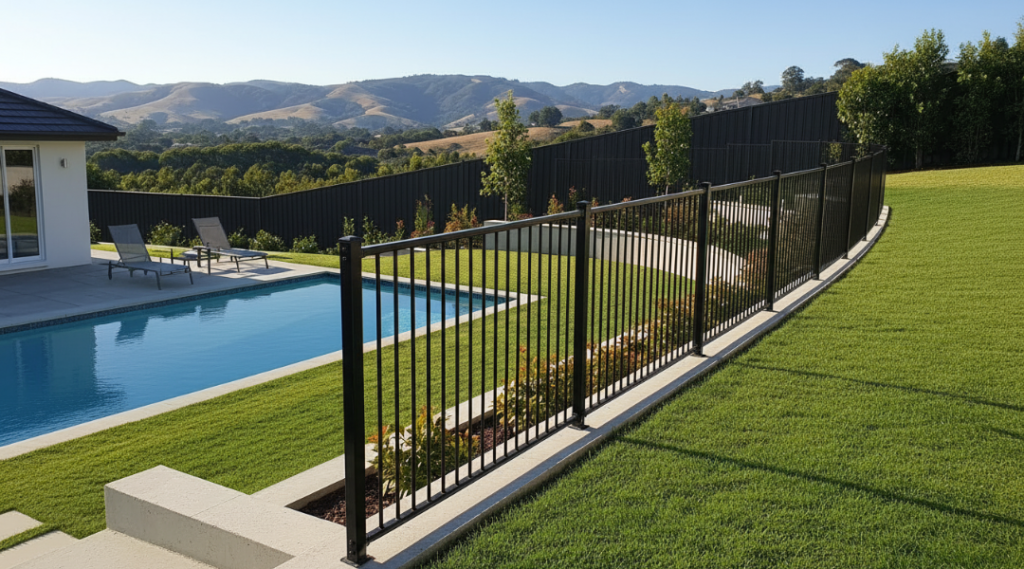
You may notice gaps form under panels when the ground drops sharply. This space can exceed code limits and create a hazard for children or pets. Many installers adjust by using stepped panels or rackable systems that follow the grade and keep the gap consistent without lowering the effective barrier height.
When slope differences are more than a few inches per panel, you might need to raise the lower sections or install a small retaining edge. Checking these clearances before pouring concrete posts helps prevent expensive rework after inspection.
| Key Checkpoints | Why It Matters |
|---|---|
| Fence height measured from lowest grade point | Ensures compliance with safety standards |
| Bottom gap less than 2 inches | Reduces climbing and drowning risk |
| Panel alignment on slopes | Keeps a uniform and secure boundary |
Why Level-Ground Assumptions Often Lead To Failures
Using a standard flat-yard design on uneven terrain often causes structural and compliance issues. When posts are set without adjusting for angle or elevation, some fence areas become lower than the minimum safety height. That small variance can cause a failed inspection or a weak point a child could exploit.
Ground shifts, water runoff, or compacted soil on one side can also make a fence lean over time. These problems develop slowly, so many homeowners don’t notice until the fence no longer meets pool safety requirements. Assuming a flat layout also affects gate alignment, preventing self-closing latches from working as required by code.
Planning for the slope ahead of time avoids cutting panels unevenly or reinstalling entire sections. Professionals usually measure the grade change between posts and calculate the rise per foot to choose whether the fence should “step” or “rack” naturally with the land.
How Inspectors And Installers Evaluate Uneven Terrain
Inspectors and installers begin with a site survey to map how the ground changes across the pool’s perimeter. They record the angle of the slope and identify areas that need deeper post holes or modified hardware. These measurements decide how high each section must stand to meet pool safety law standards.
Inspectors check both structural soundness and drowning prevention concerns. They measure the distance between the fence and pool edge, the maximum bottom clearance, and the reliability of gates or swimming pool safety nets. If a slope leads away from the pool, they confirm that the barrier still prevents unsupervised access from lower ground.
You can expect them to review compliance with the Swimming Pool Safety Act or local California ordinances, which often require barriers at least four feet high with self-closing, self-latching gates. Documenting these slope measurements in advance makes inspection smoother and reduces costly corrections later.
What To Consider Before Choosing A Fence Approach
Your choice of fence style, material, and structure depends on slope degree, soil type, and long-term maintenance expectations. Mesh systems suit mild grades because they allow flexible post spacing and clean adjustments. For sharper declines, stepped panels provide a neat look but may create visible gaps requiring landscaping to conceal.
You should also assess whether the fence aligns with your pool safety plan. If young children or pets are present, a mesh pool safety fence with minimal gap spacing may work better than heavier materials that leave openings at ground level. Local codes might demand extra gate checks or secondary barriers such as safety nets or alarms.
Before buying materials, take note of:
- The direction and rate of slope fall
- Soil drainage patterns affecting concrete footing
- Local building and drowning prevention regulations
- Compatibility with your pool’s existing perimeter features
Considering these points helps you select a design that holds up under weather, passes inspection, and maintains safe access without constant adjustment.
How Sloped Terrain Affects Pool Fence Compliance
Grade changes in hillside and sloped yards create unique challenges for meeting pool safety barrier standards. You must account for differences in fence height, ground spacing, and climbability hazards to stay compliant with code requirements and maintain swimming pool safety.
Fence Height Measurement On Uneven Ground
Pool safety codes typically require fences to be at least 48 inches high, but that standard can vary depending on where you measure on a slope. When the ground elevation changes, the height on the downhill side can appear shorter and may fall below code. You need to measure from the lowest point where the fence meets the ground.
Uneven terrain may force you to step fence panels or contour them to follow the grade. Stepped installations use level panels placed at different heights, while raked or contoured styles follow the slope’s angle. Either method can meet standards if you maintain consistent height across all sections.
Inspectors often check height measurements at multiple points. It helps to mark slope angles and measure before installing posts to ensure the finished fence stays compliant without gaps or weak points.
Ground Clearance Gaps Created By Grade Changes
When building on a slope, gaps under the fence tend to vary as the ground rises or falls. Large openings create serious swimming pool safety concerns because small children or pets can crawl through. Most local codes limit ground clearance to 2 inches on solid surfaces or 4 inches on soft ground.
To control these gaps, you can install retaining blocks, fill uneven ground with compacted soil, or step panels to match elevation shifts. In some cases, mesh or custom panels may help bridge irregular contours.
Always check the lowest point under each panel with a measuring stick after setting posts. Even a single unplanned gap can cause your fence to fail inspection.
Climbability Risks Caused By Elevation Shifts
Changes in elevation can create climbable zones that reduce a fence’s effectiveness. If a fence section sits near a raised planter bed, retaining wall, or slope shoulder, someone could use that height to climb into the pool area.
To stay within code, keep at least 45 inches of clear vertical separation between exterior footholds and the top rail. Trim vegetation that could serve as steps and avoid placing benches, rocks, or landscape features near the barrier line.
When your yard has multiple levels, mapping these areas before construction helps you design a layout that maintains proper barrier spacing at every height.
Why Slope Creates Enforcement Gray Areas
Slope conditions often lead to differing interpretations of barrier codes. Inspectors may judge height, clearance, or climbability differently depending on which part of the slope they assess. You might fully comply at one point but fall short a few feet away.
Building departments sometimes allow site-specific solutions, like short retaining walls or step-down fence segments, to meet intent without rewriting local code. That flexibility can help you pass inspection while maintaining a consistent visual design.
Because local jurisdictions in the Inland Empire interpret pool codes independently, you should confirm requirements with your city’s building and safety office before installation. Proper documentation and pre-inspection planning reduce disputes and keep your swimming pool safety barrier compliant.
How Professionals Assess A Hillside Pool Fence Layout
Professionals begin by reviewing ground conditions that affect how a pool fence sits and how stable it will remain over time. They focus on grade changes, drainage patterns, and soil performance on the hillside to determine how the fence can meet safety codes and stay structurally sound in the Inland Empire’s terrain.
Identifying The Controlling Grade Around The Pool Perimeter
The controlling grade is the reference elevation used to determine fence height compliance. On flat ground, this line is simple to define, but hillside yards require extra measurements. You must locate the natural ground grade along each section of the pool’s outer edge.
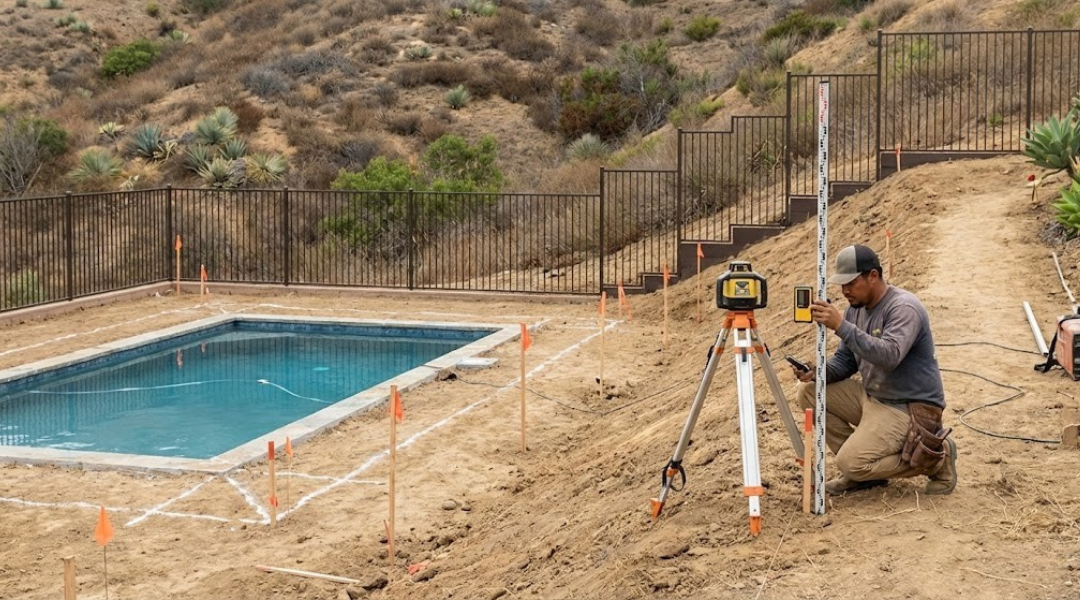
Contractors often mark elevation points every few feet using a laser level or transit. By connecting these points, they can identify high and low areas that affect fence height. If one side drops several inches, the fence panels might need stepped adjustments or retaining walls to maintain the legal barrier height.
Accurate grade mapping prevents gaps under panels and ensures the entire fence meets code, even where the slope changes quickly. This step helps prevent rework during pool fence installation.
Evaluating Slope Direction And Fall Line
Slope direction controls how water, soil, and debris move across your property. When professionals plan your pool fence installation, they assess the fall line—the path water would naturally take down the slope. This information tells them which areas face the most runoff and where the structure might need extra drainage.
On hillside lots, fence posts must resist downward pressure from the slope. Installers place posts perpendicular to the grade rather than vertical to level ground. This alignment improves strength and helps panels maintain tension.
They also consider access and visual flow. A fence should follow the land smoothly rather than appearing jagged. Properly analyzing slope direction maintains both appearance and performance.
Accounting For Soil Movement And Erosion
Soil type affects fence durability. In the Inland Empire, clay soils expand when wet, while sandy or decomposed granite soils can slide. Professionals check for surface cracking, bulging, and erosion gullies before placing any posts. These signs indicate potential movement that could tilt or separate the fence.
To limit movement, installers may use deep-set posts, drainage gravel, or steel reinforcements. They might also recommend planting groundcover with strong root systems to hold soil in place near the pool perimeter. When slope creep is evident, flexible panel connections help the fence adjust slightly without breaking.
Addressing erosion early saves you from expensive repairs later and keeps the barrier anchored even through seasonal rainfall.
When Engineering Or Grading Input Becomes Necessary
Certain slopes need more than standard installation methods. If your hillside drops more than a few feet within the pool’s perimeter or shows evidence of prior grading, an engineer’s review may be required. This ensures the fence footing and post depth match the pressures exerted by the slope.
Situations that require engineering input:
- Grade changes exceeding 2 feet between corners
- Retaining walls within 5 feet of the fence line
- Evidence of soil creep or slippage
- Pools built partly into a cut or fill section
Engineering feedback determines where reinforced posts, thicker footings, or specialized anchors are needed. Grading professionals may re-contour minor slopes to create a stable base for installation. This coordination ensures the finished pool fence meets all safety standards and endures hillside conditions over time.
Why Common Pool Fence Solutions Fail On Slopes
Installing a pool fence on uneven ground often exposes weaknesses in standard designs. Height inconsistencies, unsafe clearances, and structural stress points occur when fences meant for flat yards are forced to adapt to slopes.
Flat-Panel Fencing On Uneven Ground
Flat fence panels do not follow changing elevations. When placed on a slope, gaps appear beneath the panels, creating unsafe openings where children or pets could slip through. Most local pool codes, including those across the Inland Empire, require that openings under the barrier stay under 2 inches in height.
You might try lowering posts or burying panels, but that can cause other issues. Panels forced into the soil rot faster, while metal types corrode where they touch wet ground. In hilly yards, these attempts rarely last long and often fail inspection.
A better practice involves racking fence panels—angled installations allowing the fence to follow the grade. However, not all materials or systems can rack properly. Rigid vinyl and some ornamental designs may twist or buckle when forced to fit slopes, leading to structural weakness or unattractive results that reduce property value and curb appeal.
Stepped Sections That Still Violate Clearance Rules
Many homeowners step fence sections down the hill, copying the “stair-step” style seen in privacy fences. Though this approach looks neat, each step introduces a wider vertical gap below the low end of the panel. These openings often exceed code limits, especially on steep grades.
You may not notice these gaps from eye level, but inspectors measure them precisely. Even a 3-inch clearance where the ground drops suddenly can trigger a failed safety check. Children could crawl under, or pool toys could roll through—both violations of pool barrier intent.
Maintaining compliance means adjusting step height and fill material carefully. Adding compacted soil or low landscaping may close gaps temporarily, but erosion or rain can wash it away. Over time, fence height near steps becomes inconsistent, leaving sections too short to meet pool code requirements.
Relying On Retaining Walls As Barriers
Retaining walls often seem like an easy substitute for fencing. While they add structure and reduce slope, most do not meet pool barrier definitions. Code requires continuous, climb-resistant surfaces at specific heights; retaining walls rarely provide this.
If you mount a fence on top of the wall, ensure the combined height meets local standards from the low side of the grade. Many homeowners mismeasure from the yard side instead, leaving the pool perimeter under height on the downhill slope.
Another concern is anchoring. Fence posts drilled into retaining walls can crack concrete blocks or destabilize older walls. You should use reinforced anchors or core-drilled posts supported below frost level to prevent failure. Proper engineering ensures the structure resists both poolside moisture and soil pressure.
Assuming Visual Coverage Equals Compliance
It’s easy to think that if the fence “looks” tall enough, you’re protected. But visual coverage often hides technical violations like small elevation changes or climbable surfaces. A six-foot privacy fence may appear solid from your patio but fall short of required height when measured from lower ground on a slope.
Inspectors check the entire perimeter from all sides. That means the area behind bushes, near the equipment pad, and along side yards must all meet spacing, latch, and height standards. In sloped lots, these points often fall below grade, exposing unsafe conditions.
You need to measure elevation differences before installation. Using a survey level or digital grade tool identifies low points early. Planning with these measurements helps you choose the right materials—like adjustable aluminum fencing—that maintain both compliance and a consistent visual barrier across uneven terrain.
Pool Fence Approaches Used On Sloped Or Hillside Yards
Installing a pool safety fence on uneven ground requires careful design to match the rise and fall of your yard. You must choose a fence layout, materials, and placement method that provide safety while maintaining a clean appearance and meeting code.
Racked Vs Stepped Fencing Systems
Two main systems—racked and stepped fencing—allow pool fences to follow sloped terrain. A racked fence uses rails and pickets that adjust to the grade, keeping a consistent gap beneath the fence. This works best for gentle slopes where the elevation change between posts is small. Common materials include aluminum, mesh, and vinyl pool fences, which can flex or adjust slightly without leaving gaps.
A stepped fence changes elevation at each post, producing a level section followed by another that “steps down” with the slope. You’ll see this more often with vinyl fencing or rigid panels that cannot angle easily. Stepped designs are ideal for steep grades but may create triangular gaps that need infill panels or landscaping to maintain pool guard compliance. Contractors often mix both styles across one property, depending on how the ground changes.
| Terrain Type | Recommended System | Typical Materials |
|---|---|---|
| Gentle Slope | Racked | Mesh, Aluminum, Vinyl |
| Steep Slope | Stepped | Vinyl, Panel Fencing |
Custom Post Heights And Variable Spacing
A hillside installation rarely allows uniform post heights. You or your installer may need variable post lengths to keep the top rail level while maintaining correct barrier height. This method also avoids sections that look uneven from a distance.
Spacing between posts may need small adjustments to fit the slope’s contour without weakening the structure. If you use a removable pool fence or a mesh pool fence, the posts can often be set closer together on sharper slopes to prevent sagging. Fixed vinyl pool fences require more precise post placement since the panels cannot flex. Careful measurement and use of a pool guard pool fence layout guide help achieve consistent safety height of at least 48 inches, as required by most building codes.
Fence Placement Relative To Retaining Walls
Retaining walls near your pool influence where and how the fence stands. When a wall supports soil on the downhill side, the pool fence may need to sit at the top of the wall to stop access from below. On the uphill side, you can place the fence behind the wall for a cleaner look.
If the wall is high, your contractor may add removable pool safety fences or short vertical extensions to maintain barrier height. Drainage gaps around retaining walls should remain clear to prevent water damage to fence posts. You can also add vinyl pool fences directly over retaining wall caps with proper anchoring, provided the surface is stable and level.
Key factors include:
- Wall height and type (block, poured concrete, natural stone)
- Soil stability and drainage path
- Mounting method — core-drilled, surface-mounted, or embedded posts
How Experienced Inland Empire Contractors Like All Counties Fence & Supply Evaluate Slope-Related Risks
Experienced Inland Empire contractors evaluate every slope before installation. They measure grade changes, check soil conditions, and identify areas where a pool safety fence might shift or settle. They also consider wind exposure and moisture, which can affect fencing performance over time.
Companies such as All Counties Fence & Supply inspect whether your hillside requires reinforcement, like deeper post footings or small retaining edges, to ensure durability. They help you choose materials suited for the terrain—vinyl for low-maintenance strength or mesh fencing for flexible installation.
They also review compliance with California pool barrier codes, confirming that gaps, climbable surfaces, and gate clearances meet standards. With their evaluation, you’ll know whether to use stepped fencing, racked fencing, or a hybrid design. This level of assessment reduces long-term maintenance and helps keep your pool area both safe and visually balanced.
Edge Cases That Complicate Hillside Pool Fencing
Certain terrain and design conditions make hillside pool fencing more challenging. These include uneven gate transitions, elevation shifts that require different materials, older pools built to outdated standards, and drainage paths that interfere with fence lines and anchors. Each situation affects safety, code compliance, and long-term durability.
Transitional Slopes Around Gates
Gate areas on sloped ground often create gaps that can reduce safety if not carefully addressed. You need consistent height and secure footing where the gate meets uneven terrain. A self-closing gate must latch properly at all times, which can be difficult when the slope changes sharply right under the gate swing.
Installers often use step-down or ramped gate frames that follow the incline while keeping the latch level. Separating the gate post from the main fence line can help stabilize motion and prevent binding when the ground shifts or erodes.
A short table of common adjustments helps clarify solutions:
| Condition | Common Fix |
|---|---|
| Sharp slope under gate | Step-down hinge mount |
| Slight incline | Adjustable hinge with extended post |
| Uneven soil | Add concrete footing or grade pad |
Each method aims to preserve safety clearance and maintain barrier performance regardless of slope direction.
Mixed Materials Along Changing Elevations
When the yard elevation varies dramatically, you may need different fence materials in separate sections. For example, metal panels can transition into glass near a view edge, or mesh fencing may bridge steep corners. These changes must align structurally and visually, avoiding weak joints.
Using transition posts allows you to connect two materials cleanly. Each material expands differently in heat and moisture, so proper hardware spacing prevents stress fractures.
Work with installers who understand both structural loads and local pool codes. The Inland Empire’s mix of clay and sandy soils can cause shifting over time, so you should select hardware and anchors suited for moderate movement and thermal expansion.
Older Pools Built Before Current Slope Interpretations
If your pool predates modern safety codes, slope tolerances and fence standards may differ. Many older hillside pools used shorter barriers or incorporated landscaping as part of the boundary. Today’s safety rules usually require continuous fences of a specific height and clearance, regardless of slope angle.
You may need to retrofit your fence posts, anchors, or gate alignments to meet updated self-closing and self-latching requirements. A professional assessment can identify weak points near retaining walls or terraced sections.
Expect to shore up support points where soil has settled or eroded. Reinforcing these spots protects both the fence’s structural integrity and your compliance with local pool safety regulations.
Drainage Features Intersecting Fence Lines
Drainage is a frequent complication on hillside lots. French drains, culverts, or run-off channels often cross paths with the planned fence line. You must preserve water flow while maintaining a secure barrier. Improper handling can lead to erosion around posts, eventually weakening the fence base.
Installers usually integrate small bridge sections or raised panels above drainage channels. Concrete or metal sleeves can protect posts placed near wet zones. In severe slopes, anchor systems with deeper footings or cross braces add stability.
Routine seasonal checks are necessary. After rain, dirt shifts and runoff can undermine base supports or tilt fence panels. Routine inspection and reinforcement keep the fence intact without compromising necessary drainage flow.
Closing Considerations For Hillside Pool Fence Planning
Before finalizing your hillside pool fence, take time to confirm how elevation changes affect gate placement and fence alignment. A slope may require graded sections or stepped panels so each segment meets height and spacing rules. You might also need small retaining areas to create level ground where gates can swing and latch correctly.
Check the local building code and any HOA or easement restrictions before you order materials. In the Inland Empire, cities often have different requirements for fence height, setback, and visibility. Reviewing these details early helps you avoid redesigns once construction begins.
Use this quick checklist to guide your final planning:
| Key Item | Why It Matters |
|---|---|
| Site survey | Confirms slopes, utilities, and property lines |
| Permit review | Ensures compliance with pool safety regulations |
| Material durability | Prevents corrosion or warping on uneven ground |
| Drainage plan | Avoids water buildup along the fence line |
Coordinate with your pool contractor, landscaper, and fence installer so each trade understands the slope conditions and final grade. Clear communication prevents gate misalignment and saves time during inspection.
Finally, confirm that your fence design supports easy maintenance access to pool equipment. A well-planned layout keeps your pool area safe and functional while blending naturally with the hillside terrain.