Finding the right fence height for your dog in Riverside can feel tricky, especially with so many breeds and behaviors to consider. Local terrain, energy levels, and even neighborhood rules play a role in what works best for your space. Most dogs in Riverside stay safely contained with fences between 4 and 6 feet tall, but active or athletic breeds often need fences up to 8 feet to prevent escape.
Choosing the correct height does more than stop jumping—it helps protect your dog from distractions, wildlife, and nearby roads. When you pick the right balance between height, design, and material, you create both safety and peace of mind without compromising your yard’s look.
This guide helps you understand why fence height alone isn’t always enough, how to spot behavior patterns that lead to escapes, and what local professionals consider when tailoring fence solutions for specific breeds. By the end, you’ll know how to match your dog’s abilities with a fence built for lasting security and value in Riverside’s unique environment.
Why Fence Height Alone Doesn’t Solve Escape Problems
A tall fence can help, but it doesn’t guarantee your dog will stay inside. Some dogs dig, climb, or push through weak spots. Others learn to take advantage of uneven ground or nearby structures like benches that give them a boost.
Behavior plays a huge role. A bored or anxious dog may try to escape no matter how high your fence stands. Regular exercise, mental stimulation, and consistent training help reduce escape attempts much more effectively than height alone.
Fence material also matters. Wood or vinyl fences may look solid, but persistent chewers or diggers can weaken them. Chain link fences can act like ladders for dogs that climb. Reinforcing the base with buried mesh or concrete can help stop digging.
Electric fences can deter some dogs, but they work best as a supplement, not a replacement. A determined or frightened dog might run through the shock zone, then hesitate to come back inside. Pairing an electric system with visible boundaries and positive training creates better control and safety.
Before raising your fence, check for these escape factors:
| Common Escape Cause | Simple Prevention Step |
|---|---|
| Gaps under the fence | Bury wire or attach a dig guard |
| Climbable surfaces | Remove nearby objects and reshape the top |
| Boredom or anxiety | Increase walks and play sessions |
| Weak gate latches | Install secure, self-closing locks |
Taking a complete approach keeps your dog contained and comfortable within your yard.
Does Your Dog’s Behavior Match a Common Fence Failure Pattern?
Your dog’s behavior often determines whether your fence keeps them safely contained. Common failure patterns usually involve physical ability, energy level, and how your environment influences behavior. Recognizing these patterns helps you choose a fence that matches your dog’s habits, not just their size.
Jumpers, Climbers, and Diggers vs Passive Breeds
Active dogs often test boundaries. Breeds like Huskies, Border Collies, and German Shepherds may jump or climb fences, especially if they see something exciting beyond the yard. Terriers and similar small breeds tend to dig under fences to chase smells or small animals.
A solid fence at least 6–8 feet tall works best for jumpers and climbers. Attach smooth toppers or angled extensions to make climbing harder. For diggers, bury wire mesh or concrete edging along the fence base.
Passive breeds such as Bulldogs, Basset Hounds, or Shih Tzus typically stay within boundaries, requiring less height or reinforcement. Still, check for gaps or weak spots that can tempt even calmer dogs. Regular inspections stop small escape attempts from turning into habits.
Young, Athletic Dogs vs Older or Trained Dogs
Younger dogs and those with high energy levels show the most fence-related issues. They may chase visual triggers such as passing cars, bikes, or neighborhood dogs. In these cases, a tall privacy fence limits visual stimulation and helps reduce chasing behavior.
Older dogs or well-trained pets usually respect boundaries, but that doesn’t mean you can ignore fence security. Loose boards or low spots can still cause escapes. Training consistency and supervision remain key, especially when new distractions appear nearby.
Tip: Try listing fence challenges in a quick chart to plan upgrades.
| Dog Type | Common Issue | Effective Solution |
|---|---|---|
| Young & Active | Jumping or running along fence | Tall privacy fence |
| Older or Trained | Occasional testing | Routine maintenance |
| High-Drive Working Breed | Climbing or digging | Reinforced barrier base |
Urban Riverside Yards vs Larger Suburban Lots
In Riverside’s urban areas, small yards and close neighbors mean more triggers. City dogs often react to foot traffic and other pets across fences. A solid wood or vinyl fence about 6 feet tall limits these sights and sounds. Gaps between slats can lead to barking or frustration, so choose designs with minimal openings.
Suburban lots give dogs more space but bring different risks. Large running zones and open views can encourage sprinting starts that help dogs clear fences. For these yards, use sturdy materials and consider varying fence height based on terrain.
Urban fences often require compliance with local building codes or HOA rules, while rural edges may prioritize durability against weather and soil movement. Matching your fence type to your yard’s layout and surrounding activity ensures long-term safety for your dog.
What You’ll Be Able to Judge After Reading This
You’ll understand how breed size, temperament, and living conditions affect your fence height decisions. You’ll also see how to identify limits of general height charts and how to measure your own yard to prevent gaps, climb points, or escape routes.
Why Breed Size Is Only One Part of Fence Height Decisions
Breed size gives you a starting point, but not the full picture. A Labrador Retriever and a Greyhound may stand at similar shoulder heights, yet their energy and jumping power differ greatly. Size influences jumping reach, but breed traits determine determination and method—whether a dog digs, climbs, or jumps.
Many guides note that dogs can often jump one to three times their shoulder height. Still, your dog’s athleticism and motivation decide real performance. For example, herding breeds like Border Collies and Australian Shepherds show intense drive and often clear higher barriers than calm breeds of the same height.
When judging your needs, pair physical measurements with an understanding of your dog’s instincts. A relaxed, heavier dog may stay safe behind a 4-foot barrier, while an alert working breed might demand 6 feet or more. Treat size as one metric, not a final answer.
How Behavior and Environment Affect Containment
Your dog’s behavior changes how well a fence works. Excitable or territorial dogs react strongly to outside noise or movement, driving attempts to jump or climb. Factors like nearby traffic, visible animals, or passing people can increase escape risk.
Terrain also alters containment. A sloped yard or uneven ground can reduce effective fence height. A 6-foot section downhill from the gate may act closer to 4 feet if the grade lifts the dog’s launch point.
Consider adding deterrents such as inward-angled extensions or smooth surfaces on climb-prone fences. If your dog digs, install buried wire mesh or concrete edging. The environment and behavior combine to define height needs more accurately than breed data alone.
When Standard Height Charts Break Down
Standard charts simplify average conditions, but many dogs fall outside those averages. Athletic dogs, young dogs, or intact males often exceed typical jump expectations. Even charts listing “6 feet for large breeds” may fall short when energy or motivation are higher than normal.
Medical conditions matter too. An older or mobility-limited dog may not need tall fencing, but this can change over time. Similarly, mixed breeds might have unpredictable agility, requiring adjustments after you observe their abilities.
If your dog shows consistent escape attempts, treat any guideline as a baseline, not a ceiling. Increasing fence height by one additional foot can often shift a marginal fence into a secure barrier without changing materials or layout.
How to Assess Your Own Yard Realistically
Walk your fence line and note where the ground rises, lowers, or forms gaps. Measure the fence height from the dog’s side, not from the outside, since terrain and slope create uneven protection. Record results in a simple table:
| Area | Ground Level | Fence Height | Effective Height | Adjustment Needed |
|---|---|---|---|---|
| Back corner | Slight slope up | 6 ft | ~5 ft | +1 ft extension |
| Gate section | Flat | 5 ft | 5 ft | None |
| Left side | Retaining wall near base | 6 ft | <4.5 ft | Add mesh barrier |
Evaluate nearby objects your dog could use for leverage such as planters, steps, or furniture. Keep at least a few feet of clearance inside the fence line to prevent climb assists. Check for loose boards or wide picket spacing where small or narrow dogs could squeeze through.
Taking these measurements allows you to apply height recommendations accurately rather than relying only on published ranges.
What “Fence Height” Really Means for Dogs
A fence’s effectiveness depends on more than how tall it stands. Materials, layout, and how your dog interprets boundaries all influence whether the fence truly prevents escapes and keeps your pet safe.
Physical Height vs Effective Containment Height
Physical height is the actual measurement of your fence from the ground up. Effective containment height is what your dog experiences based on jumping ability, nearby objects, and ground level. These two numbers often differ.
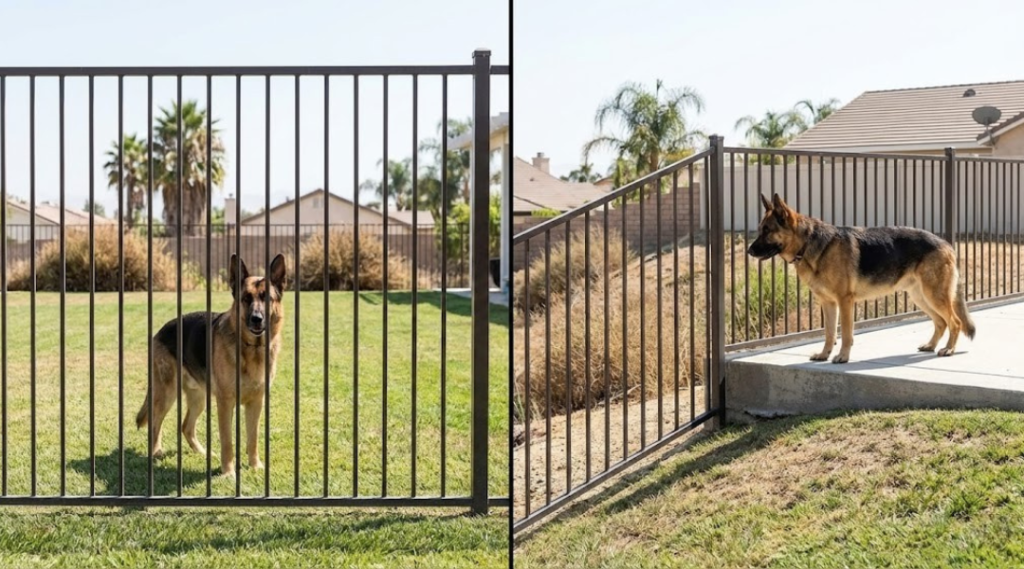
For example, a 6‑foot fence might only act like a 4‑foot barrier if placed on a slope or beside a raised patio. To contain most medium to large breeds, aim for an effective containment height of at least 5–6 feet.
Evaluate how your yard’s layout affects containment. Remove platforms or objects near the fence that can give your dog extra height. For athletic or climbing breeds, such as Huskies or German Shepherds, the optimal fence height may reach 7–8 feet to prevent escape attempts.
| Dog Size | Suggested Optimal Fence Height | Notes |
|---|---|---|
| Small | 3–4 ft | Works for non‑jumpers |
| Medium | 5–6 ft | Check for dig zones |
| Large | 6–8 ft | Avoid leverage points |
Visual Barriers vs Physical Deterrence
Dogs respond both to what they can see and what they can physically interact with. A transparent fence like chain link allows visual stimulation, which can trigger barking or pacing. A solid fence—wood or vinyl—acts as a visual barrier and can calm reactive dogs by blocking outside distractions.
Physical deterrence depends on strength and construction. Reinforce weak spots, secure gates, and ensure no gaps at the bottom. In Riverside neighborhoods with varied terrain, you may need to adjust panel height to keep a consistent barrier.
If your dog climbs or pushes on fences, materials matter more than style. Vinyl and solid wood offer better resistance against pushing and chewing, while chain link works if tensioned tightly and topped with a horizontal rail.
How Dogs Perceive Boundaries Differently Than Humans
You may view a fence as a fixed line, but your dog sees it as part of a space to explore. Dogs assess boundaries through height, texture, scent, and prior experience. A confident jumper may see a 4‑foot fence as a challenge, not a limit.
Invisible or electric fences change the boundary by training rather than physical barriers. The containment fence height in these systems depends on how the correction zone is set, not an actual measurement. It’s effective only if the dog associates the signal with the edge of its allowed area.
You should also consider distractions outside your yard. Passing dogs, wildlife, or children can tempt a dog to test limits. For a secure setup, choose materials and heights that match how your dog perceives and responds to its environment, not how you expect the fence to function.
How Professionals Determine Appropriate Fence Height
Professionals base fence height recommendations on measurable factors like your dog’s athletic ability, behavior, and the yard’s physical setup. They also consider how fence materials and design influence security and durability to choose a height that matches both your pet’s tendencies and your property’s layout.
Evaluating Jump Ability, Motivation, and Agility
Installers begin by assessing how high and fast your dog can jump. A strong, energetic breed like a Border Collie or Husky may clear a 5-foot barrier, so a 6–8 foot fence is often safer. Smaller or less active breeds usually need only 4–5 feet.
They also gauge motivation—some dogs test boundaries from boredom or curiosity. A dog chasing squirrels or reacting to street traffic might try harder to escape than one that stays calm. Observing habits like fence pacing, climbing, or digging helps determine customized containment levels.
Agility and drive influence material choices too. Agile dogs benefit from smooth surfaces like vinyl fencing or aluminum fences, which provide fewer footholds. In contrast, wood fences with horizontal slats can make climbing easier, requiring either added height or design adjustments.
Yard Layout, Slope, and Takeoff Points
Even small yard details can make a secure fence ineffective. Professionals study how your yard’s slope affects fence height perception. A 6-foot fence that’s shorter on the high ground side may become a 5-foot escape route on a slope.
They also identify launch zones—objects or structures near the fence that dogs might use to jump over. Picnic tables, compost bins, tree roots, or retaining walls can all become takeoff points. Experts will adjust the fence height or recommend moving obstacles to block these assist areas.
Visual distractions outside your yard, like open views or neighboring animals, can increase jumping attempts. For these cases, adding privacy panels to a vinyl or wood fence can reduce stimulation and make the barrier more effective.
Interaction Between Fence Height and Material Type
Different materials handle height and pressure in unique ways. A chain-link fence can be affordable and tall but might allow climbing if the mesh is too coarse. Vinyl fences and aluminum fences create smooth, tall surfaces that resist both weather and climbing attempts.
Wood fences offer privacy but can warp if the boards aren’t reinforced at greater heights. Installers often add vertical support posts or steel brackets for fences over six feet. For stronger security, some property owners choose wrought iron fences or iron fences, which provide sturdiness but less concealment.
Below is a quick comparison professionals use when balancing height and structure:
| Fence Material | Escape Resistance | Best Height Range (ft) | Visibility | Maintenance |
|---|---|---|---|---|
| Vinyl | High | 5–6 | Low | Low |
| Chain-Link | Moderate | 5–8 | High | Low |
| Wood | Good | 5–7 | Low–Medium | Moderate |
| Aluminum/Iron | High | 4–6 | Medium–High | Low |
Why Installers Look Beyond Breed Labels
Professionals know that a label like “small breed” or “working dog” doesn’t tell the full story. Two dogs of the same breed can behave very differently depending on age, training, and confidence. Your individual dog’s energy level and curiosity matter more than its breed category.
Installers observe real behavior before finalizing height. They look for signs of climbing, tunneling, or pacing that reflect personality rather than genetics. A low-energy Labrador may stay contained by a 5-foot wood fence, while an athletic one might need at least six feet and coyote rollers.
They also consider your daily routine. Dogs left alone for long periods are more likely to challenge any barrier. By adjusting for temperament, yard use, and motivation, installers design a fence—whether vinyl, chain-link, or aluminum—that fits your dog’s true behavior, not just its breed profile.
Why Common Dog Fence Height Advice Often Fails
Choosing the wrong dog fence height often comes from using outdated assumptions, treating all dogs the same, or overlooking practical yard conditions. The result is a fence that looks secure but fails to stop real escape behavior. Small details like yard slope, distractions outside the fence, and weak gates can make even a tall fence ineffective.
Relying on Breed Averages Instead of Individual Behavior
General breed charts can give a starting point, but they rarely fit every dog. Two Labradors may share size and strength yet differ completely in curiosity or climbing drive. When you rely only on breed averages, you risk underestimating what your dog can do.
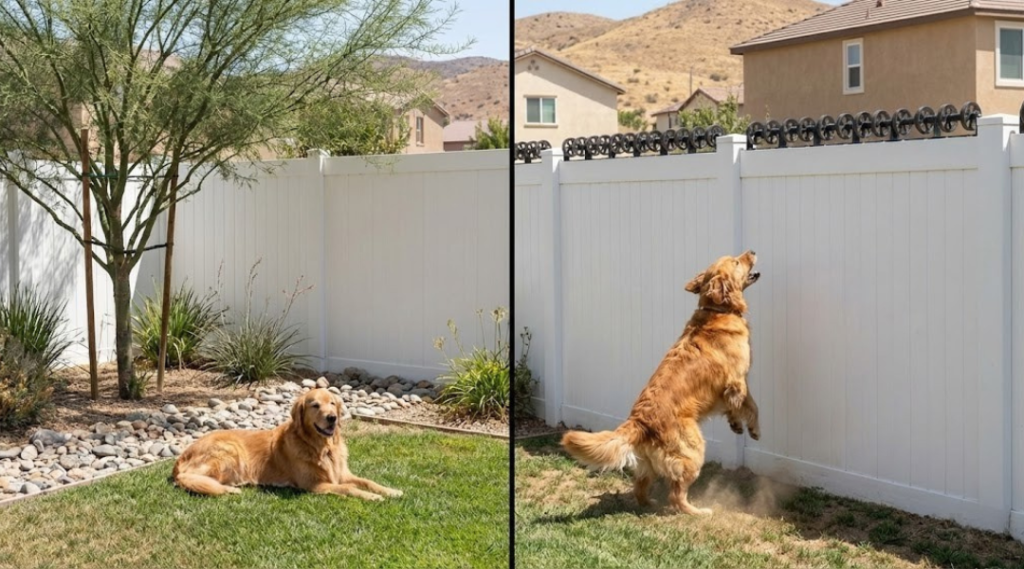
You should observe your dog’s habits before setting a fence height. A calm golden retriever with no escape history may stay secure behind five feet, while an athletic one could clear six with ease.
Behavior-based assessment works better. Note how your dog reacts to wildlife, scooters, or passing dogs—these triggers can spark escape attempts. Using visible barriers like wood or vinyl can limit visual stimulation, while coyote rollers can stop jumpers by removing paw grip from the top edge of the fence.
Ignoring Terrain Changes and Nearby Objects
Many dogs escape because the surrounding environment shortens the functional height of the fence. A three-inch dip or slope can give a tall dog just enough leverage to jump over. Uneven ground creates weak spots that breach the fence’s intended height.
Nearby structures often add aid to a climber. Yard furniture, planters, or stacked firewood can serve as launch pads. Even invisible fences can lose reliability near sloping or shaded areas that distort signal consistency.
Before installation, walk the fence line and look for elevated soil or hard surfaces along the base. Use this checklist:
- Check slope direction – Raise fence sections at lower ground.
- Remove climb aids – Keep bins, tables, and ledges away from the fence.
- Reinforce low areas – Add fill or install wire mesh underground to maintain consistent height.
Small corrections in terrain often make a greater difference than adding another foot of fencing.
Choosing Height Without Considering Gate Weak Points
A strong fence can still fail if the gate is poorly secured. Dogs often push through, dig under, or exploit flexible hinges. Gates are frequently lower than the main fence or have wider gaps at the bottom, creating easy escape routes.
Inspect your gate first. Use latches that lock automatically and attach them at a height beyond your dog’s reach. If you have large breeds or strong jumpers, consider adding a double-latch system—one near the middle and another near the top of the gate frame.
Also check the threshold beneath. Adding gravel or a concrete strip prevents digging where the soil is soft. For chain-link gates, ensure there are no gaps larger than the width of your dog’s muzzle. These adjustments strengthen the structure without changing fence height.
Assuming Taller Fences Always Solve Escape Issues
A higher fence does not automatically mean a safer one. Dogs that dig or climb often find new methods once vertical barriers increase. For them, prevention design is more effective than just adding height.
Install angled fence toppers or coyote rollers if your dog tends to climb. They make it impossible to gain traction at the top, reducing the incentive to try. Alternatively, use sturdy ground barriers like buried mesh or an L-footer to block digging.
In some cases, invisible fences or motion-triggered alarms add backup protection. However, these devices should complement—not replace—solid physical barriers.
A well-designed fence balances height with layout, materials, and features that match your dog’s real behavior. Taking this approach keeps your dog safer and helps your fence remain effective long term.
Fence Height Ranges for Popular Dog Types in Riverside
Choosing the right dog fence height in Riverside depends on breed size, athletic ability, and behavior. The local climate and yard layouts also influence material and design, making it important to balance durability, visibility, and restraint.
Small but Athletic Breeds With High Jump Potential
Breeds like Jack Russell Terriers, Miniature Pinschers, and Italian Greyhounds are small but capable of impressive leaps. Although they weigh little, their energy demands a fence height greater than many owners expect. A 4-foot fence may seem enough for a small dog, yet these agile jumpers can clear that easily. Installing a 5-foot picket fence or vinyl panel fence helps reduce jump success while keeping an open yard appearance.
Use smooth vertical materials like vinyl or metal pickets to limit paw holds. Avoid climbable chain-link fencing unless topped with angled mesh or coyote rollers. Some owners add a slight inward lean or fence cap to discourage takeoff. In Riverside’s warm weather, ventilation gaps also help regulate temperature without lowering the fence’s secure function. This approach safely contains athletic small breeds without blocking airflow or views.
| Breed Example | Minimum Height | Recommended Material |
|---|---|---|
| Jack Russell Terrier | 5 ft | Vinyl picket or PVC panel |
| Miniature Pinscher | 5 ft | Aluminum or mesh fence with topper |
| Italian Greyhound | 4.5–5 ft | Smooth composite or vinyl panels |
Medium Breeds With Climbing or Pushing Behavior
Beagles, Cocker Spaniels, and Border Collies are curious dogs that often challenge barriers by climbing, pawing, or pushing rather than jumping. A standard 5-foot fence height generally provides adequate containment if reinforced at the base and top. Because these breeds may dig, secure the lower edge with buried mesh or a small concrete footer.
Avoid wood fences with horizontal rails on the inside since they act as ladders. A mesh fence or vinyl fence with vertical supports discourages climbing. In yards where visibility matters, black-coated chain-link can work if you reinforce the top edge. Maintain consistent tension or panel alignment so the fence doesn’t flex or create leverage points. For households with multiple dogs, strengthening gates and latch areas is often more important than increasing height.
Large and Powerful Breeds Requiring Structural Strength
Dogs such as German Shepherds, Labrador Retrievers, and Rottweilers typically require a stronger barrier rather than just a taller one. The best dog fence height range for these breeds is between 6 and 8 feet, depending on temperament. A 6-foot privacy fence made from heavy wood, vinyl, or steel provides strong resistance against leaning, impact, or pawing.
You should use post anchoring and steel braces to prevent tilting under pressure, especially if your dog jumps up on the fence when excited. While chain-link fences are affordable, they can bend or stretch over time. Upgrading to thicker-gauge metal or framed privacy panels increases durability. In Riverside’s dry climate, powder-coated steel or treated wood withstands sun exposure and heat while requiring minimal maintenance.
How Experienced Local Suppliers Like All Counties Fence & Supply Evaluate Height Recommendations in Practice
Local companies such as All Counties Fence & Supply evaluate fence height for dogs by measuring your dog’s shoulder height, jump tendency, and yard layout. They also check municipal fencing codes in Riverside, which limit the maximum fence height in some residential zones. Their staff often recommends 6-foot fences for most large or athletic breeds and 4–5-foot heights for calmer small or medium dogs.
They also help you select a suitable material type, from wood to vinyl to chain-link with privacy inserts. Installers may suggest extra reinforcements such as cement footers, top rollers, or angled extensions if your dog shows persistent escape attempts. When choosing your dog fence, local experts balance safety with aesthetics and neighborhood requirements, ensuring both security and compliance.
Edge Cases That Complicate Fence Height Decisions
Some properties and dogs bring extra challenges when choosing a fence height. Dogs with unusual jumping skills, mixed-breed households, uneven yards, or local rules can make a single height recommendation unreliable.
Dogs That Clear Fences Without Running Starts
Certain dogs can jump impressive heights from a standing position. Breeds like Border Collies, Australian Shepherds, and Whippets often combine agility with motivation, allowing them to clear fences that would contain most other dogs. Strong limb power lets them leap without a running start, which means even a 6-foot fence may not suffice.
For these breeds, you may need angled toppers, anti-climb rollers, or inward-facing extensions to prevent escape attempts. Exercise also helps—dogs that burn energy through play are less likely to test boundaries.
Use materials that discourage traction, like vinyl panels instead of chain link. Smooth surfaces deny them footing to launch over. Regular inspection for sagging or weak panels further reduces jumping opportunities and keeps the barrier consistent in height.
Multi-Dog Households With Mixed Behaviors
When you own multiple dogs with different sizes and temperaments, one fence height may not meet every need. A small dog like a Dachshund may not challenge the fence, but a larger, athletic dog such as a Labrador might. The more active dog sets the standard for the minimum height you’ll need.
Competitive instincts can make the situation worse. Once one dog learns to climb or jump, others often mimic the behavior. You might notice digging, climbing, or team escapes. To manage this, install underground barriers at the base to stop digging and keep heights at least 6 feet if any dog is medium to large.
If space allows, create zones separated by interior fencing. A divided yard lets calmer or smaller dogs use a lower barrier without risking escape from stronger jumpers.
Yards With Retaining Walls or Elevation Changes
Changes in elevation can make a fence functionally shorter on one side than another. A yard that slopes downward from the fence line may give a tall dog the extra boost needed to jump over. Similarly, retaining walls, steps, or garden beds near the fence can act as platforms.
To manage this, you should measure fence height from the highest ground level next to it, not the base of the structure. If elevation varies, raise the fence panel heights on the lower side or install terracing to remove takeoff points.
Strategically placed landscaping can also help. Shrubs or planters set a few feet back from the fence line can reduce clearance zones and discourage jump attempts.
HOA or City Restrictions Affecting Fence Height
In Riverside and similar cities, local ordinances or homeowners’ association (HOA) rules can limit how high a residential fence can be. Common limits range from 6 feet in backyards to 4 feet in front yards. Exceeding those rules may require a variance or written approval.
These restrictions complicate safety choices for large or high-jumping breeds. If rules prevent raising the fence, you can explore alternatives such as invisible boundary systems, inward-leaning fence toppers, or added landscaping barriers.
Check HOA bylaws and city planning codes before construction. Submitting drawings or material samples early can save time and prevent costly rework if your planned height or design is not compliant.
Common Questions About Dog Fence Height in Riverside
In Riverside, both city regulations and practical design choices affect how high you can build your fence for dogs. The right balance between height, structure, and safety keeps your pet contained while maintaining compliance with local rules.
Whether City Codes Limit Residential Fence Height
Riverside sets clear limits for residential fences to maintain neighborhood safety and visibility. Most front yard fences cannot exceed 4 feet, while back and side yard fences can reach up to 6 feet. These limits apply even when your primary goal is dog containment.
If you live on a corner lot or near a driveway, height restrictions may be stricter to keep sightlines open for drivers. You should contact the City of Riverside Planning Department or review your parcel zoning before installation. Homeowners Associations (HOAs) may also enforce their own limits or preferred fence materials, so check both city and neighborhood standards before starting work.
When local limits interfere with your dog’s containment needs, consider solutions that increase security within allowed dimensions, such as solid materials or angled toppers instead of exceeding height regulations.
How Much Height Matters Compared to Fence Design
Fence height is only one part of keeping your dog safely enclosed. The design, materials, and placement often determine how effective the fence will be. For example, a well-built 6-foot wood or vinyl fence with smooth panels offers more protection than a taller chain-link fence that is easy to climb.
Strong joints, secure latches, and limited spacing between boards or panels reduce points of leverage. You can also choose coyote rollers or angled extensions to make climbing difficult without significant height increases.
Think about your dog’s behavior. Jumpers may need a taller fence, but diggers require underground barriers or buried wire mesh more than added height. Evaluate both your pet’s tendencies and the fence design before assuming height alone solves containment issues.
When Adding Height Creates New Safety or Stability Issues
Adding extra fence height sometimes introduces problems instead of fixing them. Taller structures face greater wind load and must have sturdy posts, deep footings, or reinforced frames to stay steady. Poorly anchored panels can lean or collapse, especially after heavy wind or rain.
If you’re extending an existing fence, remember that added sections must align with current building codes and hold securely to avoid tipping or cracking. Heavy materials, such as wood or composite panels, may require thicker posts or concrete bases.
Also, increasing height can shade plants, block neighboring views, or conflict with zoning rules. Before making changes, assess how much stability and compliance your fence can safely support. Careful planning helps you meet your dog’s needs without causing structural or regulatory issues.
Closing Considerations: Choosing Height Based on Reality, Not Charts
When picking the right fence height, base your choice on your dog’s actual behavior, not just size charts or breed averages. Charts can guide you, but they don’t reflect each dog’s energy, age, or drive to explore. Take time to observe how your dog reacts to outdoor distractions before deciding.
A small but athletic Jack Russell may jump higher than a calm Lab twice its size. In contrast, a senior German Shepherd might have little interest in climbing or leaping. You know your dog’s habits better than any general guide.
Consider your property’s layout too. A sloped yard or raised patio can make a fence effectively shorter on one side. Walk your fence line and note where your dog might get extra leverage or dig underneath. Simple ground adjustments or adding a foot to the height can help prevent escapes.
Balance function and curb appeal. Many homeowners in Riverside prefer fences that blend with landscaping or neighborhood style. A wooden or vinyl fence often keeps dogs secure without making your yard feel closed off.
| Dog Trait | Recommended Height | Notes |
|---|---|---|
| Small, low-jumping breeds | 3–4 ft | Monitor digging habits |
| Medium breeds | 4–5 ft | Add visual barriers if needed |
| Large/athletic breeds | 6 ft or more | Reinforce corners and gates |
Use your dog’s history and your yard’s design to make the final decision, not someone else’s numbers.