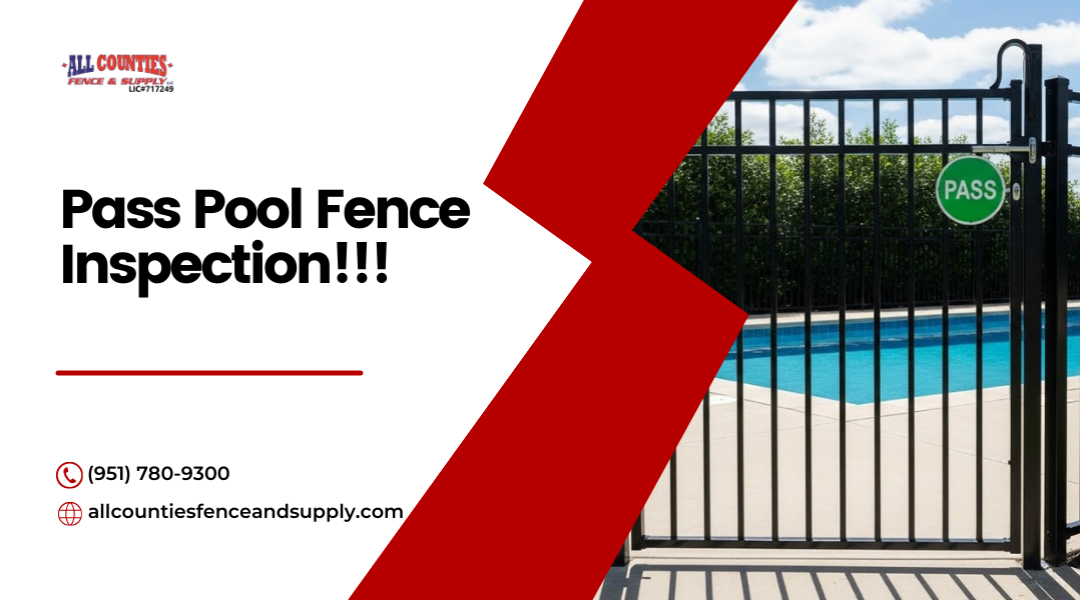
Passing a pool fence inspection in Riverside County might seem simple, but many property owners find small details make the difference between approval and extra costs. Local inspectors follow strict building and safety standards to ensure fences meet height, spacing, and gate requirements set by county code. To pass your inspection the first time, your fence must stand at least 5 feet tall, have no climbable gaps, and feature a self‑closing, self‑latching gate that opens away from the pool.
You’ll learn how these rules apply during inspection and what inspectors look for at each step. By understanding why small issues like gate height, latch placement, or ground clearance cause rejections, you can prevent common failures that delay pool use.
Whether you’re building a new pool or updating an old barrier, knowing how to prepare before inspection gives you confidence. Riverside County inspectors value precision, not guesswork—and with the right information, you can meet every standard with ease.
Why Pool Fence Inspections Fail More Often Than Expected
Most failed pool fence inspections come down to small but serious mistakes: gates that don’t latch on their own, missing barriers, or fences too short to meet code. Local requirements in Riverside County also vary depending on the property type and when the fence was built or modified, which adds confusion and more chances for errors.
Private Residential Pools vs Shared or Rental Properties
Private residential pools often fail inspections because homeowners rely on outdated or incomplete knowledge of local safety codes. You might assume a fence built years ago still meets standards, but regulations often change. Current codes require minimum fence heights, self-closing gates, and no openings larger than 4 inches between vertical parts.
Shared or rental properties face extra rules. Multi-unit homes, vacation rentals, and HOA-managed pools must meet both state safety standards and any additional local or association requirements. Inspectors check for consistent access control—such as self-latching gates and posted safety signs—throughout shared spaces.
Because more people use these pools, inspectors pay close attention to potential access points from parking areas, decks, or shared walkways. Even one unsecured gate or missing sign can lead to failure. Proper maintenance and documentation reduce these risks.
New Installations vs Existing Fences Being Re-Inspected
New installations fail when contractors overlook the details of finishing work, such as hinge placement or ground clearance. The most common problems include gates that do not close automatically, fence panels shorter than 48 inches, and large gaps under the fence. Before scheduling an inspection, check that all components meet local code and that every gate swings away from the water area.
Existing fences being re-inspected usually fail because of wear and tear or modifications made without permits. Hinges rust, latches loosen, and fences warp over time. If a section leans or separates from the ground, inspectors can flag it as unsafe. Routine maintenance is essential to keep your fence compliant. Taking time to replace worn hardware and fill gaps before an inspection helps prevent costly rechecks and delays.
Remodels, Repairs, or Permits That Trigger Inspections
Any time you remodel a yard or change the pool area, you may trigger a new inspection. Common triggers include removing and reinstalling concrete, adding decking, or changing gates or walls around the pool. When these changes occur, updated pool safety standards apply—even to fences that were previously compliant.
A major reason for failing these inspections is misunderstanding how small updates reset compliance requirements. For example, if you replace a section of fence, the new portion must meet current code, not the version from when the pool was first built. Inspectors in Riverside County often require proof of proper latch height, clear spacing, and gate operation before signing off.
During remodels or repairs, track all changes and verify that new materials meet state and county standards. Keeping records of product specifications and installation measurements helps you demonstrate compliance when inspectors review your site. Regularly checking work as it’s done prevents oversights that lead to inspection failure later.
What You’ll Walk Away Understanding After Reading This
You’ll understand how Riverside County inspectors assess every part of a pool barrier—from fence height and gate latches to spacing and materials—and how small oversights can cause inspection delays. You’ll also know the specific steps to take before calling for a re-inspection to avoid repeat issues.
How Riverside County Inspectors Interpret Pool Barrier Rules
Inspectors in Riverside County apply both the California Building Code (CBC) and local standards that emphasize preventing child access to pools. They check every part of the barrier to ensure it blocks unsupervised entry. The focus is not only on measurements but also on how securely and consistently those elements perform in real use.
A compliant pool fence must stand at least 60 inches tall, with no gaps larger than 4 inches anywhere along the barrier. Inspectors often test gates repeatedly to confirm that they self-close and self-latch without fail. They also confirm the latch sits at least 60 inches above the ground, keeping it out of reach of small children.
They pay close attention to slope or uneven ground. If the fence sits above a retaining wall or has a grade change, inspectors measure from the lowest point to the top of the barrier. Any area where a child could climb through or over is seen as a code issue, regardless of the material used.
Which Details Matter Most During an Inspection
Small construction details decide whether you pass or fail. Inspectors look for consistency across the entire barrier, testing both physical integrity and safety mechanisms. A fence may meet height standards but still fail if it flexes or leaves gaps when pushed.
Key details include:
- Gate direction: Must open outward, away from the pool.
- Self-closing hinge tension: Must return the gate to closed automatically each time.
- Latch type and height: Must engage reliably and sit high enough to prevent child access.
- Fence-to-ground clearance: Should not exceed 2 inches at any point.
Inspectors typically measure clearances with a small gauge to confirm uniform spacing. They inspect fasteners and anchor points for wear, corrosion, or poor installation that might weaken the structure. These checks reflect the principle that function is just as important as visual compliance.
Where Homeowners Typically Misjudge Compliance
Homeowners often assume a new or attractive fence automatically meets code. However, inspectors focus on barrier performance, not appearance. Common mistakes include mounting gate latches too low, choosing decorative panels with wide gaps, or misreading terrain measurements.

A frequent issue is the bottom clearance on sloped lots. Builders sometimes install fences that appear level, but small grade changes can leave gaps larger than 2 inches in places inspectors measure. Poor hinge tension is another common failure; gates that close slowly or stick at the latch often don’t meet requirements.
Another misunderstanding involves when rules apply. Even existing pools may need upgrades if modifications occur or new safety ordinances take effect. It’s important to confirm which version of the California Residential Code your project falls under before scheduling inspection.
How to Think About Fixes Before Scheduling Re-Inspection
Approach re-inspection prep like a checklist, targeting every point of failure from the first report. Start by reviewing the written correction notice so each issue is clearly understood. Then, inspect the fence yourself using a ruler, level, and gate test before calling an installer.
Common fixes include:
| Issue | Typical Fix |
|---|---|
| Gate not self-closing | Adjust hinge tension or replace spring hinges |
| Latch too low | Reinstall at or above 60 inches from ground |
| Large bottom gap | Add base trim, adjust post height, or fill grade |
| Loose posts | Reinforce anchors or replace weak sections |
Make sure the modifications are permanent and not temporary fixes, as inspectors check workmanship carefully on re-inspection. Hire licensed technicians if adjustments require structural changes.
Finally, take photos and verify operation multiple times. Demonstrating consistent self-closing and secure spacing helps ensure your property meets Riverside County’s current safety and building codes.
What a Pool Fence Inspection Means in Riverside County
A pool fence inspection checks whether your property meets safety, construction, and access control standards. Inspectors look for secure barriers, alarms, and proper spacing to protect residents—especially children—from unsupervised entry into pool areas.
The Safety Purpose Behind Pool Barrier Enforcement
Pool barriers reduce accidental drownings by stopping unsupervised access to water. In Riverside County, inspections focus on whether your pool fence acts as a reliable physical and audible deterrent.
You must have a continuous enclosure at least 60 inches high that fully separates the pool from the house and yard. Gates should be self-closing and self-latching, opening away from the pool area. If a home wall forms part of the barrier, you need exit alarms on any doors or windows leading into the pool space.
Inspectors verify alarms work properly and cannot be disabled easily. They also check that spacing between fence pickets or mesh openings prevents children from squeezing through.
By reviewing these details, inspectors ensure your setup meets both California Building Code and Riverside County Ordinance 421, which aim to balance freedom of use with measurable safety control.
How Inspectors Define a Compliant Enclosure
During a pool fence inspection, the County Building and Safety Division examines each element of your barrier to see if it matches approved plans. They test for structural stability, correct height, working gates, and secure latches.
A compliant barrier meets these rules:
| Feature | Minimum Requirement | Inspection Focus |
|---|---|---|
| Fence Height | 60 inches | Prevents easy climbing |
| Gate Type | Self-closing & self-latching | Opens away from pool |
| Clearance | Less than 2 inches from ground | Stops crawling under |
| Picket Gaps | Less than 4 inches | Stops squeezing through |
If your pool uses the house wall as part of the enclosure, inspectors check pool alarms and door exit alarms for sound level and function. They make sure you are home to demonstrate alarm operation. You should repair or replace faulty alarms, latches, or sections before scheduling to avoid failed inspection fees.
How Building Code, Safety Standards, and Enforcement Overlap
Your pool fence inspection reflects how state laws, county ordinances, and building codes work together to set safety benchmarks. California’s SB 442 requires at least two safety features such as fencing, alarms, or safety covers. Riverside County enforces these through its permit and inspection process.
When you apply for a pool permit, the county reviews your plans for compliance. Each inspection stage—steel, grounding, primary barrier, and final—confirms that construction stays consistent with your approved design.
Inspectors from the County’s Building and Safety Department and, in some cases, Environmental Health ensure pool barriers follow both state codes and local rules. This overlap keeps standards consistent across residential properties.
If an inspection fails, the same combined framework guides correction notices and reinspection requirements until the pool area is compliant.
How Inspectors Evaluate a Pool Fence Step by Step
Inspectors in Riverside County review the fence’s design, construction, and condition to confirm compliance with current safety codes. They check measurements, gate operations, and materials while comparing what they see on-site against approved plans and permit records to verify that the barrier prevents unsupervised pool access.
Pre-Inspection Permits and Documentation
Before any site check, you must have your building permit and approved plans ready. Inspectors from the county’s Building & Safety Division use these documents to confirm that your fence matches what was submitted and approved during your building permit review. If you applied for the permit after construction, they may request a retroactive inspection to verify compliance with the California Residential Code and Riverside County amendments.
You should also have any approved engineering notes, manufacturer specifications, and previous inspection reports available. Missing paperwork can delay approval, so keeping digital and printed copies helps.
Inspectors focus on whether your documented fence layout—such as gate position, height, and materials—matches what is built on-site. If differences appear, you may need a correction notice before the inspection can proceed.
On-Site Measurements and Functional Testing
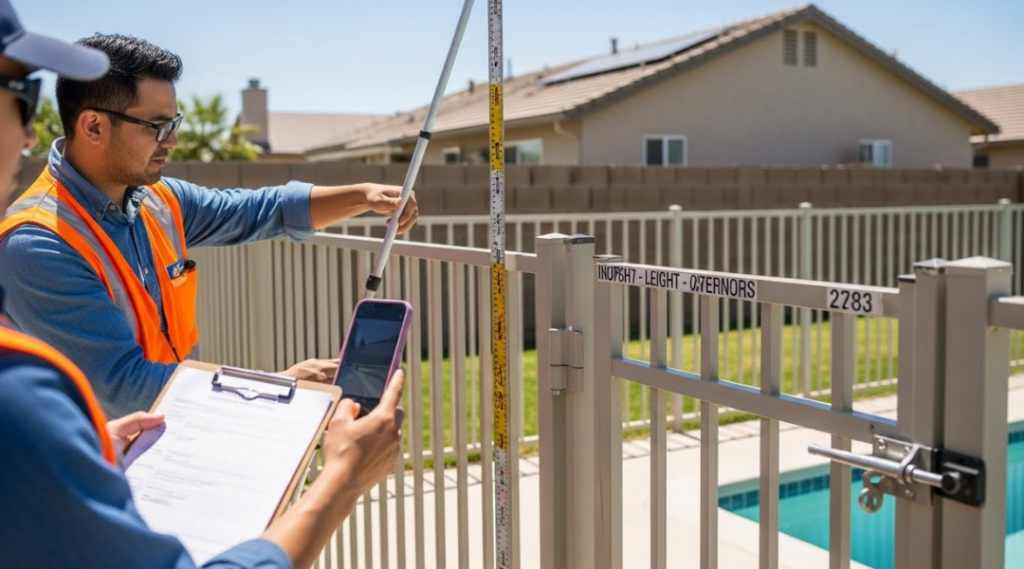
Inspectors measure the height of each fence section using a tape or pole level to ensure it meets the minimum 60-inch standard measured from the outside ground grade. They also check for bottom gaps; anything more than 2 inches between the fence and the ground generally fails.
Gates receive close attention. You’ll see inspectors open and release the gate several times to confirm it self-closes and latches automatically. The latch mechanism should be at least 54 inches high and operate smoothly without resistance.
They often bring a small sphere—about 4 inches wide—to test spacing between vertical slats or mesh openings. Any space large enough for that object to pass through can trigger a correction. Hardware tightness, hinge performance, and latch alignment are all tested mechanically to ensure long-term safety and function.
Visual Checks That Commonly Lead to Failure
Many inspection failures result from visual issues that seem minor but affect safety. Inspectors look for corrosion, loose fasteners, bent posts, or damaged mesh panels. Gates that drag or sag often signal post movement or soil erosion, which can reduce fence strength.
They also inspect the area around the fence. Overgrown plants or stacked objects, like planters or furniture, can create a climbable surface within 45 inches of the barrier. Even decorative features can count against compliance if they provide footholds.
Inspectors note wear and tear, fading mesh, or broken connection points and may recommend repair or replacement. Keeping your fence clean and clear of debris helps prevent these issues from being marked during the evaluation.
How Inspectors Handle Borderline or Unclear Conditions
When an inspector encounters a condition that doesn’t clearly meet or fail the code, they typically confer with a senior inspector or refer to guidance from the Department of Building and Safety. They may measure again, take photos, or document the item in the inspection report for review.
If your fence nearly meets a requirement—such as being slightly under the required height—inspectors may issue a correction notice rather than a full failure. This allows you to fix and reschedule without restarting the process.
In uncertain cases, the Building & Safety Division often requests supporting documentation, such as manufacturer data or engineer letters, to verify compliance. By providing detailed records and staying responsive, you can help inspectors resolve gray areas more quickly and avoid costly re-inspections.
Why Common Pool Fence Fixes Often Don’t Work
Quick repairs like patching a gate or raising a fence panel may seem to solve visible issues, but they often fail to meet Riverside County’s inspection standards. Many problems come from misunderstanding code requirements for pool barriers, gate hardware, and clearances under or around the fence. Small oversights can still leave safety gaps inspectors will flag.
Cosmetic Changes vs Actual Compliance
Many homeowners repaint or tighten fence sections thinking this will satisfy inspectors. While these touch-ups improve appearance, they rarely address functional safety issues such as latch height or gate direction. A compliant pool barrier must meet measurable standards, not just look secure.
Inspectors focus on structure and spacing, not surface condition. If your vertical pickets are spaced more than 4 inches apart or the fence sits above the ground by more than 2 inches on grass, no amount of paint or patching will make it pass.
Typical noncompliant “fixes”:
| Cosmetic Action | Real Issue Ignored | Why It Fails |
|---|---|---|
| Repainting or staining the fence | Structural misalignment or gaps | Doesn’t affect safety function |
| Adding decorative panels | Creates climbable surfaces | Increases child access risk |
| Replacing only broken boards | Doesn’t verify spacing or height | Leaves barrier incomplete |
For compliance, focus on the fence’s physical and functional standards defined in pool gate requirements rather than surface-level repairs.
Gate Adjustments That Still Fail Inspection
You can adjust a sagging gate or tighten its latch, but if it doesn’t self-close and self-latch from any open position, it won’t pass inspection. Riverside County follows California pool safety regulations that require automatic closing mechanisms. Some gates close only when pushed hard or opened at specific angles, which fails the test.
A proper gate should:
- Swing away from the pool area.
- Latch at least 54 inches above the ground.
- Close automatically without assistance.
Even small misalignments keep the latch from engaging fully. Inspectors often spot uneven hinges or gates rubbing against posts. Replacing them with approved spring hinges or latch kits that comply with ASTM standards helps ensure lasting operation.
Maintenance should also include checking for rusted parts, weakened posts, or warped wood. Failures in these areas often make your gate unreliable, no matter how new the latch looks.
Height and Clearance Assumptions Homeowners Get Wrong
Many homeowners believe an existing six-foot fence guarantees safety, but measured height depends on terrain and fence orientation. Inspectors measure from the outside grade facing away from the pool. If ground shifts or landscaping adds soil near the base, your measured height may drop below the 48-inch minimum.
Clearances underneath the barrier are another frequent failure point. A gap more than 2 inches on grass or 4 inches on concrete allows children to crawl under. Filling gaps with loose material—like rocks or mulch—doesn’t count. You must secure permanent materials to block openings.
Tip: Review your fence from all sides. What looks compliant from the pool deck might measure short or high from the yard side, especially after grading or paving changes. Regular measurement and realignment prevent failed inspections later.
Why Prior Approvals Do Not Guarantee a Pass
Some property owners assume that because their fence passed years ago or came with a previous home sale, it remains compliant today. Building and pool gate requirements evolve, and materials degrade. What met older standards might now violate updated safety codes or have physical wear that compromises performance.
Riverside County inspectors check current standards, not past permits. A previously approved latch may now need to be self-closing, or a chain-link mesh once acceptable might exceed the allowed 2¼-inch opening size.
Also, environmental changes—like soil settling or added landscaping—can alter clearances and fence alignment. Regular reinspection and maintenance keep your barrier aligned with current safety expectations. Treat each inspection as new, verifying every measurement and mechanism instead of relying on past compliance.
Practical Ways to Address Issues Before Re-Inspection
If your pool fence inspection didn’t go as planned, clear steps can help you correct problems efficiently. Small fixes often prevent major rework, while understanding what inspectors won’t approve keeps you from wasting time or money.
Minor Corrections vs Structural Changes
Inspectors often flag small problems like loose gate latches, missing self-closing springs, or insufficient fence height by an inch or two. These are usually minor corrections. You can fix them by tightening hardware, replacing worn hinges, or adding approved extensions that meet local code.
Structural changes take more time. If parts of the fence sit below grade or posts are unstable, you may need to reset footings or rebuild sections. Riverside County requires that fences resist climbing and maintain specific clearance from grade and pool edges, so make sure your corrections align with those standards.
Keep good records of your updates. Take photos, keep purchase receipts, and note the correction date. This documentation shows the inspector that you addressed every violation carefully, which helps the re-inspection go smoothly.
Temporary Solutions Inspectors Typically Reject
Inspectors look for permanent, code-compliant fixes, not quick patches. Using wire mesh or plastic netting to block openings is a common short-term attempt, but it fails because it can deteriorate or detach. Tape, glue, or temporary fasteners also don’t meet safety requirements.
Avoid propping gates closed with bungee cords, temporary locks, or zip ties. Gates must self-close and self-latch from any open position. If the mechanism isn’t installed properly or fails under repeated use, the correction won’t pass.
Instead, install permanent hardware rated for outdoor use and test it multiple times before the inspector returns. Quality workmanship tells the inspector that your fence will stay compliant long after the inspection ends.
Situations Where Replacement Is Unavoidable
Sometimes repair costs exceed replacement. When fence posts rot, corrode, or lean beyond acceptable limits, replacement often becomes unavoidable. In Riverside County, a fence under 5 feet tall or one that can be climbed using nearby footholds won’t meet safety code, even if repairs are made.
Replacing sections also helps if material types don’t match the required specifications. For example, wood fences without a proper gate closure device or chain-link meshes with openings larger than 1¾ inches may need full replacement.
Before committing, get a written estimate comparing reinforcement versus replacement costs. A clear inspection checklist can help determine which path meets safety standards most efficiently.
How Experienced Local Installers Like All Counties Fence & Supply Evaluate Inspection Risk
Experienced fence contractors use measured site evaluations to identify problem areas early. Companies such as All Counties Fence & Supply in Riverside County assess post alignment, latch performance, and material durability before recommending fixes. Their local knowledge helps you match each correction to county inspection criteria.
They often use a checklist that includes items like:
| Inspection Area | Common Causes of Failure | Recommended Action |
|---|---|---|
| Gate Operation | Hinges not self-closing | Replace with spring-loaded hardware |
| Fence Height | Below 60 inches | Add compliant extensions |
| Clearance at Grade | Gaps over 2 inches | Fill or regrade soil |
Working with a seasoned installer ensures proper material selection and documentation. You remain responsible for compliance, but expert evaluation reduces the risk of repeat failures and saves time before re-inspection.
Situations That Complicate Pool Fence Approval
Several conditions can make it harder to pass a pool fence inspection in Riverside County. Property layout, installation choices, and building age all affect whether your pool or spa enclosure meets local and state safety standards.
Sloped Yards and Uneven Ground Conditions
Hillsides and uneven terrain often create gaps under the fence that exceed allowed limits. Inspectors typically require less than 4 inches of space between the ground and the bottom of the barrier. When the slope varies, maintaining a consistent gap becomes difficult.
You can use stepped panels, short retaining walls, or graded backfill to close excess gaps. Adjustable posts can also help maintain proper height while keeping the fence stable.
Inspectors expect the fence to remain at least 48 inches high along its entire length. If part of the slope causes the fence to fall below this height, that section may fail inspection. Take measurements along the full perimeter before installation to confirm compliance.
Removable Mesh Fences and Inspection Acceptance
Removable mesh fencing must meet ASTM F2286 standards to be accepted by Riverside County inspectors. Materials alone aren’t enough; proper installation matters equally. The fence must reach at least 48 inches in height and include a self-closing, self-latching gate that opens away from the water.
Inspectors usually check for tension, post spacing, and latch height (at least 54 inches above ground). If you’re installing the fence yourself, use manufacturer instructions exactly and retain proof of ASTM compliance from the supplier.
Some inspectors prefer permanent barriers. If they question a removable system, show documentation confirming lab-tested compliance and manufacturer installation diagrams. Preparing this paperwork ahead of your inspection helps prevent delays.
Shared Property Lines and Access Points
If your fence runs along a neighbor’s property line or borders a shared walkway, inspectors may focus on access control. The fence should fully isolate the pool or spa area and not rely on a neighbor’s wall or gate for security.
Common problem areas include side gates, alley entrances, or driveway pathways that lead directly to the pool area. Any shared access must have a self-closing, self-latching gate that locks from the pool side.
A clear layout map can help you plan a compliant design. Include measurements and mark each access point. If a neighboring structure forms part of the enclosure, obtain written permission and verify that the shared segment meets height and latch standards.
Older Pools Built Under Previous Codes
Many pools in Riverside County were built decades ago under less strict safety rules. When you remodel, install new equipment, or sell the home, current standards apply regardless of the pool’s age.
Older fences often fall short of modern height or gate requirements. For example, past codes might have allowed 42-inch barriers or latch hardware lower than permitted today. These features no longer qualify as compliant.
If your fence or gate predates the current California Swimming Pool Safety Act or local building standards, upgrading materials is usually necessary. When seeking inspection approval, note whether your municipality enforces ISPSC 2018, 2021, or newer versions, as the details differ slightly. Updating early saves time and avoids repeat inspections.
Final Takeaway: How to Prepare for a Successful Inspection Without Guesswork
You can take the uncertainty out of your pool fence inspection by following a few simple steps. Start by reviewing Riverside County safety standards before scheduling. Each rule—such as gate height, latch type, and barrier spacing—exists to keep your pool secure. Understanding what inspectors look for saves you time and prevents repeated visits.
Create a short checklist to stay organized.
| Item | What to Check | Why It Matters |
|---|---|---|
| Gate Self-Closure | Opens outward and closes automatically | Prevents unsupervised access |
| Latch Height | At least 54 inches above ground | Keeps latch out of children’s reach |
| Fence Height | Minimum 60 inches | Blocks entry from climbing |
| Gap Size | Less than 4 inches | Stops small children from slipping through |
Before the official visit, do your own walkthrough. Test each gate and ensure all hardware works smoothly. If any latch sticks or the gate drags, fix it early. Look for loose posts, damaged panels, or distractions like overgrown plants that could hide defects.
Keep essential documents handy, such as permit paperwork and inspection records. This helps you respond quickly if questions arise. Good communication with the inspector also reduces delays and misunderstandings.
Finishing touches matter. Clean the area, clear debris, and make sure the fence looks well-maintained. Small details often make the difference between passing on the first try and needing a recheck.