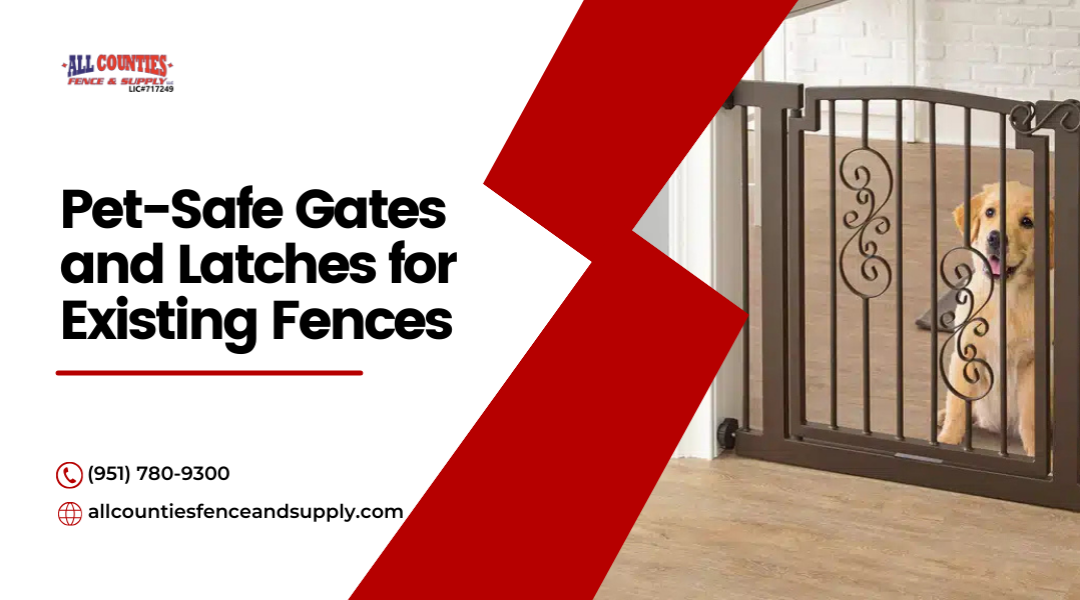
Adding a pet-safe gate to your existing fence can transform your yard into a secure space for your furry family members. Whether you have an active dog, an adventurous cat, or multiple pets with different needs, the right gate and latch system keeps them safely contained while making your life easier.
A properly installed pet-safe gate combines self-closing mechanisms, secure latches positioned out of your pet’s reach, and durable materials that withstand daily use. The key is selecting features that match your pet’s size, behavior, and abilities. Dogs that jump need different solutions than cats that climb, and smaller animals require tighter spacing to prevent squeezing through gaps.
This guide walks you through practical considerations for retrofitting your current fence with pet-safe gates and latches. You’ll learn which designs work best for different situations, what choices contractors in Riverside recommend based on local conditions, and how to weigh short-term costs against long-term benefits. These insights help you make informed decisions that protect your pets while maintaining your property’s functionality and appearance.
When Retrofitting Gates And Latches Makes Practical Sense
Not every fence needs a gate upgrade, and not every household will benefit from retrofitting. The decision depends on your pet’s needs, your property layout, and whether your current fence can actually support the modifications.
Yards, Pets, And Routines Where Upgrades Matter Most
Retrofitting works best when you already have a sturdy fence but need better access points for daily pet care. If you walk your dog multiple times per day through the same spot, adding a gate saves you from constantly moving outdoor furniture or makeshift barriers. Homes with front and back yards benefit from gates that let pets move between spaces without your involvement.
Multiple-pet households see the biggest advantage. A secondary gate lets you separate dogs during feeding or when one needs outdoor time alone. Gates also help when you have pets with different exercise needs or temperaments.
Properties with service access needs make strong candidates for retrofitting. If lawn care workers, pool maintenance, or delivery drivers need yard access while keeping pets contained, a lockable gate solves the problem. You maintain security while giving authorized people entry.
Gates become essential when your routine involves taking pets in and out for bathroom breaks, play sessions, or training exercises. Without a proper gate, you’re climbing over the fence or creating gaps that compromise the entire enclosure.
Fences And Hardware That Usually Aren’t Worth Modifying
Chain link fences with rust, bent posts, or sagging sections won’t support new gates properly. The gate posts need solid vertical alignment and firm ground anchoring. If your existing posts wobble or lean, you’ll need to replace them before installing any gate.
Wood fences over 15 years old often have rot at ground level even when they look fine above surface. Check the posts where they meet soil by pushing hard with your hand. Soft spots or visible decay mean the structure can’t handle gate hardware stress.
Very short fences under three feet high don’t benefit from latches designed for security. Most medium and large dogs clear these barriers easily regardless of gate type. Temporary plastic or wire fencing also lacks the stability for permanent gate installation.
Decorative fences made from thin materials like lattice or picket styles with wide spacing won’t contain determined pets. Adding a gate to these creates a false sense of security when the entire fence remains inadequate.
Assumptions About Dog Size, Strength, And Behavior Driving Decisions
Small dogs under 20 pounds need different gate considerations than large breeds. A lightweight gravity latch works for a Chihuahua but fails when a Labrador jumps against the gate. Your latch choice must account for your dog’s weight hitting the gate at full speed.
Diggers require gates with no ground gaps. If your dog paws at barriers, standard gates with 2-3 inch clearances let them create escape routes underneath. You need either ground-level gates or dig guards extending below the fence line.
Jumpers need taller gates than the fence height suggests. Dogs that can clear four feet won’t respect a standard 48-inch gate even if it matches the fence. Add at least 6-12 inches to your dog’s jumping height when selecting gate dimensions.
Dogs with separation anxiety or barrier frustration need gates they can’t see through easily. Solid panel gates reduce stimulation from street activity. Climbing breeds like Huskies also need smooth surfaces without horizontal rails that become footholds.
Fundamentals Of Pet-Safe Gate And Latch Design
A secure pet gate depends on precise swing mechanics, robust latch hardware that prevents manipulation, structural integrity under repeated force, and thoughtful containment strategies that account for escape behavior. Each element must work together to create a barrier that remains effective throughout daily use.
How Swing Direction, Clearances, And Gaps Impact Containment
Gate design starts with controlling how the gate opens and closes. The swing direction determines whether your pet can push the gate open from their side. Gates should always swing away from the pet’s area or toward the house to prevent animals from forcing the gate outward.
Gate width affects both convenience and security. A standard walk-through gate measures 36 to 48 inches wide. Wider openings require double gates to maintain structural stability and prevent sagging.
Clearance gaps create the most common escape routes. The space between the gate bottom and ground should not exceed 2 inches for small dogs or 4 inches for large breeds. Side gaps between the gate frame and posts must stay within 3/8 to 1/2 inch for wooden installations. Metal gates can maintain tighter tolerances of 1/4 inch.
Gate alignment changes with temperature and humidity. Wood expands in summer and contracts in winter, which affects how the latch meets the strike plate. You need to account for seasonal movement when setting initial gaps. A gate that closes perfectly in June may stick or leave gaps in December.
Latch Mechanisms That Resist Nudging, Pawing, And Jumping
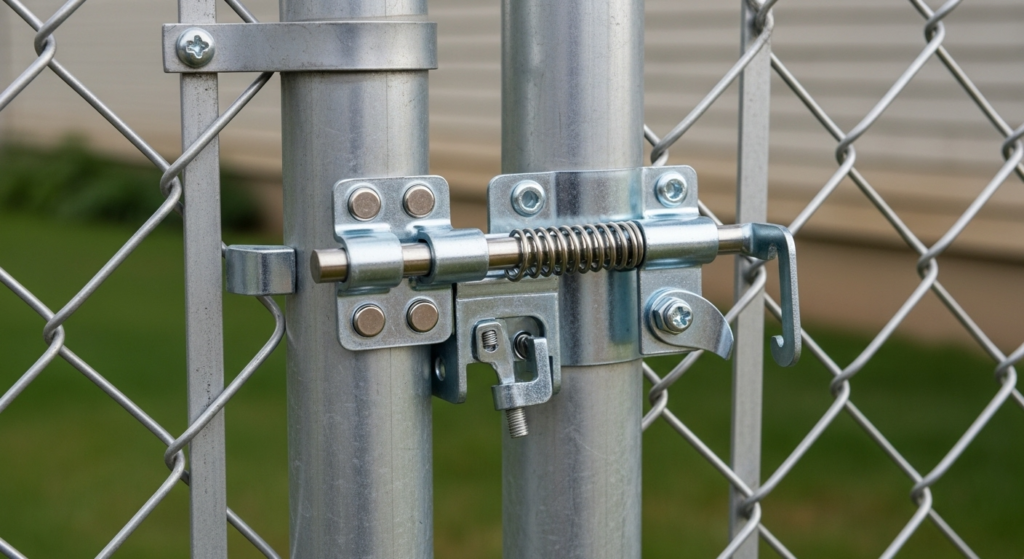
The gate latch serves as the primary security point. Spring-loaded latches provide consistent engagement because the spring pushes the bolt into the strike plate automatically. This active mechanism works better than gravity latches, which rely on the latch arm falling into place.
Magnetic latches eliminate mechanical jamming and resist vibration from pawing or jumping. High-quality magnetic systems use dual magnets to increase holding force. These latches work well for pets that have learned to shake gates loose.
Mounting height prevents many escape attempts. Place latches at least 48 inches above ground for large dogs and 36 inches for smaller breeds. The latch should face the side opposite from your pet to make manipulation harder.
Dual-action release mechanisms require two separate movements to open. You might lift a lever while simultaneously pulling the gate. This complexity stops most pets from accidentally triggering the latch. For homes with children, these mechanisms also provide added safety at stairway gates.
Structural Forces On Posts, Hinges, And Frames Over Time
Gate hardware must withstand thousands of cycles and significant lateral force. Gate hinges bear the full weight of the gate plus impact forces from slamming. Strap hinges distribute weight across a larger surface area than butt hinges, making them more suitable for heavy wooden gates.
Post stability determines long-term gate alignment. A 4×4 post set in concrete to 24 inches depth provides adequate support for most residential gates. The post must cure for 48 hours before mounting gate hardware.
Hinge screws require proper sizing and installation. Use lag bolts measuring at least 3 inches long for wooden posts. Drill pilot holes to prevent splitting the wood and stripping the threads. Self-closing hinges add spring tension that pulls the gate shut automatically, but this constant force can loosen fasteners over time.
You should inspect and lubricate hinges every six months. Apply silicone spray to pivot points to reduce friction. Check all screws and bolts for tightness. A sagging gate indicates loose hinges or post movement, both of which compromise the latch alignment.
Integrating Self-Closing, Double-Gate, And Containment Layers
Self-closing hinges eliminate human error by ensuring the gate always returns to the closed position. These spring-loaded components create enough force to swing the gate shut from any angle. Adjust the spring tension so the gate closes firmly but doesn’t slam.
Double gates create an airlock system at entry points. This two-barrier approach gives you a contained space to move through without releasing your pet directly into an unrestricted area. Install both gates to swing in opposite directions to maximize the buffer zone.
The primary gate should use the strongest latch and face toward the area you want to secure. The secondary gate can use a simpler mechanism since it serves as backup containment. Space the gates 3 to 6 feet apart to create a functional vestibule.
Containment layers add redundancy for escape artists. Combine a standard gate with a secondary barrier like a lower cross-beam that prevents digging underneath. For climbers, add a top rail or extend fence height near the gate. These multiple obstacles require different skills to overcome, making successful escape much less likely.
Gate And Latch Choices Through A Riverside Fence Contractor’s Lens
Riverside’s climate and soil put unique stress on fence hardware, so contractors prioritize materials that resist UV damage and adjust easily when posts shift. Most retrofit work focuses on reinforcing gate posts and replacing rusted hinges before adding child-proof or pet-safe latches.
Common Retrofit Patterns All Counties Fence & Supply Sees On Existing Yards
Most homeowners add gates to existing fence lines where a builder left 36-inch openings or where previous gates failed. You’ll need to install gate posts before you can hang hardware, and contractors typically dig post holes 24 inches deep with a post hole digger in Riverside’s clay-heavy soil. The posts get set in fast-curing concrete to handle daily use.
Vinyl gate installations often require metal reinforcement inside the frame because pets push hard against lightweight materials. Wood gates need diagonal bracing to prevent sagging, which makes latch alignment easier over time. Chain-link gate retrofits usually swap original butterfly latches for gravity-style fingertip releases that pets can’t nose open.
Contractors also see frequent requests to add secondary latches 5 feet high, paired with a lower handle for adults. This dual-latch setup keeps determined dogs from jumping and hitting the release mechanism.
How Riverside Heat, Sun, And Soil Movement Influence Hardware Longevity
Summer temperatures above 100°F warp plastic components and fade powder coatings on cheaper latches. Contractors recommend gate materials with UV inhibitors or solid metal construction to avoid yearly replacements. Steel latches need powder coating rated for outdoor exposure, not simple paint that cracks within months.
Soil expansion during winter rains shifts fence posts by up to half an inch, throwing latches out of alignment. Adjustable strike plates and spring-loaded mechanisms compensate for this movement without requiring tools. Gravity latches work better than magnetic models because dust and grit interfere with magnet strength in dry months.
Direct sun exposure on south-facing gates breaks down polymer parts faster than metal. Stainless steel or coated steel latches outlast zinc-plated options in Riverside’s climate by three to five years.
Practical Constraints When Upgrading Wood, Vinyl, Iron, And Chain-Link Gates
Wood gates need gate installation techniques that avoid splitting when you drill through dry boards. Pre-drill all screw holes and use stainless steel hardware to prevent rust stains on cedar or redwood. Heavy thumb latches require backing plates on both sides to distribute weight.
Vinyl gates limit your latch choices because the material can’t support heavy mechanisms without cracking. You’ll need to hang the gate with reinforced hinges and choose lightweight aluminum latches. Most fence contractors add internal metal sleeves before mounting any hardware.
Iron gates handle any latch weight but rust quickly without proper prep. Grind off old paint before installing new hardware and apply rust converter to bare metal. Chain-link gates work best with U-bolt butterfly latches or specialty clamps that don’t require welding.
Each material demands specific fasteners—wood screws for timber, self-tapping screws for vinyl sleeves, and machine bolts for iron frames.
Reasoning Through Tradeoffs And Long-Term Outcomes
Every gate and latch decision involves weighing immediate benefits against durability, maintenance needs, and how your choices affect future modifications to your fence system.
Balancing Convenience Of Access With Escape Resistance And Safety
Simple flip latches open quickly but a determined dog can learn to lift them with a nose or paw. Spring-loaded latches require more force and coordination, making them harder for pets to manipulate.
Double-action latches add a second step to the opening process. You lift and pull, or twist and push. This complexity stops most pets but slows you down when carrying groceries or garden tools.
Keyed locks provide maximum security for escape-prone dogs. You sacrifice quick access and need to keep track of keys. Consider how often you use the gate daily.
Height matters as much as mechanism. Installing any latch 6 inches higher than your dog can reach while jumping adds security. A basic latch mounted at human shoulder height often works better than a complex mechanism at waist level.
Visual Style Versus Tamper-Resistance And Wear Under Daily Use
Decorative wrought iron latches match ornamental fencing but expose more moving parts to weather and pet interference. Enclosed box latches protect mechanisms from rain and curious paws but look industrial.
Powder-coated finishes resist scratches from claws better than paint. Expect visible wear within 6-12 months on any latch your dog can reach. Stainless steel shows fewer scratches than painted aluminum but costs 40-60% more.
Gates with vertical pickets need latches that don’t catch on pet collars. Horizontal boards allow flush-mount options that sit flat against the surface. Your fence design limits which styles work safely.
Wood swells and contracts with humidity changes. Latches mounted to wood need adjustment slots or oversized mounting holes. Metal gates hold alignment better but transfer more impact force to latch components when slammed.
How Incremental Upgrades Change Future Repair Options And Replacement Timing
Adding a gate to an existing fence section means cutting posts or rails. Those cuts become weak points. Reinforcing with metal brackets now prevents sagging that makes latches misalign within 2-3 years.
Standard latch holes measure 1.5 or 2 inches in diameter. Upgrading later to a latch with different hole spacing means patching old holes or drilling new ones in already-stressed wood.
Self-closing hinges cost $15-30 more than basic hinges but reduce frame stress from slamming. Gates that close gently need latch adjustments less often. You replace fewer parts over 5-10 years.
Modular systems let you swap latch types without new drilling. Universal mounting plates attach once to your gate. Different latches click into the same plate. You adapt to a new dog’s behavior without permanent changes to your fence.