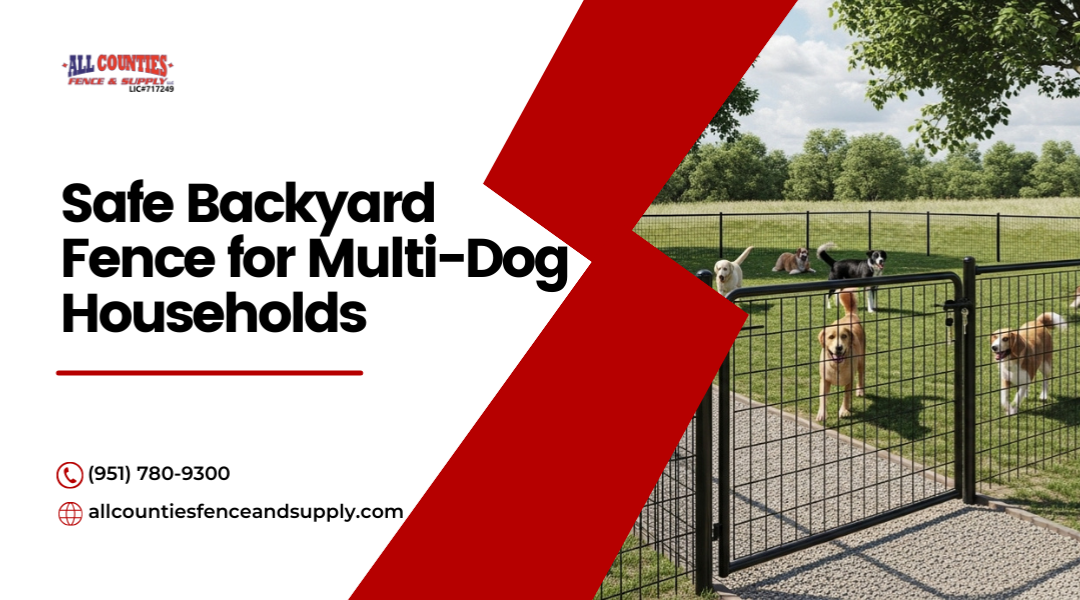
Owning multiple dogs brings joy and energy to your home, but it also creates specific backyard challenges that a single-dog household rarely faces. Dogs interact with each other in complex ways, and these behaviors directly affect how you should design your fence. Pack dynamics, size differences, and varying energy levels all influence what makes a backyard truly safe for your entire crew.
A well-designed fence for multi-dog households accounts for escape artists, size variations, and territorial behaviors while creating separate zones when needed. Your fence needs to handle the combined strength and intelligence of multiple dogs working together, not just contain one pet. When one dog discovers a weak spot, the others will follow, making your containment system only as strong as its most vulnerable point.
This guide walks you through the practical considerations that matter most for multi-dog fence design. You’ll learn how to assess your specific pack’s needs, apply proven safety principles, and understand the tradeoffs between different fencing options. Whether you have two small terriers or four dogs of mixed sizes, the right approach protects your pets while giving them the outdoor space they need.
What You’ll Understand By The End
You’ll learn how to evaluate fence safety with multiple dogs in mind and identify which design features create lasting security. These two areas form the foundation of a multi-dog yard that prevents escapes and supports each dog’s needs.
How To Think About Fence Safety When Multiple Dogs Share A Yard
You need to assess your dogs as a group, not just individuals. When dogs play together, they create more force against fencing than a single dog would. They may jump higher when chasing each other or dig together near the fence line.
Consider the smallest and most athletic dog in your group. Your fence height should prevent your best jumper from clearing it, typically six feet for determined breeds. The spacing between fence boards or wire must be narrow enough that your smallest dog cannot squeeze through.
Watch for pack behavior patterns:
- Dogs may encourage each other to test fence boundaries
- One dog’s escape attempt can teach others the same method
- Play fighting near fences puts extra stress on materials
Your weakest dog determines your minimum security needs. If one dog is an escape artist, every access point must account for that skill level.
Which Design Choices Matter Most For Long-Term Containment And Wellbeing
Material durability matters more with multiple dogs because wear happens faster. Wood fences should use treated lumber at least 1.5 inches thick. Chain link needs heavy gauge wire (9-gauge or thicker) to resist pushing and climbing.
Gate systems require extra attention:
- Self-closing mechanisms prevent dogs from nudging gates open
- Double-latch systems add security when dogs learn to manipulate single latches
- Gates should swing inward so dogs cannot push them open from inside
Ground-level security prevents digging escapes. Bury fencing 12-18 inches deep or install an L-footer that extends underground. Some multi-dog households benefit from a gravel or concrete border along the fence line.
Visibility affects behavior management. Solid privacy fences reduce fence-line barking but prevent you from monitoring interactions. Partially open designs like horizontal slat fences let you observe all dogs while maintaining boundaries.
When Multi-Dog Fence Design Really Changes The Equation
Not every multi-dog household needs a complete fence overhaul. The specific situations where multiple dogs change your fencing requirements depend on factors like breed size differences, behavioral patterns, and how much supervision you can provide during outdoor time.
Situations Where A Basic “Single-Dog” Fence Is Not Enough
Your standard fence becomes inadequate when you have dogs with significantly different athletic abilities. A 3-foot fence might work for a Basset Hound but fails completely if you add a Border Collie to your household.
Size mismatches create specific vulnerabilities:
- Small dogs can slip through gaps that larger dogs cannot
- Athletic breeds can clear heights that work for less agile dogs
- One determined digger can teach escape tactics to other dogs
Multi-dog households with same-sex pairs face higher risks of territorial disputes at fence lines. Female pairs show aggression in 68% of documented cases. This means you need visual barriers or separate zones within your yard.
Pack behavior amplifies fence-testing behaviors. When one dog finds a weak spot, the others typically follow. You need reinforced corners, buried dig guards, and chew-resistant materials throughout the entire perimeter. A single weak point becomes a pack-wide escape route.
When Existing Fencing Is Usually Sufficient With Minor Adjustments
Your current fence often works well if your dogs are similar in size and temperament. Adding a dig guard along the bottom handles most escape attempts for breeds under 40 pounds.
Common upgrades that solve multi-dog issues:
- Installing roll bars on top to prevent jumping
- Adding wire mesh to block gaps between fence boards
- Creating separate access points with secure gates
Dogs that already respect your existing fence rarely develop new escape behaviors when you add another dog of similar size. If your 50-pound Lab stays contained by a 4-foot fence, a second Lab will likely respect the same boundary.
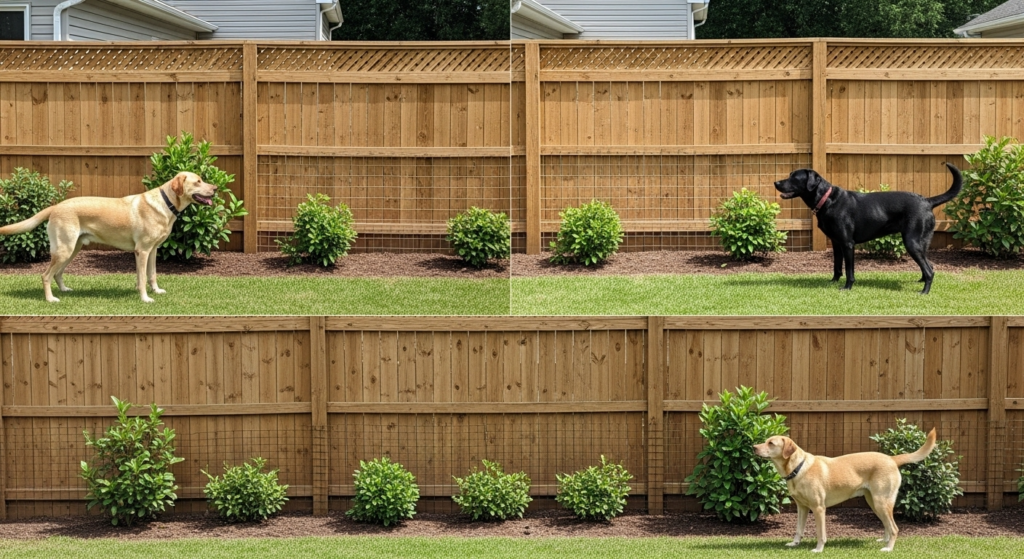
Minor visual barriers help manage territorial behavior without rebuilding your entire fence. Strategic plantings or partial panel installations give each dog personal space during outdoor time.
Assumptions About Dog Size, Temperament, And Supervision That Shape The Advice
Standard fencing advice assumes you have dogs within 20 pounds of each other. This weight similarity means their jumping and digging capabilities stay relatively matched.
Temperament assessments factor heavily into fence requirements. Calm, non-reactive dogs need less intensive containment than high-prey-drive breeds. Your Cavalier King Charles Spaniel requires different security than your Husky.
Supervision levels affect your fence needs:
| Supervision Type | Fence Requirements |
|---|---|
| Always supervised | Basic height and gap prevention |
| Partially supervised | Add dig guards and anti-climb features |
| Unsupervised periods | Full security with multiple backup systems |
Most recommendations assume you provide at least periodic visual checks during outdoor time. Completely unsupervised multi-dog households need professional-grade containment systems with redundant security features. Your ability to monitor interactions directly impacts the level of physical barrier your dogs require.
Core Safety Principles For Multi-Dog Backyard Fences
Effective multi-dog fencing requires attention to height specifications, ground security, strategic gate placement, and thoughtful yard organization. These elements work together to prevent escapes while managing the unique behavioral dynamics that emerge when multiple dogs share outdoor space.
Height, Visibility, And Line-Of-Sight Management Between Dogs And Stimuli
Your fence height needs to match your tallest or most athletic dog. Most medium-sized dogs require at least 5 feet, while larger breeds and strong jumpers need 6 feet or higher. Chain link fence and aluminum fence options often come in these standard heights and allow you to see your dogs at all times.
Visibility matters differently depending on your dogs’ personalities. Wire fence and chain link provide full visibility, which helps you monitor interactions but may increase reactivity to outside stimuli. Your dogs might bark more at passing people or animals when they can see through the barrier.
Solid barriers like vinyl fence or wooden picket fence block visual triggers that cause excitement or aggression. This works well for reactive dogs but removes your ability to supervise without entering the yard. Some multi-dog households benefit from mixed fencing where solid sections face the street and transparent sections face the house.
Ground-Level Security Against Digging, Squeezing, And Pushing Forces
Ground-level security prevents the most common escape methods in multi-dog households. One dog’s digging can create an exit point that others will quickly discover and use.
Install an L-footer by burying your fence material 12-18 inches deep, then bending it outward underground in an L-shape. This stops diggers when they hit the horizontal barrier. For chain link fence installations, extend the mesh below ground or add a separate dig guard along the fence line.
Check for gaps at ground level where smaller dogs might squeeze through. The space under gates poses the biggest risk. Add threshold plates or extend your gate material to eliminate these openings.
Multiple dogs create significant pushing force against fencing, especially during play or when chasing squirrels together. Reinforce fence posts with concrete footings and space them no more than 8 feet apart. Wire fence and flexible fencing systems need tensioning to maintain rigidity under pressure.
Gate Placement, Latching, And Double-Entry Strategies To Prevent Escapes
Position gates away from high-traffic areas where dogs congregate. Multiple dogs crowd exits, making it difficult to pass through without someone slipping out. Place your main gate along a side yard rather than directly off a deck or patio.
Standard gate hardware fails under the chaos of multi-dog households. Use cane bolt locks that secure gates at both top and bottom. Spring-loaded latches wear out quickly when dogs jump against gates.
Self-closing gate hinges eliminate the human error of leaving gates open. These hydraulic or spring-loaded systems pull gates shut automatically after you pass through. Adjust the closing speed to prevent gates from slamming but fast enough to close before a dog reaches the opening.
Double-entry systems create an airlock effect for maximum security. Install a small fenced vestibule or outdoor dog kennel area before the main yard gate. You enter the first gate, close it, then open the second gate to access the main yard. This prevents dogs from rushing past you to freedom.
How Yard Layout, Zones, And Sightlines Affect Group Dynamics And Arousal
Your yard layout directly influences how your dogs interact and their stress levels. Open rectangular spaces with clear sightlines across the entire area can increase arousal and conflict between dogs.
Create separate zones using partial fencing, landscaping, or strategically placed outdoor dog kennels. These divisions don’t need to completely isolate dogs but should break up long sight lines. Dogs that can’t see each other across the entire yard experience less sustained excitement and fewer confrontations.
Consider removable panels or flexible fencing to adjust your space as pack dynamics change. You might need temporary separation during feeding times or when introducing new dogs to the group.
Design paths and activity areas that prevent bottlenecks. Multiple dogs trying to access the same narrow passage simultaneously creates conflict. Provide at least two routes between major areas of your yard.
Place resources like water stations and shaded rest areas in multiple locations rather than a single spot. This reduces competition and gives lower-ranking dogs access without confrontation.
Applying These Principles In A Riverside, California Backyard
Riverside’s desert climate, sandy soils, and intense summer heat create unique challenges for multi-dog fencing that demand specific material choices and installation methods. Understanding how these local conditions affect fence stability and dog safety helps you build a containment system that performs reliably year-round.
How Local Climate, Heat, And Sun Exposure Influence Material And Layout Choices
Riverside temperatures regularly exceed 100°F from June through September. Metal fence components absorb this heat and can burn your dogs’ noses or paws if they make contact.
Vinyl and composite materials resist heat absorption better than metal chain link or aluminum. If you choose metal fencing, powder-coated finishes in lighter colors reflect more heat than darker options.
Material Performance in Riverside Heat:
- Wood fencing dries out rapidly and requires annual sealing
- Vinyl maintains structural integrity but may become brittle after 8-10 years of UV exposure
- Wrought iron needs protective coatings to prevent rust from rare but intense rain events
- Chain link heats up quickly and provides no shade
Your fence placement should account for sun patterns throughout the day. Installing shade structures or positioning fence runs where existing trees provide coverage reduces heat stress on both materials and dogs. Western-facing fences receive the most intense afternoon sun and experience the fastest material degradation.
Soil Conditions, Slopes, And Irrigation Patterns That Affect Post Stability And Gaps
Riverside’s sandy, decomposed granite soils don’t provide the same post stability as clay-heavy soils. You need deeper post holes filled with concrete rather than relying on tamped earth alone.
Standard 24-inch post depth often proves insufficient in sandy Riverside soils. Extending posts to 30-36 inches with concrete footings prevents shifting when dogs dig or jump against fence sections. This extra depth matters especially on properties with any slope.
Many Riverside yards feature graded drainage slopes to direct water away from foundations. These slopes create natural gaps under fence lines where smaller dogs can escape. You must extend fence material below ground level or install buried barriers even on modest inclines.
Irrigation Considerations:
- Drip systems and spray patterns soften soil around posts
- Water runoff creates erosion channels under fence lines
- Wet soil allows determined diggers to excavate faster
- Sprinkler overspray accelerates wood rot and metal corrosion
Position fence posts at least 18 inches away from irrigation heads. Check fence line integrity after winter rains when soil saturation peaks.
Practical Insights From All Counties Fence & Supply On Multi-Dog Containment In Typical Riverside Neighborhoods
Local fence professionals see recurring challenges in Riverside’s suburban developments. Properties in neighborhoods built since 2000 typically have smaller yards with shared fence lines, requiring coordination with neighbors for repairs.
Standard 6-foot privacy fencing works for most multi-dog households, but homes backing onto washes or open space need 8-foot heights. Coyotes and other wildlife in these areas can jump shorter barriers and agitate dogs into escape attempts.
Common Riverside Multi-Dog Scenarios:
| Property Type | Primary Challenge | Recommended Solution |
|---|---|---|
| Corner lots | Extended perimeter to secure | Reinforced gate latches, secondary containment |
| Wash-adjacent | Wildlife interaction | 8-foot solid panels, buried barriers |
| Shared walls | Neighbor dogs creating fence-fighting | Visual barriers, double-fence systems |
HOA restrictions in many Riverside communities limit fence materials to specific styles and colors. Review your CC&Rs before purchasing materials, as most require architectural approval for new fencing or modifications.
Homes near March Air Reserve Base experience noise events that can startle dogs into panic responses. Extra-secure latching mechanisms prevent escape during these unpredictable episodes when dogs may bolt in fear.
Tradeoffs, Behavior Dynamics, And Long-Term Outcomes
Fence selection for multi-dog homes requires weighing competing needs like privacy against visual stimulation, while accounting for how different materials withstand daily canine activity and how your management approach evolves as dogs age.
Balancing Privacy Fencing With Dogs’ Need For Visual Engagement And Monitoring
Privacy fence panels create complete visual barriers that reduce barking at passersby but can increase anxiety in dogs who prefer monitoring their territory. Solid wood or vinyl fencing eliminates external triggers but may lead to heightened reactivity when dogs encounter stimuli at gates or during walks.
A hybrid approach works well for many households. You can install solid fencing along busy street sides while using partial-privacy designs on less-trafficked boundaries. Horizontal slat fences with 1-2 inch gaps provide security while allowing limited visual access.
Dogs who fence-fight with neighbors benefit from solid barriers. However, dogs with barrier frustration often worsen when completely blocked from seeing their surroundings. Monitor your dogs’ stress signals during the first weeks after installation.
Consider your own supervision needs too. Chain-link or spaced picket designs let you quickly spot all dogs from windows, which matters when managing multiple animals with different play styles or resource guarding tendencies.
How Different Fence Types Handle Wear From Chasing, Jumping, And Rough Play
Chain-link withstands the most abuse from running dogs but shows visible wear patterns along fence lines where dogs patrol. The metal develops rust spots at ground level from urine exposure and digging attempts.
Wood fencing splinters and cracks under repeated jumping impact, especially at the 3-4 foot height where medium to large dogs make contact. Cedar and pressure-treated pine last 10-15 years with multiple dogs, while untreated wood degrades in 5-7 years.
Vinyl and composite materials resist moisture damage but can crack in freezing temperatures when dogs collide with panels during play. These materials bend rather than break under pressure, which prevents escape but creates unsightly warping.
| Fence Material | Lifespan With Multiple Dogs | Primary Wear Points |
|---|---|---|
| Chain-link | 15-20 years | Ground-level rust, bent corners |
| Wood (treated) | 10-15 years | Split boards, loosened fasteners |
| Vinyl | 12-18 years | Cracked panels (cold weather) |
| Metal panels | 20+ years | Dents from impact |
Install kick boards along the bottom 12-18 inches of any fence type to protect against digging and reduce soil splash that accelerates rot or corrosion.
The Interaction Between Training, Supervision, And Fence Design Over The Life Of The Dogs
Young dogs require direct supervision regardless of fence height or strength. A 6-foot privacy fence doesn’t compensate for lack of recall training or poor impulse control in the first two years.
As dogs mature and learn boundary respect, fence requirements often decrease. A household that initially needed 6-foot barriers may find 4-foot fencing adequate once dogs reach 4-5 years old and lose interest in escaping.
However, aging dogs present new challenges. Senior dogs with cognitive decline may forget learned boundaries and attempt to push through previously respected barriers. Arthritic dogs who never jumped may suddenly scramble over fences during anxiety episodes.
Pack dynamics shift over time too. Adding or losing dogs changes established territorial behaviors and supervision demands. A fence that worked for two dogs may prove inadequate when a third dog triggers competitive fence-running or barrier frustration between pack members.
Your available supervision time matters more than fence specifications. Dogs left unsupervised for 8-10 hours daily need more robust containment than dogs who spend outdoor time during active supervision periods when you can interrupt problem behaviors before they become fence-testing habits.