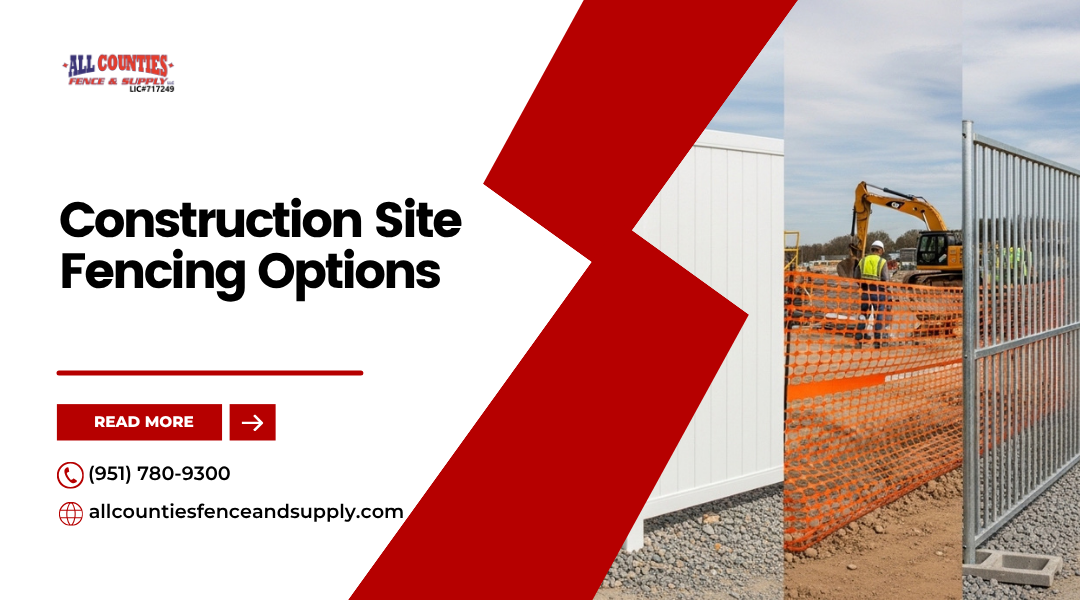
Choosing the right fence for a construction site in Riverside or San Bernardino affects more than just site appearance—it determines safety, access control, and cost efficiency. You need fencing that matches project timelines, site challenges, and local regulations while protecting equipment and maintaining security. Whether you need to define a short-term perimeter or invest in a lasting boundary, understanding your options helps you make informed decisions.
In fast-growing areas like the Inland Empire, construction projects range from short-term builds to large-scale developments. Temporary fencing, like chain-link panels or in-ground systems, offers quick setup and removal, while permanent fences, such as iron or vinyl, deliver durability and a finished look. You balance flexibility and security every time you choose between them.
Local rules, terrain, and budget also shape your fencing plan. By knowing when to rent a temporary setup and when to install a permanent system, you save time, reduce risk, and stay compliant. The next sections walk through how each option performs under real site conditions and how All Counties Fence & Supply supports the demands of construction projects across Southern California.
When Temporary and Permanent Fencing Becomes Necessary
You need secure, compliant boundaries at different stages of a project to manage access, safety, and materials. Temporary fencing helps you control short-term risks, while permanent fencing defines the finished site’s boundaries and protects assets long after construction ends.
Early-Stage Site Control Versus Long-Term Perimeter Definition
At the start of construction, you usually install temporary fencing to keep the site contained, protect materials, and meet safety requirements. This fencing type is quick to set up, adjust, and remove. It helps you limit unauthorized access and meet OSHA and local safety regulations that require barriers around active construction zones.
As your project nears completion, permanent fencing becomes necessary for defining your property’s legal and visual boundaries. Permanent options, such as chain link or ornamental steel, provide a stable perimeter and reduce ongoing maintenance.
| Fencing Phase | Main Purpose | Typical Duration |
|---|---|---|
| Temporary | Access control and worker safety | During construction |
| Permanent | Security and property definition | Post-construction |
Using both types as your project advances ensures safety early and long-term protection later.
Project Scale, Duration, and Exposure Variables
Your fencing decisions depend heavily on project size, length, and exposure to risk. Small or short-term jobs may only need lightweight panel fencing or mesh barriers. These can be assembled quickly and moved as site conditions change.
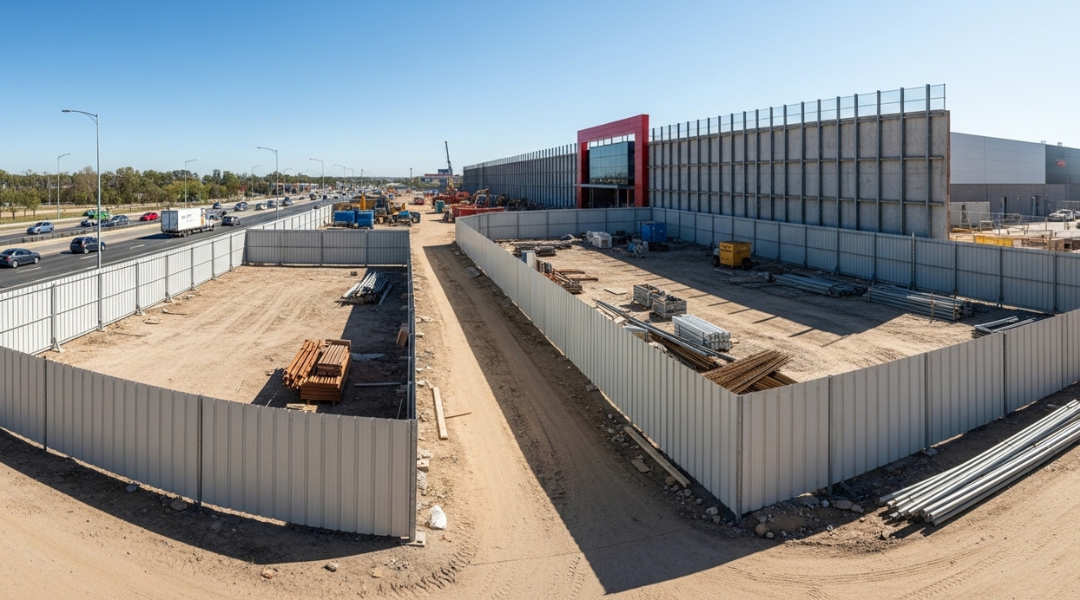
Larger or higher-risk projects—like commercial developments or sites near busy roads—often require reinforced materials, taller panels, or anti-climb features. Permanent fencing becomes cost-effective on projects lasting more than a year because it offers better stability and lower replacement frequency.
Environmental factors also matter. Sites in high-wind or high-traffic areas benefit from anchored, heavy-duty materials, while low-risk areas may use modular barriers. Matching the fence to the project’s real-world challenges helps you balance safety, cost, and efficiency.
When Overlapping Systems Are Required on Active Sites
Sometimes you need both temporary and permanent fencing at once. This happens on large, phased projects where parts of the site are still under construction while other sections are finished. Temporary sections protect workers and equipment in active zones, while permanent fencing secures areas already turned over or occupied.
You can also use overlapping systems during transitions, such as replacing temporary barriers with permanent ones. Keeping both active ensures no lapse in site security or compliance.
In some cases, combining systems reduces labor costs and minimizes downtime. A clear schedule and regular inspections help you coordinate installation safely while maintaining continuous perimeter protection.
Temporary Versus Permanent Fencing System Differences
Material strength, setup time, and longevity define whether a fencing system fits a short-term job or a lasting site enclosure. You need to judge safety, cost, and handling based on how long your project will last and how often the fence may need to move or adapt to site changes.
Panel Fencing, Chain-Link Rolls, and Driven Posts
You will often see panel fencing and chain-link rolls used for temporary fencing solutions. Panel fencing consists of steel or welded-wire panels that connect with clamps or couplers. You can rent a fence like this for construction or event use since it moves easily and installs quickly. It provides moderate strength and visibility while keeping people and vehicles out of restricted zones.
Chain-link rolls form the base of many permanent and temporary fence rentals alike. Rolled chain-link meshes onto steel posts and provides more continuous coverage than panels. When anchored by driven posts set into concrete or soil, the structure becomes semi-permanent. This type of anchoring offers better wind resistance and higher security but limits mobility.
Temporary fence rental panels may use bases filled with concrete or sandbags rather than driven posts. This keeps surfaces intact when you must remove fencing after the project ends. Permanent chain link fencing, in contrast, uses fixed posts that can last years with basic maintenance.
| Fencing Type | Common Use | Lifespan | Installation Effort |
|---|---|---|---|
| Panel Systems | Short-term construction, crowd control | Weeks to months | Low |
| Chain-Link Rolls | Long-term security, perimeter control | Years | Medium to High |
Mobility, Anchoring Methods, and Installation Timelines
A temporary fence emphasizes speed and mobility. You can install panel fencing with modular feet within hours and relocate it on short notice. This flexibility suits changing construction phases in Riverside or San Bernardino where site boundaries shift as work progresses.
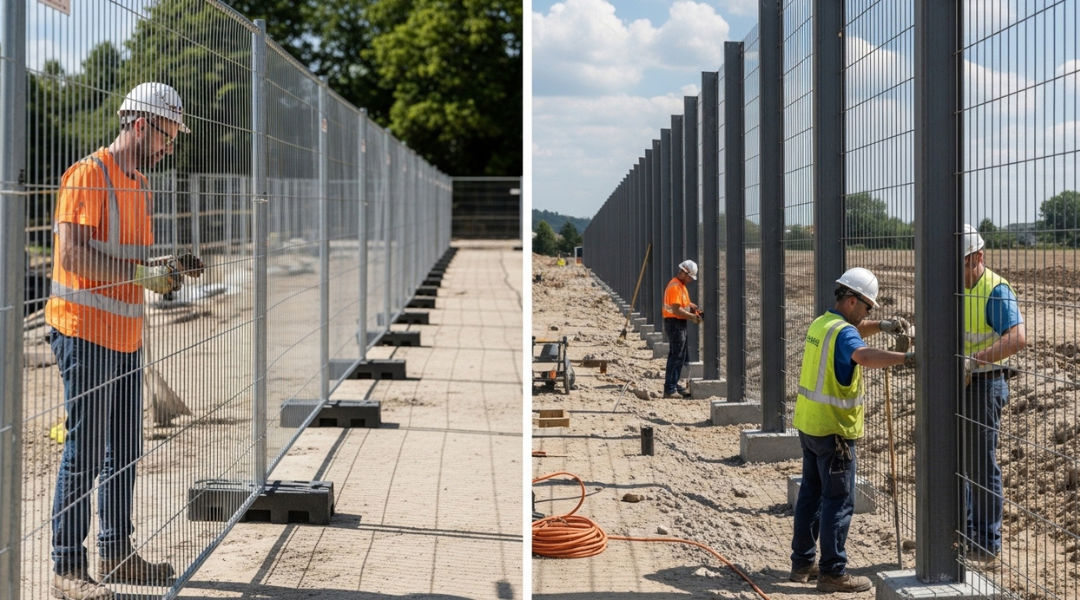
Permanent fences require fixed anchoring such as driven steel posts or concrete footings. Though slower to install, they resist displacement and provide more durable containment. The tradeoff is that removing or repositioning these systems later can be costly.
Anchoring methods matter for both safety and compliance. Lightweight blocks or sandbags work for portable fence rental systems but may not meet high-wind standards. Projects requiring permit-approved barriers often specify deeper anchorage or improved bracing to ensure structural integrity.
Installation timeline differences can range from hours for small portable setups to several days for large permanent enclosures. Planning your schedule and rental duration around those timeframes keeps labor and rental costs predictable.
Transition Points from Temporary to Fixed Structures
Some projects start with temporary fencing during early site grading, then later convert to permanent chain link fencing once crews complete major groundwork. You can reuse sections of modular fence or transfer components to new anchor points if materials remain in good condition.
A clear transition plan reduces downtime between stages. Schedule the removal of portable barriers after heavy equipment exits and before landscaping or paving work begins. Ensure that any temporary fence rental company coordinates pickup or replacement with your construction timeline.
When converting to fixed fences, compliance checks become important. Local regulations in Riverside and San Bernardino may require specific post depths, line markers, and height limits for permanent barriers. Choosing materials that match both temporary and permanent needs—such as galvanized chain-link panels—can shorten the transition.
Knowing when and how to move from flexible barriers to lasting structures helps you control costs and maintain safety through all project phases.
Regulatory and Site Conditions in Riverside and San Bernardino
You must consider both local codes and environmental factors when choosing fencing materials for active construction areas. The rules define what types of barriers, heights, and anchoring are acceptable, while ground and site conditions influence how you install and maintain them.
Municipal Code Expectations and Safety Compliance Triggers
City and county codes in Riverside and San Bernardino require that all temporary fencing meet safety and visibility standards during construction or grading. In Riverside, the Municipal Code includes provisions under Titles 16 through 19, covering building, grading, and zoning, which may apply when your project impacts sidewalks, adjacent lots, or noise-sensitive areas.
You must obtain approval from the Building and Safety Division before beginning work. Temporary fencing often becomes a compliance trigger when excavation, demolition, or outdoor storage create potential hazards. In some cases, the Planning Division requires protective fencing to shield trees, archaeological areas, or cultural sites during site work.
Be prepared to demonstrate that your fencing maintains pedestrian safety, does not obstruct drainage, and withstands moderate wind loads. Using heavy bases, properly driven posts, and sandbags at fence corners improves stability and helps meet city safety expectations.
Public Right-Of-Way, Pedestrian Protection, and Liability Zones
Fencing within or near a public right-of-way requires careful placement to avoid blocking streets or sidewalks. Both cities mandate clear pedestrian paths and require reflective visibility panels or barrier mesh for night safety. You should maintain at least four feet of unobstructed walking width unless an approved walkway detour is provided.
Failure to secure fences within these zones can lead to liability claims if accidents occur. Make sure your site plan marks all zones that border public areas. Clearly identify restricted zones with signage and durable fencing such as chain-link with weighted bases.
Where work borders traffic areas, attach edge barriers, cones, and sandbagged bases to prevent fence movement. Check inspection schedules and code updates through each city’s Building and Safety or Public Works divisions to stay current on enclosure requirements.
Terrain, Soil Variability, and Staging Limitations
The terrain across Riverside and San Bernardino varies from compact clay soils near valley floors to loose sand and gravel in hillside and desert areas. These conditions affect fence footing depth, post spacing, and anchoring methods. On sloped or uneven ground, longer fence sections need cross braces or sandbag anchors for wind protection.
Grading areas with unstable or saturated soils may limit vehicle access and increase the need for temporary staging zones to store materials and fence panels. Keep heavy equipment off soft soil until it is compacted and inspected.
In low-lying sites, install stormwater control measures alongside fencing, such as silt barriers or sandbag berms, to control runoff. Proper drainage prevents soil erosion around fence posts, keeping your site safer and easier to maintain.
Tradeoffs Between Flexibility, Security, and Cost Control
Selecting the right fencing solutions for your construction site requires balancing budget, adaptability, and safety standards. Each option—temporary or permanent—offers measurable benefits and limitations that affect how you control access, reduce risk, and manage project timelines.
Short-Term Adaptability Versus Long-Term Durability
Temporary fence rentals provide quick setup and removal, making them ideal for projects with short schedules or changing layouts. You can easily shift panels to adjust site boundaries or create new access points without interrupting operations. This flexibility keeps work moving, especially in fast-paced jobs across Riverside and San Bernardino.
Permanent fences, on the other hand, deliver lasting strength and weather resistance. Materials like chain link or wrought iron withstand wear, offering security for multi-year developments or facilities that will operate on-site after construction. Although permanent options require higher upfront investment, they reduce repeated rental costs and offer stable containment over time.
| Feature | Temporary Fence | Permanent Fence |
|---|---|---|
| Installation Time | Hours or less | Several days |
| Cost Type | Short-term rental | Upfront ownership |
| Durability | Moderate | High |
Your choice depends on how long you plan to secure the area and how often site boundaries change.
Theft Deterrence Versus Ease of Site Access
Security at construction sites must strike a balance between restricting intruders and maintaining daily efficiency. Sturdy permanent fencing provides strong barriers that deter theft and vandalism, especially when paired with locked gates, lighting, or cameras. It helps safeguard stored materials, fuel tanks, and parked equipment.
Temporary fence rentals support easier access for truck deliveries, contractors, and inspections. Panels and gates can be repositioned or removed quickly, which improves traffic flow but can slightly reduce overall protection. Using add-ons like privacy screens or anti-climb mesh helps raise security without sacrificing mobility.
When you need frequent deliveries or shifting work zones, temporary fencing can help you stay efficient. For fixed perimeters where long-term prevention is critical, permanent fencing better protects your investment.
Reusability of Materials Versus Project-Specific Builds
Temporary fencing stands out for its reusable design. Rental providers often clean, repair, and redeploy panels between projects, reducing material waste. You save on maintenance and avoid storage costs once the job ends. In an area with many short-term builds, like commercial expansions or roadwork in Riverside County, rentals offer an economical and sustainable choice.
Permanent fencing, however, is a one-time installation tailored to your property’s specifications. It integrates with terrain, landscaping, and structural features to create a secure perimeter that remains after construction. While it requires periodic upkeep, it boosts the long-term value of your property.
Choosing between reusability and permanent structure depends on how long your security needs last and whether the fence serves only the construction phase or becomes part of the finished site.
All Counties Fence & Supply View on Construction Site Demands
Efficient fencing at construction sites depends on how well you manage staging, coordinate with multiple crews, and ensure every barrier meets safety codes. You need systems that can move as projects shift while staying strong enough to protect property, workers, and the public.
Managing Fencing Across Phased Construction Timelines
Construction schedules often progress in stages, requiring fencing that adapts as each phase opens and closes. All Counties Fence & Supply offers modular and reusable fencing materials so you can install, relocate, and reuse panels with minimal downtime. Their team understands that early site preparation and late-stage finishing often need different levels of access control.
You can use temporary chain link panels, tube steel frames, or vinyl systems depending on site needs. Lightweight sections help during foundation work, while reinforced boundaries fit better once equipment and materials increase. Coordinating fence placement with project phases reduces wasted labor and keeps traffic routes clear for deliveries.
They also recommend clear documentation and labeling of each fenced zone. Doing so helps you track equipment and material storage areas through changing layouts, avoiding costly relocations later.
Adjusting Systems to Multi-Contractor Site Activity
Busy construction zones often involve multiple contractors sharing one site. Managing those overlapping activities takes careful planning of access points, staging areas, and safety zones. All Counties Fence & Supply focuses on creating layout plans that give each trade controlled entry while separating hazardous or restricted workspaces.
You can set up color-coded entrance gates for contractor groups or trade teams to simplify compliance with safety plans. When several crews operate daily, using moveable fence gates speeds up transitions between tasks without sacrificing control.
To improve communication, the company encourages you to maintain an updated site map showing every active fence line and gate location. In complex multi-trade projects, this helps limit cross-traffic and ensures emergency routes stay open.
Balancing Rapid Deployment with Structural Reliability
Temporary fencing must install quickly but still meet code requirements for stability and security. All Counties Fence & Supply, with more than 40 years of regional experience, balances fast setup times with proper anchoring and material choice.
You can select from driven-post chain link systems, freestanding weighted panels, or poured-base anchors depending on soil type and wind exposure. Using high-quality hardware and welded joints minimizes maintenance, keeping your site secure during long operating periods.
Their crews work under verified licenses for general building and ornamental metal installation, ensuring reliable service for both short-term and permanent installations. Each fence, even temporary, is built to handle the region’s heat, dust, and wind so you avoid typical repair delays and safety risks common on active job sites.