Repair the fence if the posts are solid and the damage sits in a handful of sections. Replace it if posts have failed at grade, if rot or wind damage has spread across a third or more of the run, or if it’s over 20 years old and failing in more than one place. Here’s how to tell which one you have.
Start at the posts, not the panels
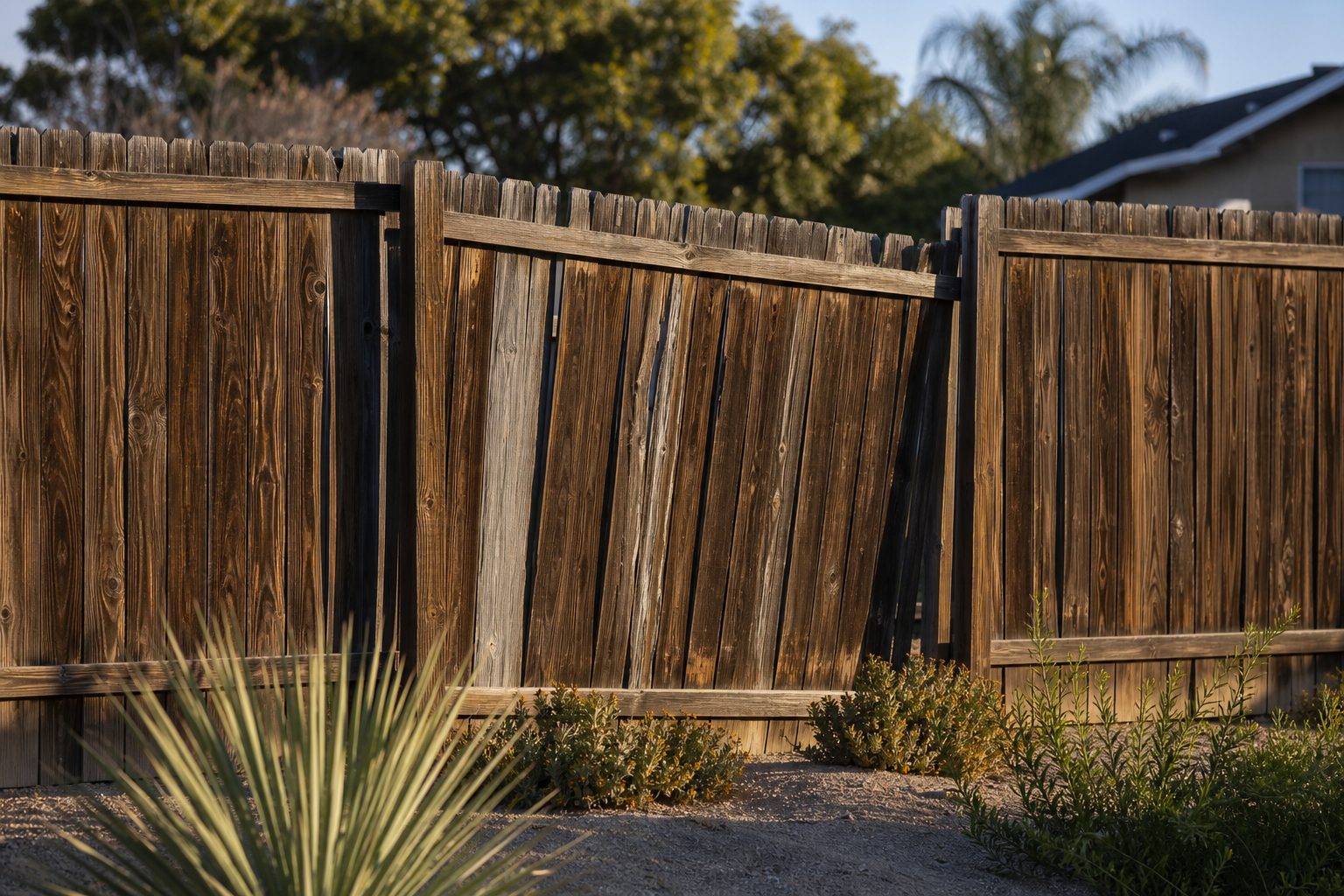
Panels are what you notice first: a split board, a leaning section, a gap where a picket used to be. They’re also the least useful thing to judge a fence by. The posts decide everything.
Push each post at chest height, where a person leaning on the fence would push. A sound post barely moves. One that rocks, or that moves the whole section with it instead of flexing on its own, has lost its grip in the ground.
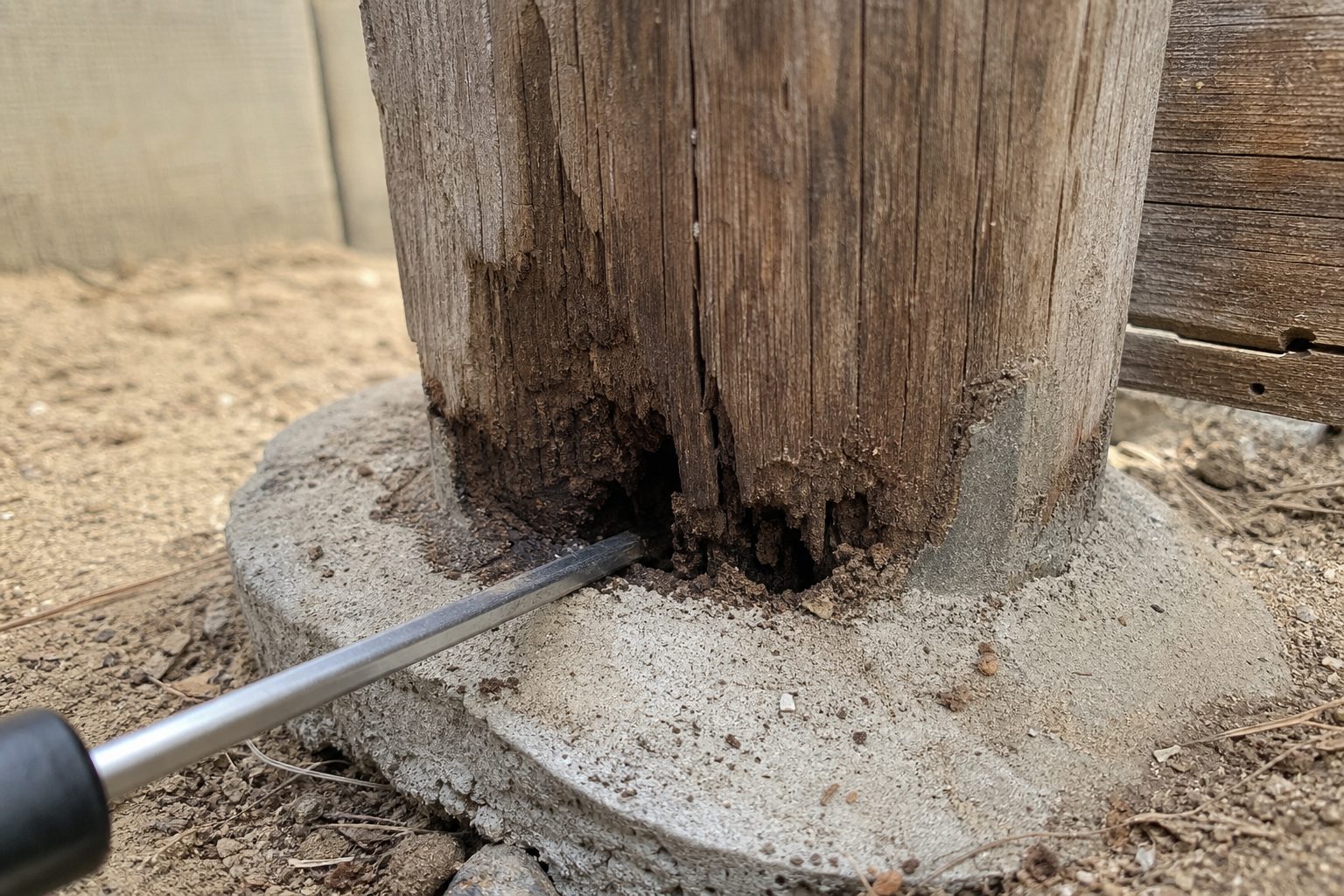
Then check at grade, where the post meets the soil and the concrete collar. Push a screwdriver into the wood right at that line. Sound wood resists. Wood that’s gone soft, where the screwdriver sinks in with almost no pressure, has already failed, even if the post above ground still looks fine.
If the posts are sound, repair is on the table no matter what the panels look like. If the posts have failed at that section, you’re replacing that run. The panel condition doesn’t change the outcome.
What actually kills fences in the Inland Empire
Four failure modes account for most of what shows up on a Riverside County fence.
Dry rot at the concrete collar. Water runs down the post and pools where wood meets concrete instead of draining away. The post looks fine a foot above the ground and is soft or gone right at the collar line. This is the single most common failure point on older wood fences here.
Termites and dry-wood pests in older redwood. Rot and termite damage look similar from a distance, but they’re not the same problem and the giveaway is in the texture. Rot is soft, spongy, and often darker than the surrounding wood, and it crumbles with the grain when you press it. Termite galleries run through the wood in tunnels, and you’ll often find small pellet-like frass near the damage. If you’re not sure which you’re looking at, read the common signs of fence rot first.
Santa Ana wind racking. A solid 6-ft privacy panel acts like a sail in a wind event. The load doesn’t hit the panel evenly. It transfers straight to the posts and the fasteners, which is why wind damage often shows up as racked panels and popped nails rather than snapped boards.
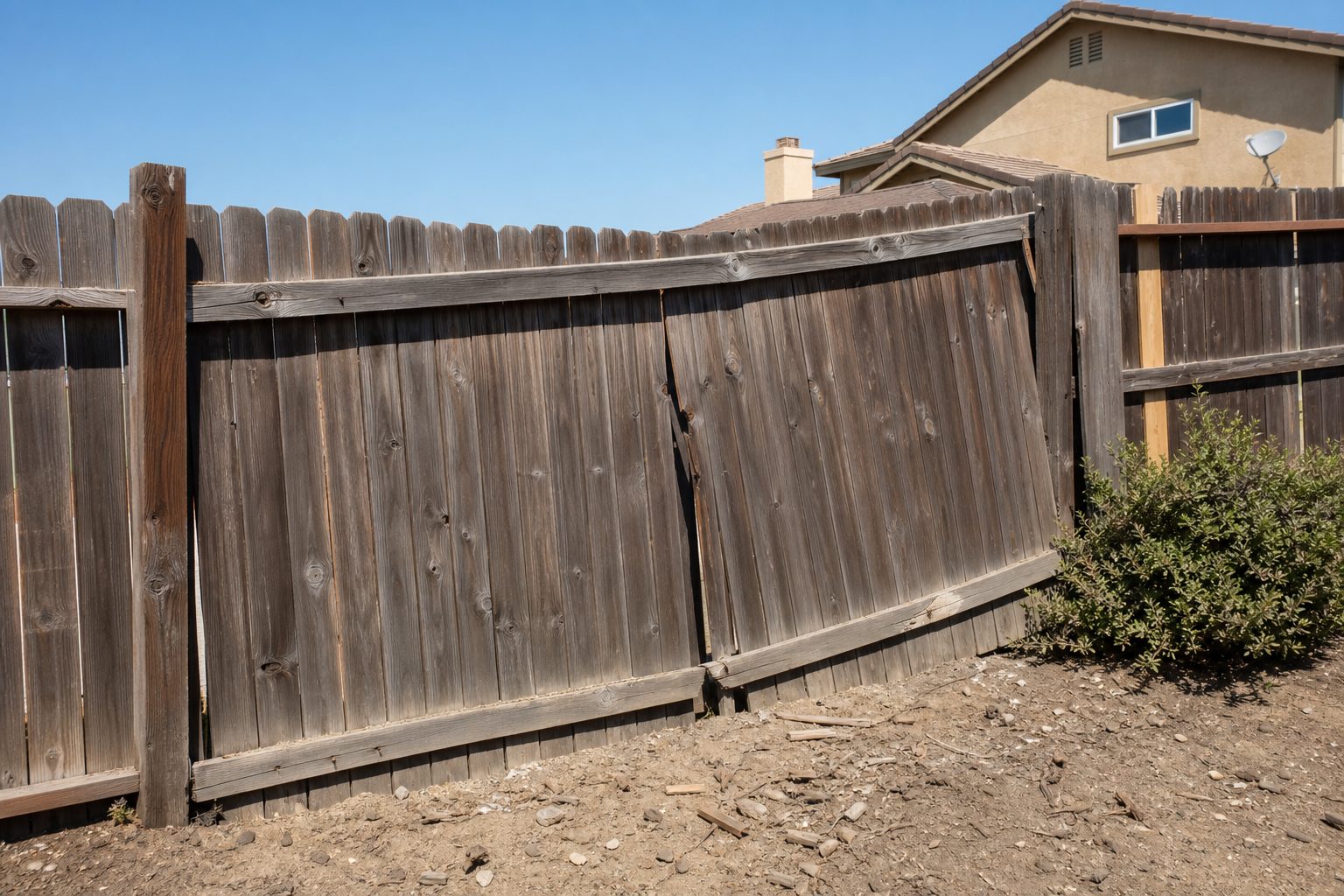
Soil movement and sprinkler overspray. Clay and decomposed-granite soils here shrink and swell with moisture, which works posts loose over years rather than all at once. Sprinklers set too close to the fence line accelerate the same process by keeping the collar area wet long after the rest of the yard has dried.
How much of the fence is affected?
This is a judgment call, not a formula, but the rule of thumb holds up: scattered damage across a small share of the run is a repair. Damage spread across a third or more of the run, or damage that keeps turning up in new sections after you’ve already fixed the last one, means the fence is at the end of its working life, not just having a bad year.
The reasoning isn’t just about the wood. A crew mobilizing to fix three scattered sections costs about the same as mobilizing to replace a full run, so the math tips toward replacement faster than most people expect. And if a run went up in the same season, the sections you haven’t fixed yet are on the same clock as the ones that already failed. They’re just a year or two behind.
Repair vs. replace: the signals at a glance
| Signal | Points to repair | Points to replacement |
|---|---|---|
| Posts | Solid at grade, no give when pushed | Soft or shifting at the concrete collar |
| Damage spread | One or two sections, isolated | A third or more of the run affected |
| Age and pattern | Recent, single-event damage (storm, impact, hardware) | 20+ years old, or repaired twice in the last two years |
| Cause | A one-time event | An ongoing failure mode: rot, termites, soil movement |
| Compliance | Still meets current pool-barrier or HOA requirements | No longer meets height, gap, or self-closing rules |
Will the repair match?
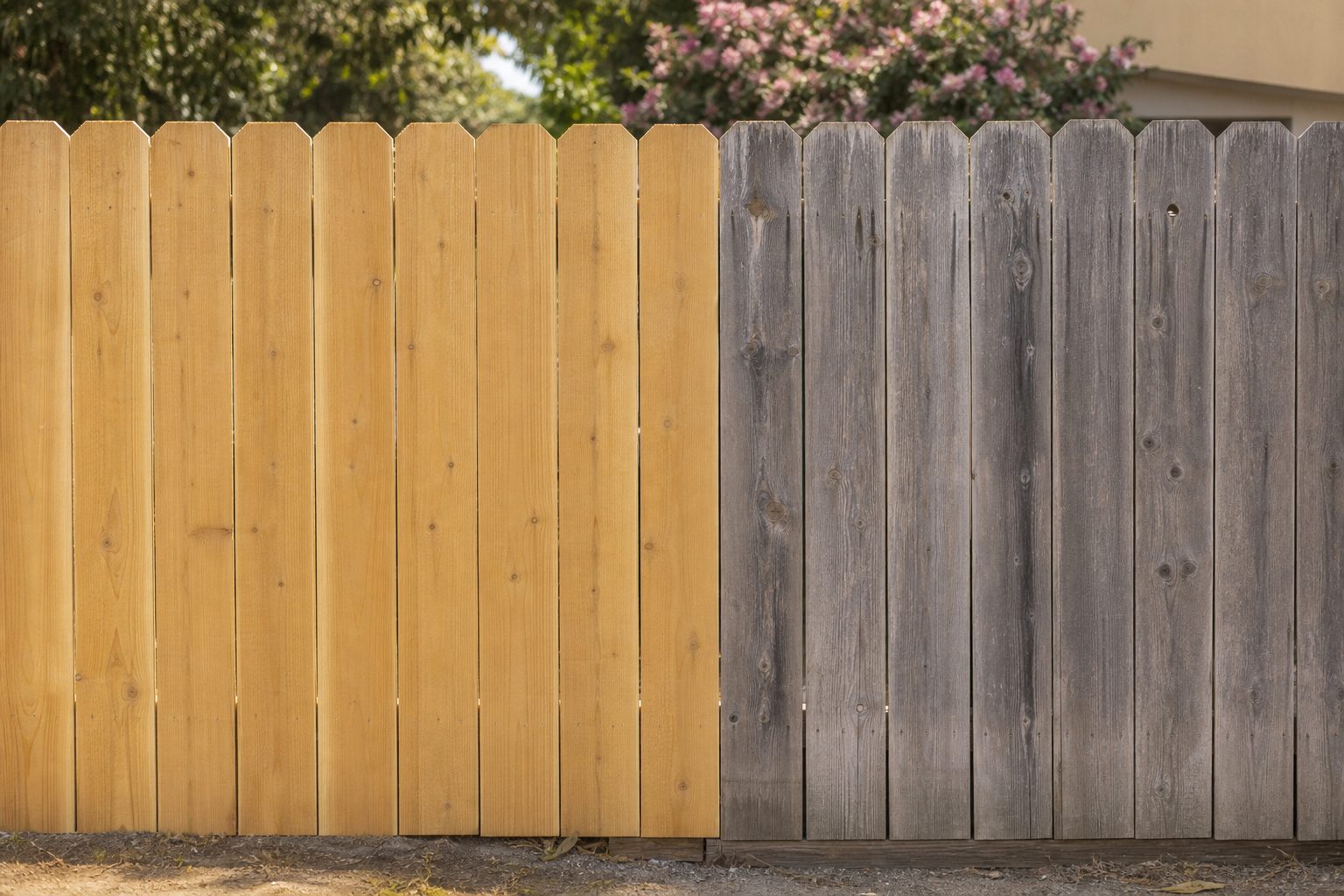
Be honest with yourself about this one. Redwood and cedar weather and silver over years, and new boards next to a 15- or 20-year-old run will look different, sometimes for a full season or two before they weather in. Board widths and profiles also drift over time, so a board that matches the old fence exactly may not be what’s currently available.
Your real options: replace the whole visible elevation so the color is consistent, stain the entire run so old and new match going forward, or accept the mismatch on a section that’s out of the sightline from the house or street. None of these is wrong. It depends on whether the fence needs to look right or just work right. If you’re leaning toward replacement, see the wood fence options we carry.
When repair is clearly the right call
- One or two sections down after a windstorm, with the rest of the run intact
- A gate that’s dragging or won’t latch, while the fence itself is sound
- A handful of rotted pickets or a split top rail
- A single leaning post that resets cleanly once you dig it out
If your situation matches one of these, it falls under common fence repairs rather than a full rebuild.
When replacement is clearly the right call
- Posts have failed at grade across most of the run, not just one or two
- The fence is over 20 years old and rot or termite damage keeps showing up in sections you haven’t touched yet
- You’ve paid for repairs on the same run twice in the last two years
- A pool barrier no longer meets height, gap, or self-closing requirements
- A new dog, a new pool, or an HOA notice has changed what the fence has to do
If more than one of these applies, check the signs a wood fence is done before you spend money on a repair that won’t hold.
Ask what you need the fence to do
Before you price anything, be honest about the job the fence is actually doing. A wrought iron fence that has started to rust still contains the dog and still marks the line. The rust is a maintenance item, not a failure. A wood privacy fence that has gone grey and blotchy still stands up fine, but it has stopped doing the one thing you put it there for.
Two questions settle most of these: what do I need this fence to do, and does it still do it? If the answer is yes and the damage is cosmetic, repair and move on. If the fence has stopped doing its job, whether that is privacy, containment, or a pool barrier that no longer closes, that is a different decision, and it usually isn’t a patch.
What to check before you call anyone
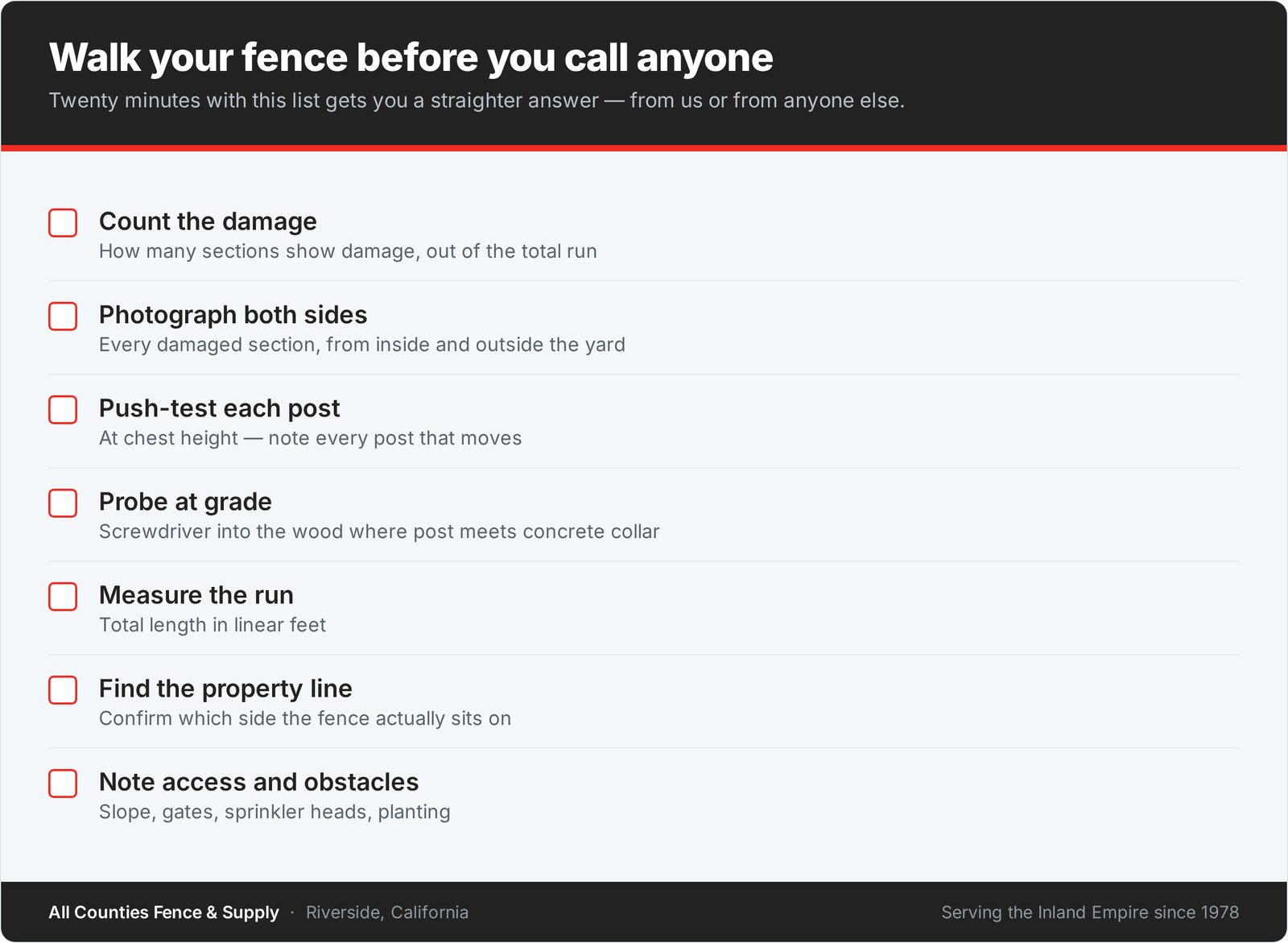
Walk the fence line first. It takes twenty minutes and it means whoever you call, us or anyone else, can give you a straighter answer.
- Count how many sections show damage, out of the total run
- Photograph both sides of every damaged section
- Push-test each post at chest height and note which ones move
- Probe at grade with a screwdriver where the post meets the concrete collar
- Measure the total length of the run in linear feet
- Confirm which side of the property line the fence actually sits on
- Note slope, access, and anything in the way: sprinkler heads, planting, gates
Permits, HOA and the property line
A like-for-like repair usually doesn’t trigger the same requirements as a new fence, but a height change or a full replacement can, and the rule depends on where you are. City of Riverside and unincorporated Riverside County apply different standards, and cities amend these rules over time. Confirm the specifics against the Riverside permit and height rules, and check with your city’s planning counter before you build.
If the fence sits on the property line, California’s Good Neighbor Fence law (Civil Code §841) presumes both owners share responsibility for it and requires 30 days’ written notice before one owner starts work. That’s a starting point, not legal advice, and it’s a big enough topic that it gets its own full explainer separately. If your neighbor disagrees about whose fence it is, a survey settles the question faster than a conversation does.
Frequently asked questions
Can you replace just one section of a fence?
Yes, if the posts on either side of that section are sound. A single bad section between two solid posts is a straightforward swap. Where it gets harder is matching the wood. New boards look different from older ones until they weather, which usually takes a season or two outdoors.
How long does a repaired fence last?
That depends on what failed and why. If the posts are sound and you’re only replacing panels or hardware, the repair should last as long as the rest of the run. If rot or wind damage turns up in new sections within a year or two, the whole run is likely at the end of its life, not just the part you fixed.
Is a leaning fence dangerous?
It can be, especially near a driveway, walkway, or pool. A post that’s shifted at the base has lost its footing in the soil, and the lean usually gets worse with the next wind event, not better. Treat a leaning fence as something to check soon, not something to watch and wait on.
Do I need a permit to replace a fence in Riverside?
It depends on the height, the location, and which jurisdiction you’re in. City of Riverside and unincorporated Riverside County apply different rules, and cities amend them over time. A like-for-like repair usually doesn’t trigger the same requirements as a full replacement or a height change. Confirm with your city’s planning counter before you build.
Who pays when the fence is on the property line?
California’s Good Neighbor Fence law (Civil Code §841) presumes both property owners share responsibility for a boundary fence, and requires 30 days’ written notice before one owner starts work. This isn’t legal advice, it’s a starting point. If the fence sits on the line and your neighbor disagrees, a survey settles the question before a conversation does.
If you’d rather not walk the line twice, once to figure out what’s wrong and once to get it fixed, we’ll come look at it with you and put what we find in writing. All Counties Fence & Supply, 930 Main St, Riverside. Call (951) 780-9300 or ask for a free estimate.