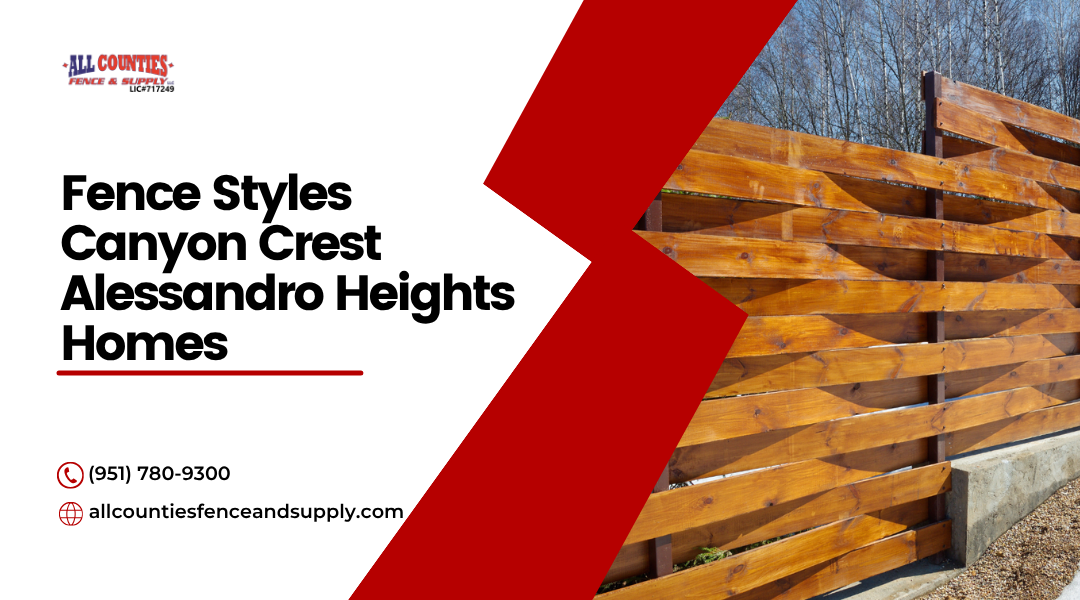
Homes in Canyon Crest and Alessandro Heights feature distinctive architecture with elegant lines, textured exteriors, and scenic surroundings. The right fence enhances these qualities rather than competes with them. Choosing a fence style that aligns with your neighborhood’s character strengthens curb appeal, preserves architectural harmony, and provides a balanced mix of privacy and security.
In Canyon Crest, modern stucco homes and lush landscapes often pair well with sleek horizontal wood or minimalist iron fences. Meanwhile, the grand estates and mature gardens in Alessandro Heights benefit from classic materials like wrought iron, stone, or high-quality vinyl that echo their timeless charm. Each material and design choice should reinforce the visual rhythm already present in the neighborhood’s streetscape.
Your property’s boundaries deserve the same design attention as your home’s facade. A well-matched fence enhances not only appearance but also function—defining space clearly while maintaining continuity with neighboring homes. When your fence reflects the spirit of your community, it transforms your property into a seamless part of Canyon Crest or Alessandro Heights’ refined landscape.
Architectural Context of Neighborhoods
Canyon Crest and Alessandro Heights share a setting of hillside views, large lots, and well-defined residential design standards. You experience a mix of modern and traditional architecture influenced by elevation, topography, and the desire for privacy and scenic perspectives.
Predominant Home Styles and Visual Language
In Canyon Crest, many homes reflect modern-suburban and contemporary Mediterranean influences. You see stucco finishes, tiled roofs, and neutral color palettes that blend with the natural terrain. Craftsman and ranch-style houses appear in older sections, showing the area’s mid-20th-century development history.
Alessandro Heights leans toward custom, luxury homes with Mediterranean Revival, Spanish Colonial, and modern estate styles. Architectural features often include arched windows, wrought iron details, and extensive use of stone or brick. The large facades and tall entryways emphasize formality yet remain warm through natural materials and balanced proportions.
Visual harmony across both neighborhoods depends on color, texture, and proportion rather than identical design. You can notice consistent landscaping themes—mature trees, terraced gardens, and drought-tolerant plants that suit Riverside’s dry climate.
Lot Size, Elevation, and Streetscape Influence
Elevation and lot size strongly shape how each property appears from the street. In Alessandro Heights, homes sit on expansive parcels, often above street level, giving clear views of the valley. Long driveways, gated entries, and varied setbacks create a feeling of space and privacy.
In Canyon Crest, the slopes and curved streets lead to tiered lots and a more varied skyline. Smaller lots near parks or the town center balance private yards with community accessibility. Streetscapes emphasize openness, and split-level designs adapt to the hilly terrain.
Both neighborhoods rely on topography to define visual rhythm. You experience broad vistas, layered vegetation, and consistent fencing and walls that frame homes without blocking the natural flow of the landscape.
Material and Design Alignment
Selecting the right fence materials and forms ensures architectural consistency and enhances property value. Choosing finishes, colors, and structures that reflect the surrounding landscape and existing home style strengthens harmony and curb appeal in Canyon Crest and Alessandro Heights neighborhoods.
Wood, Vinyl, and Iron in Upscale Residential Settings
High-end neighborhoods often feature homes with distinct architectural details and landscaped exteriors. Wood fences—especially redwood and cedar—fit naturally with craftsman and traditional designs. They offer warmth, easy repair, and customizable stains that match surrounding plant tones. For low-maintenance durability, vinyl fencing provides a sleek finish suitable for newer construction where clean lines matter.
Iron fencing suits estates and Mediterranean-style homes. Wrought iron, sometimes powder-coated black or dark bronze, emphasizes structure without visual heaviness. Many homeowners pair iron with masonry or stucco bases for added strength.
| Material | Best For | Maintenance Level |
|---|---|---|
| Wood | Natural, traditional homes | Moderate |
| Vinyl | Modern, clean lines | Low |
| Iron | Formal, Mediterranean estates | Moderate to High |
When viewed together, these materials define not just property limits but also design intent, reinforcing the home’s overall architectural language.
Openness Versus Enclosure in View-Oriented Properties
Hillside and canyon-edge homes often balance privacy with panoramic sightlines. If you value open views, horizontal slat fences or perforated metal panels work well. They preserve sightlines while still marking boundaries. Using lighter stains or neutral tones allows fences to blend with the sky and landscape instead of blocking them.
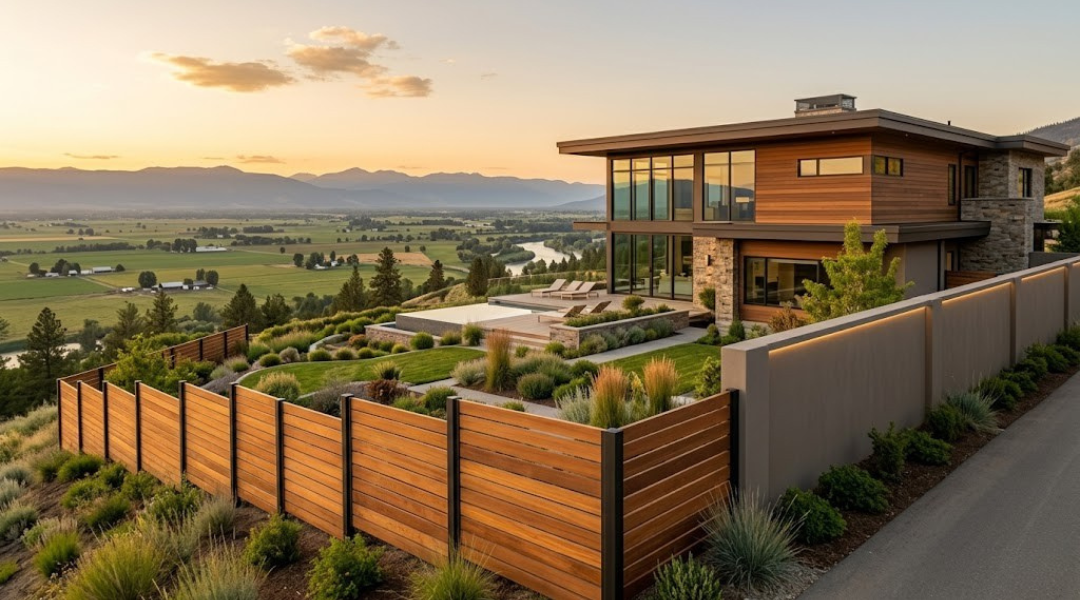
For more enclosed areas, especially yards with active outdoor spaces, stucco walls, tall hedges, or composite privacy panels create stronger separation. You can vary height and spacing to frame specific views while maintaining seclusion. Mixing open and closed sections across your property—for example, iron in front and solid fencing along sides—helps achieve visual rhythm without obstructing the scenic backdrop.
Aesthetic Consistency Across Fence Projects
Maintaining visual consistency enhances the value and appearance of homes in Canyon Crest and Alessandro Heights. You create a unified neighborhood look by aligning fence styles, materials, and finishes with local architectural themes and landscape patterns.
Translating Neighborhood Patterns Into Fence Selections
Canyon Crest homes often feature Mediterranean, contemporary, or craftsman architecture, while Alessandro Heights blends ranch and modern estate styles. Study how these patterns influence colors, textures, and proportions before finalizing a design. A stucco privacy wall with stone caps may complement a terracotta-roofed home, while a horizontal cedar fence with metal accents fits a sleek modern property.
Walk the neighborhood and note repeating traits such as post spacing, stain tones, or gate designs. Recording these details in a simple table can guide selection:
| Home Style | Compatible Fence Material | Finish or Accent Suggestion |
|---|---|---|
| Mediterranean Villa | Stucco + Wrought Iron | Earth tones, curved elements |
| Modern Estate | Cedar + Steel | Matte black, clean lines |
| Ranch or Traditional | Natural Wood or Split Rail | Neutral stain, low profile |
When you echo these shared details, your fence looks intentional and integrated rather than isolated.
Balancing Design Intent With Installation Realities
Design harmony matters, but practicality determines project success. You need to match your visual goals with feasible construction methods and local regulations. Many neighborhoods in this area fall under HOA guidelines or city setback rules, so always verify height limits and approved materials before purchase.
Material availability and terrain also affect what can be built. Uneven lots may require stepped fence panels or retaining walls, which change the visual rhythm. Coordinate with contractors to confirm that the intended patterns—like alternating wood widths or decorative inserts—remain consistent across slopes.
Refine your plan by choosing materials that weather evenly and require similar upkeep. By anticipating these realities, you keep your fence cohesive in both design and longevity.
Privacy, Security, and Visual Trade-Offs
Balancing privacy, safety, and design harmony can be challenging in upscale neighborhoods with strong architectural identities. The types of fences that work best depend on your home’s layout, sightlines, and how much visibility you want to preserve.
When Privacy Disrupts Architectural Cohesion
You want privacy, but tall solid fences can overpower homes with open, elegant architecture. In Canyon Crest, where Mediterranean and contemporary styles dominate, a full-height wood or composite barrier may feel disconnected from stucco facades or glass-heavy exteriors.
A good approach is to select materials and colors that mirror key elements of your home—such as matching fence stains to window trim or using stone bases that reflect your façade texture. Combining partial screening like horizontal slats, decorative metal panels, or mixed-material designs can protect privacy without closing off the yard completely.
| Material | Privacy Level | Best For |
|---|---|---|
| Cedar or redwood | High | Traditional homes |
| Metal + wood combo | Medium | Contemporary styles |
| Frosted glass | Medium-high | Modern builds with open views |
Even small design adjustments—like spacing boards strategically or layering shrubs along the inside line—can make a fence feel integrated instead of isolated.
Security Needs Versus Aesthetic Continuity
Higher-end neighborhoods often face the security challenge of maintaining safety without losing curb appeal. In Alessandro Heights, larger lots and exposed slopes make perimeter defenses important, but heavy barriers can appear severe.
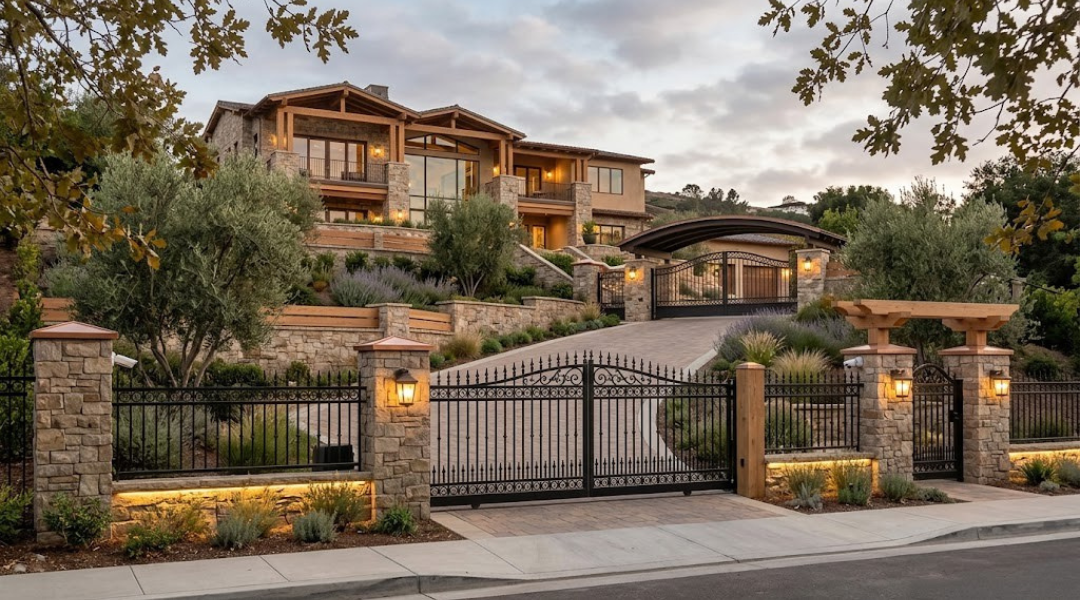
You can maintain security with height variation, lighting integration, and durable materials that blend with your property’s features. For example, reinforced metal frames coated in neutral tones offer strength while complementing stone or wood components.
Consider a layered plan:
- A decorative outer fence for appearance.
- A secondary interior gate or screen for real protection.
- Integrated cameras or motion lighting placed discreetly to avoid visual clutter.
These measures protect access points while keeping your property’s character intact, ensuring that safety and design function together instead of competing.
Boundary Conditions and Fence Style Choices
Local rules, terrain, and long-term performance shape which fences make sense for your property. You need to balance appearance with compliance and lasting function, especially where lot lines meet steep or irregular ground.
HOA Expectations and Informal Neighborhood Standards
In Canyon Crest and Alessandro Heights, many homes fall under homeowners’ association (HOA) oversight that limits fence height, materials, and colors. You usually must match the texture and tone of nearby fencing to keep visual harmony and property value consistent. Before starting construction, check for approved materials lists and height restrictions, which often range from 4 to 6 feet for perimeter fences and may differ along shared boundaries.
Informal neighborhood expectations matter as well. Even if your lot lies outside an HOA, nearby properties often set unspoken design standards. A classic stucco wall with wrought iron panels, or a low stucco-and-wood hybrid, tends to blend well with Mediterranean and modern-style homes in the area. Installing an ornate fence where most homes use simple horizontal lines can draw unwanted attention and may affect resale value.
When replacing or extending a boundary fence, document the boundary line and coordinate with neighbors. Shared fencing costs and maintenance responsibilities are common in Riverside’s residential zones. Keeping proportional height transitions between lots of different elevations also improves curb appeal and minimizes disputes.
Terrain, Slope, and Long-Term Material Performance
Your property’s slope and soil type strongly influence the stability and durability of a fence. In hilly areas like Alessandro Heights, stepped or terraced installations help maintain level panel lines and prevent uneven pressure along posts. Flat yards in Canyon Crest can support heavier materials such as masonry or composite panels without added retaining structures.
Moisture retention in clay soil shortens wood lifespan unless it’s pressure-treated or capped at the base. Vinyl and composite resist rot but can fade in direct sun over time. Metal fences—aluminum or powder-coated steel—handle both slope and temperature changes well but require secure anchoring to prevent shifting.
When selecting materials, compare their expected lifespans and care needs:
| Material | Avg. Lifespan | Maintenance | Slope Suitability |
|---|---|---|---|
| Wood (Cedar/Pine) | 10–20 yrs | Stain every 2–3 yrs | Moderate |
| Vinyl | 20–30 yrs | Wash seasonally | Good |
| Composite | 25–40 yrs | Low | Good |
| Steel/Iron | 20–50 yrs | Inspect for rust | Excellent |
| Masonry | 50+ yrs | Minimal | Moderate |
Choosing based on both appearance and terrain performance ensures your fence meets local aesthetics while holding up to Riverside’s sun, clay soil, and mild seismic activity.