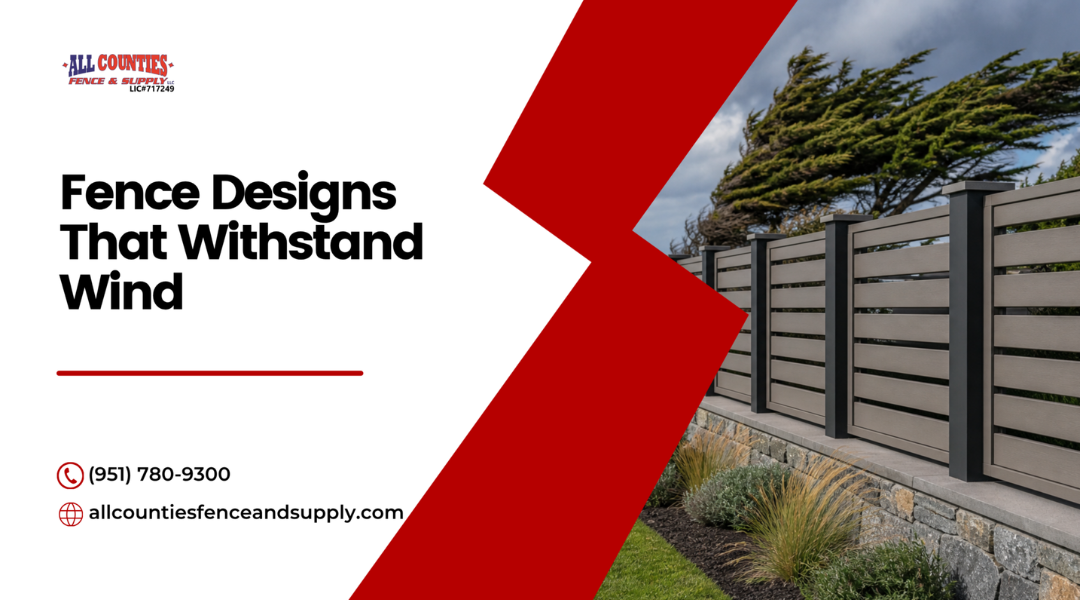
Strong winds sweeping across the slopes of Box Springs and Highgrove can turn fence selection into a practical engineering challenge. The hillside terrain amplifies gusts, testing the durability and design of any barrier you install. The best fence options for these windy hillside areas are those that allow airflow while maintaining strength—like shadowbox, louvered, or well-reinforced vinyl and metal designs built to manage pressure, not block it.
You want a fence that stands firm without constant repairs. Understanding how wind moves through your property helps you choose materials and structural layouts that prevent leaning posts or broken panels. Each slope and exposure pattern shapes how a fence performs under strain, so your design should match your site’s natural airflow.
At All Counties Fence & Supply, you can apply proven installation practices used throughout Riverside County to make your fence last. Whether you prioritize long-term stability, privacy, or cost efficiency, choosing the right combination of material and design helps your property stay secure and attractive through every storm season.
Wind Exposure Patterns in Box Springs and Highgrove
High winds along the Box Springs and Highgrove hills often combine regional valley airflows with local terrain effects. You experience frequent gusts from shifting mountain and coastal systems that make fence strength and air permeability key to minimizing damage.
Prevailing Wind Directions and Seasonal Intensity Shifts
The Inland Empire’s valleys act as natural channels that guide westerly and southwesterly winds through the Box Springs region. Most gusts move eastward from the Santa Ana River basin, where temperature differences between inland and coastal zones generate strong pressure gradients.
During late fall and winter, Santa Ana winds dominate. These dry, downslope winds accelerate through mountain passes, reaching speeds above 40 mph in exposed neighborhoods. In contrast, spring and summer bring gentler onshore breezes. These are cooler but more persistent and can wear down fence hardware over time.
You should factor in directional consistency when setting posts and rails. Aligning slatted or louvered panels at a slight offset from the dominant flow helps air pass through without stressing the supports. The most durable designs near Box Springs use shadowbox, horizontal slat, or ornamental metal fences because they balance airflow with structural stability.
Elevation, Slope, and Turbulence Amplification Effects
Box Springs Mountain rises steeply above the valley floor, creating uneven exposure zones. Homes on mid-slope or ridge sections face amplified turbulence, as air streams deflect upward and swirl across the hillside. Flat valley lots, by comparison, feel steadier but still experience strong boundary-layer winds during storms.
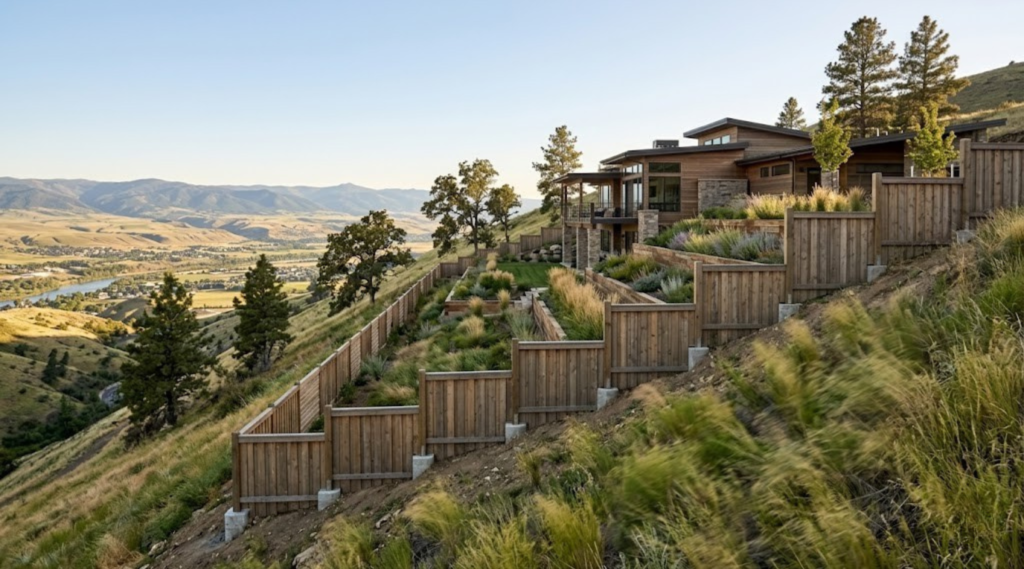
Wind uplift increases with elevation because air accelerates as it moves over terrain contours. This pushes against large, solid fence surfaces, making them prone to lift or tilt. Installing reinforced post footings—such as bell-bottom concrete piers—and burying them at least one-third of the fence height helps prevent leaning or uprooting.
Where the slope angle exceeds 10 degrees, staggered fence placement works better than continuous lines. This breaks wind flow into shorter segments and prevents structural resonance. In these exposed hillside areas, louvered vinyl or metal picket systems hold up better than standard wood panels due to their strength and controlled air permeability.
Structural Behavior of Fences Under Wind Load
Wind applies lateral pressure on your fence, producing uplift and bending forces that concentrate at the posts and their bases. Fence design for high-wind hillside areas depends on how air flows through or around the fence and how well the post system resists that force through depth, spacing, and anchoring.
Solid Panels Versus Permeable Designs in Airflow
Solid fences block wind completely, so they face higher wind loads. When the wind hits a solid panel, it creates pressure on the windward side and suction on the leeward side, pushing the fence outward. Vinyl or wood privacy fences look neat but act like walls, which can lead to failure if posts or footings are undersized.
Permeable designs like shadowbox, lattice, slatted, or picket fences allow air to pass through. Reducing the solidity ratio lowers pressure buildup and the bending moment on posts. Chain link fences and windbreak netting are especially effective on hillsides where gusts accelerate. They keep stability through flexibility, especially when mesh tension and top rails are properly maintained.
For windy areas, choosing a fence that balances airflow and privacy is key. A shadowbox fence or slatted metal system typically handles strong gusts better than a fully solid wall. These designs limit drag forces, helping you avoid leaning or overturning during storms.
Post Depth, Spacing, and Anchoring Considerations
Fence strength depends mostly on post depth and how the base transfers force into the soil. Each post acts like a cantilever beam—the deeper it’s buried, the more resistance it provides. In high-wind zones, bury posts at least one-third of the fence height, or about 30–36 inches for a six-foot fence.
Concrete footings, bolt-down shoes, or steel post anchors add extra support where digging deep isn’t possible. Soft or loose soil on hillsides may need wider or reinforced bases. Tight post spacing—about 6 to 8 feet—reduces the load per post, while wider spacing increases bending stress.
For the most reliable wind-resistant fencing, use corrosion-resistant posts with protective sleeves like Postsaver or connect wood fences using hurricane straps at key joints. In hillside conditions, angle braces and staggered post lines help distribute pressure evenly, preventing progressive failure across long runs of fence.
Material Performance in Hillside Wind Conditions
Hillside winds around Box Springs and Highgrove can shift direction quickly and create uneven pressure along fence lines. The strength and flexibility of the material play a major role in how well your fence resists bending, cracking, or loosening when exposed to constant gusts.
Wood, Vinyl, and Metal Response to Sustained Pressure
Wood fences offer natural strength but vary in wind performance depending on the design. Board-on-board, shadowbox, or lattice patterns help reduce pressure by allowing air to pass through. Solid panels, however, act like barriers and take full wind force. Moisture and age can cause wood to warp, which weakens structural alignment under continuous stress.
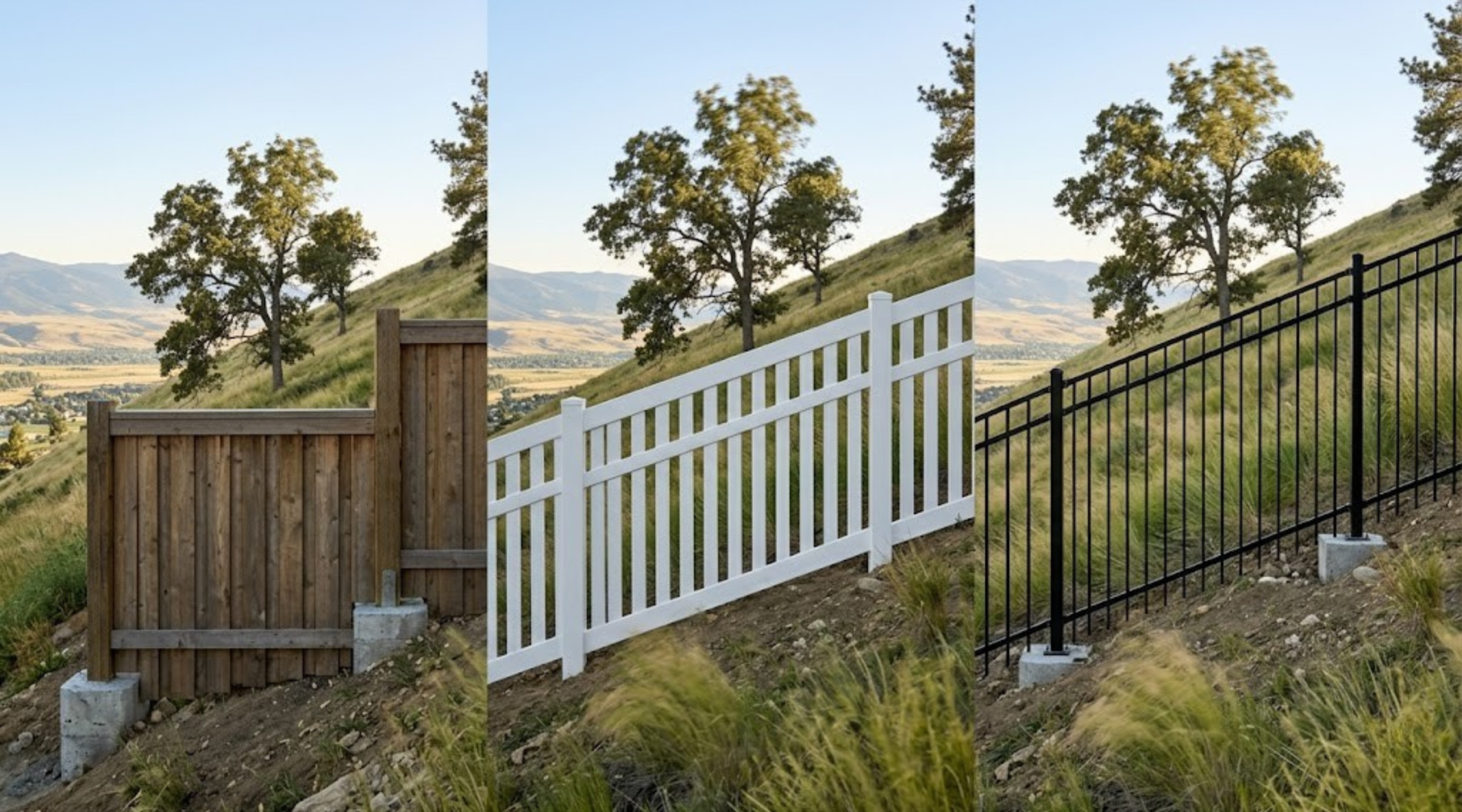
Vinyl fences stay stable when built with reinforced posts and internal rails. Their smooth surface sheds wind evenly, and designs with spacing between boards improve balance on slopes. Yet, solid vinyl panels may crack if hit by debris or subjected to sudden gusts.
Metal fences, including aluminum, steel, and wrought iron, hold up well to steady hillside winds. Open designs, such as picket or wrought-iron styles, allow air movement and minimize drag. Aluminum is lightweight and resists corrosion, while steel provides greater strength where wind loads are higher.
| Material Type | Wind Resistance | Maintenance | Common Weakness |
|---|---|---|---|
| Wood | Moderate to High (vented designs) | Regular sealing | Warping, rot |
| Vinyl | Moderate | Low | Cracking in cold or impact |
| Metal (Aluminum/Steel) | High | Low | Higher cost |
Flexibility, Fatigue, and Long-Term Structural Integrity
Constant wind exposure on sloped terrain introduces both fatigue stress and movement fatigue in fencing materials. Flexible materials, such as vinyl and composite fencing, can absorb vibrations and return to shape, reducing crack formation. However, repeated bending in poor-quality vinyl may cause brittleness over time.
Wood behaves differently. It absorbs and releases moisture, expanding and contracting with humidity and heat. Over seasons, this cycle weakens fasteners and joints, especially on uneven ground where sections experience uneven pressure. Properly treated wood with deep-set posts helps limit loosening.
Metal and composite fences excel in structural endurance. Aluminum’s pliability lets it absorb wind forces without permanent deformation, while galvanized steel and wrought iron resist joint fatigue. Composite fencing, made from fiber and resin blends, offers a balance between flexibility and rigidity that performs well in both coastal and elevated wind zones.
Applying Installation Realities from All Counties Fence & Supply
Working on steep and windy terrain calls for fence builders who understand both soil movement and long-term durability. You need to account for grade variation, water runoff, and wind exposure when choosing installation methods and materials that hold up over time.
Translating Terrain Constraints into Structural Adjustments
In hillside settings around Box Springs and Highgrove, slopes and loose soil make standard post-hole depths unreliable. Experienced installers, such as those at All Counties Fence & Supply in Riverside, often increase post depth, use concrete footings, and add gravel boards to anchor the lower portion of the fence while preventing erosion.
You should also consider staggered post spacing to absorb shifting earth pressure. For example:
| Slope Angle | Recommended Post Depth | Extra Reinforcement |
|---|---|---|
| 0–10° | 24–30 in. | Standard concrete fill |
| 10–20° | 30–36 in. | Gravel base + rebar |
| 20–30°+ | 36 in. or more | Gravel boards + steel brackets |
Wind adds another challenge. Fences with partial airflow, such as wrought iron or spaced wood pickets, reduce pressure on each panel. This structural adaptation keeps the fence from leaning or cracking during harsh weather.
Balancing Design Intent with Hillside Constructability
A fence can look good and still meet hillside demands when you balance aesthetics with engineering judgment. Instead of forcing a flat-top design onto sloped ground, opt for stepped or racked panels that follow the contour. This approach prevents awkward gaps near the ground and lowers stress on fasteners.
Material selection also matters. Vinyl, metal, and pressure-treated wood perform differently in wind and moisture. You might choose vinyl for low maintenance or steel framing for strength in high-wind zones.
When planning installation, request site-specific adjustments from your fence builders. Ask for clear explanations about post alignment, drainage, and soil preparation. Reliable contractors use measured data—not guesswork—to ensure fences remain stable through seasonal windstorms and hillside shifting.
Evaluating Tradeoffs Between Stability, Privacy, and Cost
Fences built on windy hillsides must balance their ability to resist wind pressure with the level of privacy and overall cost. Denser designs increase shelter and seclusion but also raise structural stress, which can shorten lifespan or require stronger materials. Costs can shift based on materials, post depth, and how often you perform maintenance.
When Privacy Increases Wind Resistance Risks
A solid privacy fence blocks views but also traps wind. On steep or exposed hillsides around Box Springs and Highgrove, this can cause heavy pressure on posts and panels. When wind cannot pass through, it pushes directly against the surface, increasing the risk of leaning, cracking, or full-panel failure.
Using board-on-board or hit-and-miss layouts allows airflow while keeping partial privacy. For example, a composite or vinyl panel with narrow slats can balance coverage and wind flow. A fully solid wall gives complete privacy but usually needs deeper, reinforced posts and stronger connections.
Design comparison:
| Fence Type | Wind Flow | Privacy | Wind Risk |
|---|---|---|---|
| Solid wood or PVC | None | High | High |
| Slatted vinyl or composite | Moderate | Medium | Medium |
| Chain-link | Excellent | Low | Low |
Selecting a best privacy fence for windy areas means finding a design that redirects air instead of resisting it completely.
Cost Implications of Reinforcement and Maintenance Cycles
You’ll spend more initially on materials that can survive wind pressure, but they often last longer with fewer repairs. Metal and composite fences cost more to install yet save money over time because they resist rust, rot, and strong gusts. Wood fences, while cheaper upfront, often need sealing and panel replacement after every few storm seasons.
Long-term fence maintenance affects total value. If you choose a heavy privacy design, you may pay extra for post anchoring and thicker rails. On sloped lots, extra labor for alignment and concrete depth can raise installation costs by 10–25%.
Routine checks for loosened fasteners, decay, or post movement prevent collapse. It’s better to budget for reinforcement cycles—deep-set posts, metal anchors, or cross-bracing—than face full rebuilds later. Investing in modest flexibility and proper materials helps you control expense without sacrificing fence stability.