
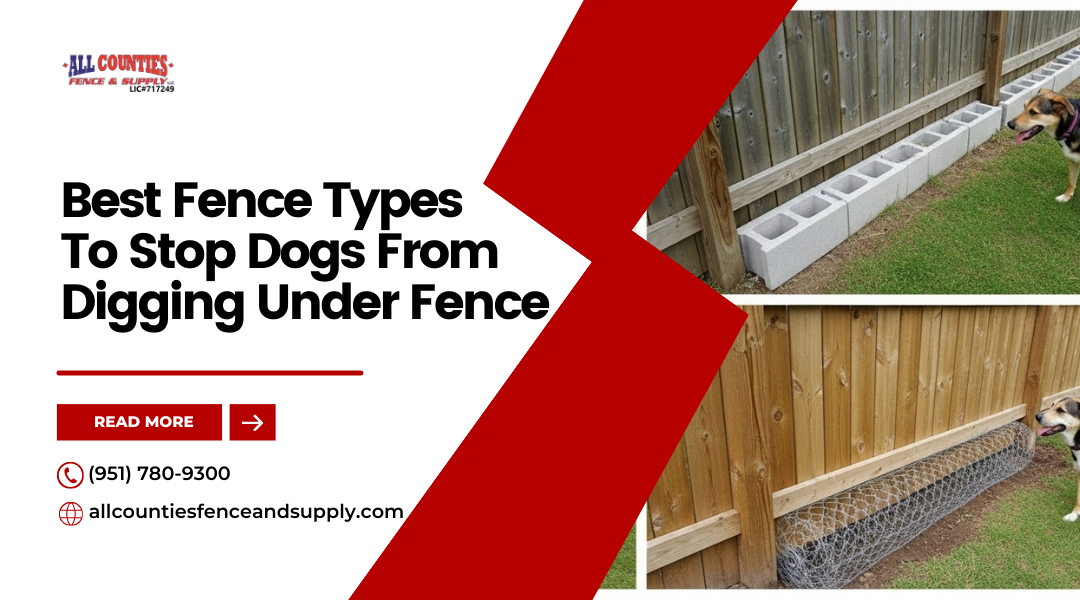
Dogs who dig under fences create a real problem for pet owners. Your dog can escape, damage your yard, and put themselves in danger. The good news is that certain fence types and features can stop this behavior when you understand what drives it and how to build the right barrier.
The most effective fences for stopping dogs from digging include chain link with tension wire and buried L-footers, vinyl privacy fences with underground barriers, and any fence style that extends 12-24 inches below ground level. The key is creating a physical barrier beneath the surface that your dog cannot dig through or around.
This guide walks you through the behavior patterns that cause digging, the specific fence features that actually work, and the fence types that combine security with lasting value. You’ll also learn from local experts at All Counties Fence & Supply in Riverside about real-world solutions that protect your dog while keeping your property looking great.
What Influences A Dog’s Digging Behavior
Dogs dig for specific reasons that range from bred-in instincts to responses to their physical surroundings. The type of fence you have and how it’s built can either encourage or discourage this behavior.
Causes Rooted In Instinct And Environment
Some dog breeds were developed to dig as part of their original work. Terriers were bred to chase prey into tunnels and dig through earth. Huskies and other cold-weather breeds dig to create cool spots to lie down when temperatures rise.
Boredom and lack of mental stimulation push many dogs to dig. When dogs don’t get enough exercise or interesting activities, they create their own entertainment. Dogs that aren’t spayed or neutered often dig to escape when they smell a mate nearby.
Anxiety and stress trigger digging in some dogs. This includes separation anxiety when left alone outside. Other dogs dig to hide toys or treats, following an instinct to store resources.
Your dog might dig because the yard doesn’t meet their basic comfort needs. Dogs dig shallow holes to escape heat or create shelter. If your garden has interesting smells from pests like moles or rabbits, hunting instincts kick in. You can redirect these urges by creating a designated digging spot filled with loose soil or sand where your dog is allowed to dig freely.
How Fence Structure Interacts With Canine Habits
Chain-link fences let dogs see outside the yard. This visibility triggers frustration when dogs spot other animals, people, or activity they want to reach. That frustration often leads to digging at the fence line as an escape attempt.
Gaps at the bottom of fences invite digging behavior. Even small spaces give dogs a starting point. Weak or damaged fence sections make it easier for determined dogs to dig their way out.
Fence material matters for digging prevention. Wooden fences that sit directly on soil are easier to dig under than fences with buried barriers. The soil type along your fence also plays a role. Soft, loose dirt encourages digging more than hard-packed earth or gravel.
A designated digging area away from fence lines can help redirect your dog’s energy. Dogs need clear boundaries about where digging is acceptable versus where it’s not allowed.
Defining The Fence Features That Actually Deter Digging
A dog-proof fence needs specific features that address how dogs actually dig and escape. The depth of your barrier, what it’s made from, and how stable it sits in the ground matter more than the fence type itself.
Depth, Base Stability, And Material Rigidity
Your fence must extend 12 to 24 inches below ground to stop most digging attempts. Dogs typically dig down 6 to 12 inches before tunneling forward under a barrier. When you bury your fence deeper, you block this natural digging pattern.
The base needs to stay fixed in place when your dog scratches and pushes against it. Loose soil around fence posts lets determined dogs shift the barrier and create gaps. You should tamp down soil firmly or use concrete footings at each post.
Material rigidity determines whether your dog can bend or break through. Chain-link, welded wire, and treated wood planks all resist dog claws better than thin materials. Chicken wire works as a dig defence layer but needs support from stronger fencing above it.
Your fence posts should sit at least 2 feet deep in the ground. This depth keeps the entire structure stable when dogs dig beside it.
Why Surface Barriers Alone Often Fail
Gravel, rocks, and mulch scattered along your fence line create temporary obstacles but don’t prevent dogs from digging. Your dog can push these materials aside within minutes of determined digging. These surface solutions work best when you combine them with buried barriers.
A physical barrier under the ground is what actually stops the digging. Dogs that move gravel away will hit buried wire mesh or wood planks and give up. The surface layer just makes the initial digging less appealing.
Spray deterrents and scent repellents wash away in rain and lose effectiveness quickly. Your dog also learns to tolerate unpleasant smells when motivated enough to escape. These methods might slow down casual digging but won’t stop a dog that sees a squirrel or smells another animal.
Evaluating Effective Fence Types And Designs
Stopping your dog from digging under a fence requires specific materials and installation methods that create barriers below ground level. The most effective solutions combine sturdy above-ground fencing with buried elements or reinforced bases that physically block digging attempts.
Chain-Link With Buried Footing
Chain-link fencing with an L-footer offers one of the most reliable methods to prevent dogs from escaping through digging. An L-footer is a portion of fencing material that extends 12-24 inches underground and then bends outward at a 90-degree angle for another 12-24 inches.
When your dog tries to dig at the fence line, they hit the buried barrier instead of finding loose soil. The L-shape works because dogs naturally dig straight down along the fence, not several feet away from it.
You can install this system during initial fence setup or add it to existing chain-link fencing. The material costs $10 to $20 per linear foot for the fence itself, plus additional materials for the footer. Galvanized chain-link resists rust and maintains structural integrity for years, even when buried underground.
Some homeowners add a bottom tension wire along the base of chain-link fencing for extra stability. This wire keeps the fence tight to the ground and makes it harder for dogs to lift or bend the material.
Vinyl Panel Fencing With Reinforced Base
Vinyl panel fencing creates a solid barrier that blocks your dog’s view of outside distractions that might trigger digging behavior. The panels sit close to the ground, leaving minimal gaps for digging to start.
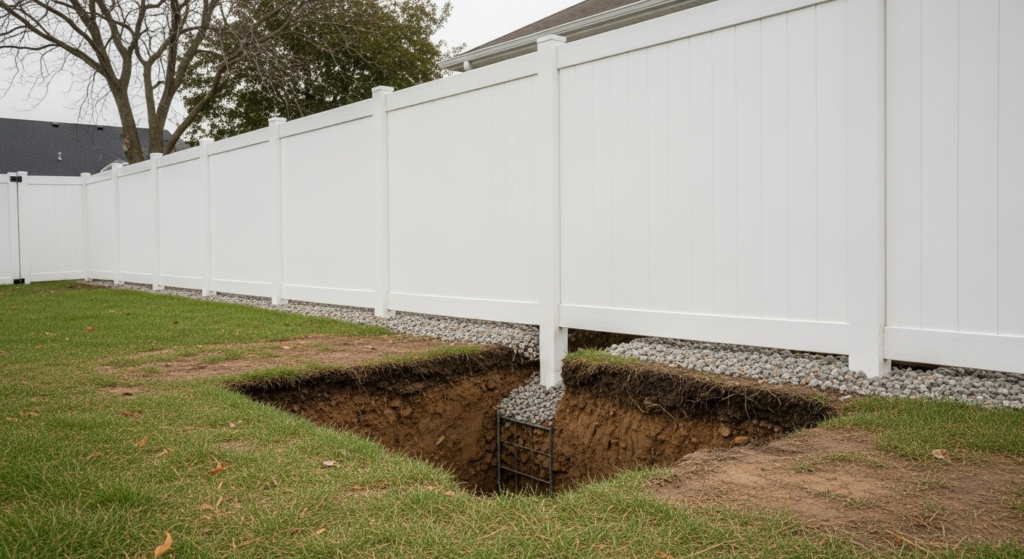
Installing vinyl panels 4-6 inches below ground level adds protection against determined diggers. You can also place concrete or gravel along the base of the panels to create a harder surface that discourages digging attempts.
Vinyl costs $10 to $30 per linear foot and requires little maintenance beyond occasional power washing. The material resists scratches from claws and won’t absorb urine stains like wood fencing does.
Key installation considerations:
- Set posts in concrete for maximum stability
- Ensure panels extend below the soil line
- Check for gaps where panels meet posts
- Add gravel or rocks along the fence line for extra deterrence
Hybrid Fences Using Concrete Or Gravel Borders
Creating a 12-18 inch border of concrete, gravel, or large rocks along your fence line stops digging without requiring buried materials. This approach works with any dog fence type, including wood, metal, or vinyl.
A concrete footer poured along the fence base creates an impenetrable barrier. The concrete should be 4-6 inches deep and extend 12 inches from the fence on your yard side. This prevents your dog from getting underneath while maintaining the fence’s appearance.
River rocks or pea gravel offer a less permanent option. Dogs dislike digging in loose stones, and these materials shift when disturbed, making it frustrating for them to continue. A 6-inch deep layer provides adequate coverage.
Border material comparison:
| Material | Cost | Permanence | Effectiveness |
|---|---|---|---|
| Poured concrete | High | Permanent | Excellent |
| Concrete pavers | Medium | Semi-permanent | Good |
| River rocks | Low | Temporary | Good |
| Pea gravel | Low | Temporary | Moderate |
Comparative Longevity And Maintenance Factors
Chain-link with buried L-footers lasts 15-20 years with minimal maintenance. The galvanized coating protects against rust, and the buried portion stays effective indefinitely since soil prevents UV damage.
Vinyl panel fencing with reinforced bases maintains effectiveness for 20-30 years. The material doesn’t rot or rust, though extreme temperature changes can cause some warping over time. You’ll need to inspect the below-ground portions every few years to ensure they haven’t shifted.
Hybrid fences with concrete borders provide permanent solutions that last as long as the fence itself. Concrete resists weathering and doesn’t degrade from dog activity. Gravel and rock borders require occasional replenishment as materials scatter or sink into the soil.
Invisible dog fence systems using a receiver collar don’t address digging behavior directly. These systems rely on training and boundary correction rather than physical barriers, making them ineffective for dogs determined to dig their way out.
Regular inspections of your dog fencing help catch problems early. Check buried footers annually by digging small test holes at different points along the fence line. Look for signs of persistent digging attempts and reinforce those areas with additional materials.
Insights From All Counties Fence & Supply In Riverside
All Counties Fence & Supply has installed and repaired fences in Riverside since 1978. Their experience with local conditions shows how soil type, weather patterns, and practical field work shape the best approaches to stop dogs from digging.
Regional Soil Conditions And Their Role In Fence Selection
Riverside’s soil varies from sandy deposits to dense clay. Sandy soil lets dogs dig faster and easier, which means your fence needs to go deeper underground. All Counties Fence & Supply recommends extending barriers at least 12 to 18 inches below ground level in sandy areas.
Clay-heavy soil provides more natural resistance to digging. But it also makes installation harder and requires different tools and techniques. You can sometimes use shallower barriers in clay soil, but you still need proper anchoring.
The local terrain also includes rocky sections. These areas need specialized equipment to dig fence post holes and install underground barriers. Your fence installer should check soil conditions before recommending depth and materials.
Local Climate Effects On Material Durability And Installation Methods
Riverside experiences hot summers, occasional heavy rains, and high winds. These conditions affect how long your fence materials last. Vinyl and powder-coated metal hold up better than untreated wood in intense heat and UV exposure.
Heavy rains can wash away soil around fence posts and underground barriers. All Counties Fence & Supply addresses this by using proper drainage and concrete footings. They also account for soil expansion and contraction during wet and dry seasons.
Hot summer days make materials expand, while cooler periods cause contraction. Your installer needs to leave proper spacing and use flexible attachment methods. This prevents warping and cracking that create new gaps for digging.
Lessons Learned From Decades Of Residential And Municipal Projects
Over 40 years of fence work has shown that L-footer designs work better than straight vertical barriers for persistent diggers. The horizontal section at the bottom blocks dogs without requiring excessive depth.
Multiple fence repairs have revealed that dogs often dig at corners and gates first. These weak points need extra reinforcement with buried wire mesh or concrete. You should inspect these areas regularly.
All Counties Fence & Supply found that combining methods works best. A buried barrier plus gravel or concrete along the fence line stops most digging attempts. Adding landscaping rocks or plants near the fence base also discourages dogs from starting to dig.
Balancing Aesthetics, Longevity, And Canine Security
Picking the right fence means weighing how it looks against how well it works and how long it lasts. Your choice affects your property value, your dog’s safety, and how much time and money you’ll spend on upkeep over the years.
Tradeoffs Between Visual Appeal And Practicality
White vinyl panels look clean and modern but create bright glare in sunny yards. Chain link fencing keeps dogs contained at low cost but exposes your yard to neighbors’ views. Wood fences offer natural beauty and privacy, yet they need yearly sealing or painting to prevent rot and fading.
Material appearance versus function:
- Picket fences add charm to front yards but leave gaps big enough for small dogs to squeeze through
- Wrought iron provides an elegant look while letting your dog see every squirrel and passerby
- Solid vinyl or wood blocks views completely but costs more upfront
Your dog’s behavior matters more than curb appeal. A digger needs metal strips buried one to two feet below any fence type. A climber requires smooth surfaces without horizontal rails that work like ladder rungs. Pretty fences fail if your dog gets out.
Long-Term Considerations For Homeowners And Landscapers
Chain link lasts decades with almost no maintenance and resists all weather conditions. Vinyl panels stay intact for 20-30 years without painting, though they cost three times more than chain link initially. Wood fences might need replacement after just five years in wet climates.
Your maintenance time adds up. Wood requires yearly sealing against moisture damage and sun bleaching. Metal fences need rust checks and occasional repainting. Vinyl only needs power washing once a year.
Budget for repairs beyond routine care. Wooden boards warp and need replacing. Loose nails can injure your dog. Chain link sections that break create sharp edges.
Weather in your area decides which materials work best. High rainfall rots untreated wood quickly. Intense sun fades paint and weakens some plastics. Cold climates make certain materials brittle.
When Professional Consultation Becomes Worthwhile
You need expert help if your housing association limits fence types or heights. Professionals know local building codes and can design solutions that meet regulations while stopping diggers. They assess your yard’s slope, soil type, and drainage patterns that affect fence stability.
Call a fence contractor when you need to bury barriers deeper than two feet. Installing concrete footers or metal plates requires proper tools and knowledge of underground utility lines. Professionals also spot problems like tree roots that might push up barriers over time.
A dog trainer can evaluate whether your pet’s digging stems from boredom rather than escape attempts. Behavioral issues need different solutions than physical barriers. Combining enrichment activities with the right fence type works better than fencing alone for high-energy dogs.


