A pool fence is essential, but it’s not the full safety picture—especially for homes near rivers or water features. The space beyond that fence holds hidden risks that no single barrier can handle alone. The safest approach uses multiple layers—secure gates, reliable alarms, sturdy barriers, and active supervision—to reduce the chance of accidents before they happen.
In Riverside homes, where pools and natural water often share the same landscape, it’s easy to assume one strong fence is enough. Yet, experts and groups like the National Drowning Prevention Alliance stress that fences, covers, and alarms work best when used together. This layered protection gives you time to react and helps prevent the silent danger of unsupervised water access.
You’ll explore how to assess these layers around your property, identify weak points, and choose upgrades that make real safety improvements. Whether installing smarter alarms, stronger gates, or better lighting, your goal is simple: create a secure and thoughtful system that protects every person who steps near your pool.
Why Pool Fences Alone Are Not The Full Safety Picture
A pool fence is one of the most effective barriers for preventing child drowning, but it’s not enough by itself. Even a sturdy fence can’t stop every risk if a gate is left unlatched or if a child finds another way into the swimming pool area. You need to think in layers to create full pool safety protection.
Physical barriers can fail over time. Latches wear out, hinges loosen, and curious children test boundaries. Regular inspection and maintenance help, yet they don’t replace active supervision and other safety tools.
Adding layers such as door alarms, self-closing gates, and pool covers strengthens your defense. These features create backups if one system fails. For example, an alarm can alert you when a door or gate is opened, even before anyone reaches the pool.
| Safety Layer | Primary Function | Example |
|---|---|---|
| Fence and Gate | Blocks unsupervised entry | Four-sided isolation fence |
| Alarms | Notifies when barriers are breached | Door, gate, or surface alarms |
| Covers and Nets | Prevents direct water access | Mesh or safety-rated covers |
| Supervision | Immediate response | Designated adult “water watcher” |
Every layer adds time for you to notice and act before danger occurs. A fence alone sets the foundation, but combining it with alarms, locks, and consistent oversight gives children and guests stronger protection against drowning hazards around your pool.
Is Your Riverside Home Relying On A Single Safety Measure?
Relying on a single barrier or device around your pool increases the risk of accidental entry, especially for children. California law requires at least two protective features so that if one fails, the other still helps prevent access.
Homes With Young Children Or Frequent Guests
If you have young children or host families often, depending on only a fence or cover is unsafe. Toddlers move quickly and may find ways past gaps, low latches, or open doors. You should treat every water feature—pools, spas, or even deep fountains—as a potential hazard.
Combining layers is more effective. Four-sided isolation fencing separates the pool from the home, while exit alarms on doors or gates add an extra alert. Many homeowners also install surface or subsurface alarms that detect water movement. These devices help you react before a child reaches the pool area.
Keep in mind that ongoing supervision is part of safety. Rules such as no running near water and quick checks of gates or alarms each week can catch small problems before they become dangerous.
Older Pool Enclosures Built To Minimum Standards
Homes built before newer safety codes often meet only basic fence requirements. A five-foot fence may have handholds or wide slats that make climbing easy. Gates might not self-close or latch reliably after years of use.
Inspect older barriers regularly. Measure gaps between fence slats and under the fence, ensuring they are no more than four inches wide. Replace worn latches or hinges with self-closing, self-latching hardware placed above a child’s reach.
Adding a second protection feature, like an approved pool cover or door alarm, brings older installations closer to current safety standards. Local Riverside building officials can confirm if your setup still complies with California’s Swimming Pool Safety Act (Health and Safety Code §115920–115922).
Remodels Or Additions That Changed Access Points
Remodeling can unintentionally make your pool less secure. A new sliding door, patio, or room addition might add a fresh path to the pool that bypasses the main gate. When any change affects entry to the pool area, you must reassess all safety barriers.
Use this simple check:
| Access Change | New Hazard | Recommended Fix |
|---|---|---|
| New door to patio | Direct path to pool | Add door alarm or self-latching device |
| Rebuilt deck or fence | Larger gaps or low rails | Meet current height standards |
| Expanded living space | More visitor access | Review pool rules with guests |
Even small construction projects can create openings large enough for a child to slip through, making updated barriers and alarms essential for continued compliance and peace of mind.
What You’ll Be Able To Evaluate After Reading This
You’ll understand how layered pool safety works in practical settings, how small oversights can reduce its reliability, and how professionals assess redundancy and upgrades in real environments such as riverside and backyard homes. You’ll learn what aspects of inspection, maintenance, and planning help strengthen each barrier between your family and potential water hazards.
How Layered Safety Is Intended To Work In Real Homes
Layered safety relies on using more than one barrier to prevent unsupervised access to water. A four-sided fence with a self-closing, self-latching gate creates the first physical separation. Beyond that, alarms, pool covers, and locked doors add warning and delay time if one layer fails.
Organizations such as the CDC and NDPA (National Drowning Prevention Alliance) emphasize combining supervision, barriers, and response tools. In riverside homes, where natural water is often nearby, this means extending protection beyond the pool’s boundary to docks, gates, or backyard access points.
A simple approach involves checking how each layer behaves independently and together. If one barrier is breached, the next should still reduce risk by controlling entry or giving an alert. These layers aim to work passively—especially when you aren’t actively watching the water.
Where Gaps Commonly Appear Despite A Compliant Fence
Even a code-compliant fence can’t protect against all entry points. Children sometimes reach the water through unlatched gates, low sections, or doors leading from the house that bypass the barrier. Weather or lawn changes can also create small gaps that go unnoticed.
Alarms help close these gaps but only if placed correctly and checked often. Door chimes, surface motion sensors, and gate alarms must stay powered and tested to remain effective. Broken batteries or silenced alerts defeat their purpose.
You should also review your space during events like cookouts or cleaning. Moving furniture near the fence or leaving tools against it can create easy climbing routes. Regular walk-throughs identify weak spots that meet standards on paper but fail in daily conditions.
How Inspectors And Safety Professionals View Redundancy
Inspectors and water safety professionals measure redundancy by confirming that no single failure exposes a direct path to the water. During a pool safety plan review, they evaluate if the fence, gate hardware, and alarms create overlapping coverage. They also look for first aid readiness such as life rings, rescue hooks, and visible emergency numbers near the pool.
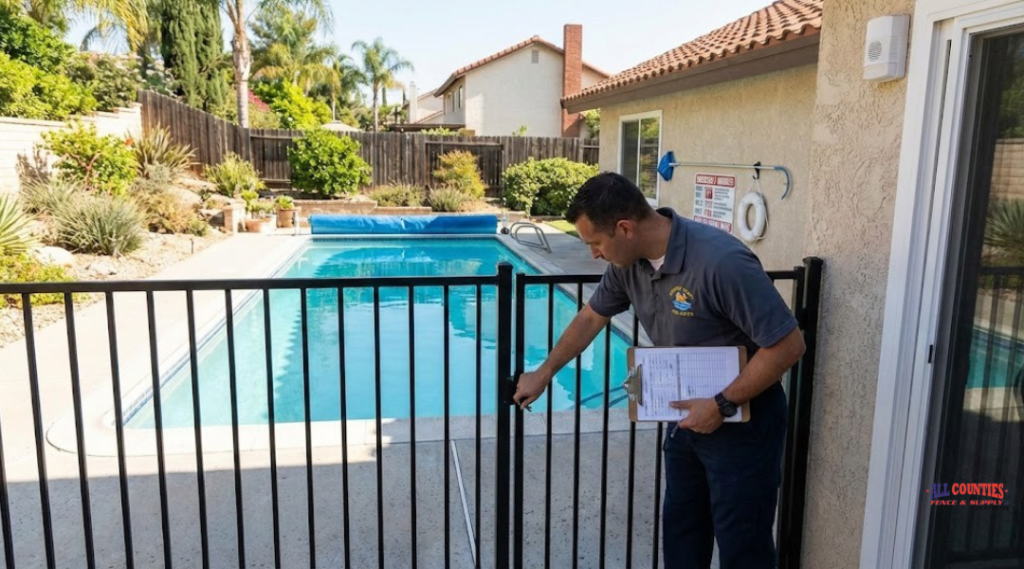
They treat redundancy as a reliability factor, not an optional feature. Two barriers that work differently—like a fence and an alarm—strengthen safety more than two of the same kind. Professionals use NDPA and CDC guidance to decide if safeguards meet community standards or need adjustment.
Your understanding of their criteria can help you self-check systems before inspections. This approach avoids last-minute corrections and keeps your property consistent with professional expectations.
How To Think Through Upgrades Without Overcorrecting
When improving safety, you should focus on measurable effectiveness, not quantity alone. Adding alarms, covers, or automatic locks makes sense when each upgrade solves a clear problem. Too many overlapping systems may complicate upkeep and reduce reliability if you stop testing them.
Create a short checklist or table summarizing what’s already in place:
| Layer | Current Condition | Improvement Needed |
|---|---|---|
| Fence & Gates | Self-closing, 48 in. high | Replace worn latch spring |
| Alarms | Door and surface sensors | Add backup battery |
| Rescue Tools | Life ring and pole | Mount closer to pool |
Review upgrades annually, especially after storms or repairs. Aim for prevention first and alerts second, supported by consistent first aid training for household members. That balance keeps your layers practical, working, and easy to maintain over time.
What “Layered Pool Safety” Means In Practice
Layered pool safety uses multiple independent safeguards to reduce risk around residential pools. Each protective measure—physical barriers, electronic alarms, and clear supervision—compensates for the limits of the others. By overlapping protection, you create redundancy that helps prevent unauthorized access and improves response time when accidents occur.
The Role Of Redundancy In Residential Pool Safety
Relying on one safety feature often leaves gaps. A fence can fail if a gate is left open, and an alarm can’t stop access on its own. Using several layers of protection ensures that when one barrier fails, another still protects your pool area.
Redundancy includes fences, self-latching gates, pool covers, and water surface alarms. Each detects or delays entry differently. For example, an ASTM F2208–certified alarm responds to surface disturbances, while a locked gate prevents entry before contact with the water.
You should treat redundancy as the foundation of your pool safety plan. A table can help clarify how each layer contributes:
| Layer | Function | Example |
|---|---|---|
| Physical barrier | Prevents entry | Fence or locking gate |
| Active alert | Detects disturbance | Pool alarm |
| Procedural | Human oversight | Supervision, rules |
Passive Barriers Vs Active Alert Systems
Passive barriers work by physically blocking access. You install them once, and they stay in place—fences, walls, and safety covers fit this category. They don’t rely on sensors or electricity, which makes them dependable but limited. If someone bypasses a gate or climbs a fence, the barrier no longer protects.
Active alert systems such as pool entry alarms or motion sensors detect movement or wave changes and sound an alert. Devices like the Blue Wave NA4212 use internal sensors to recognize the water displacement from an object heavier than about 18 pounds. They notify you quickly but only after a breach occurs.
You should combine both types. Passive barriers prevent most access, while active systems alert you if prevention fails. Neither fully replaces supervision.
How Codes, Guidelines, And Real-World Use Differ
Safety codes and guidelines set minimum requirements. Many states or municipalities require pool alarms that meet ASTM F2208 and specify fence height, gate latch placement, and audible alarm standards. These rules create a baseline but don’t cover every real-world situation, especially in complex landscapes like riverside lots.
In practice, you often need to exceed code. Conditions such as uneven terrain or shared property lines may reduce the effectiveness of standard barriers. You might add taller fencing, reposition alarm receivers, or control return jet flow to avoid false alarms.
Following the law gives you compliance, but customizing your setup gives you safety. Codes define what’s acceptable; your design choices define what’s secure.
How Pool Safety Layers Are Assessed Together
Each part of your pool safety system—fences, gates, locks, and alarms—works best when designed and maintained as one connected barrier. Inspectors look at how well these features limit access, alert you to movement, and support consistent supervision to reduce water-related risk.
Entry Points Inspectors Pay Attention To First
Inspectors usually start by examining entry points that can allow unsupervised access to the pool area. This includes doors, gates, windows, and pathways from your home or yard. They measure gate height, ground clearance, and check that latches and hinges operate smoothly. A pool safety fence should meet local height codes, have vertical spacing that prevents climbing, and be built from durable, corrosion-resistant materials.
A self-closing gate should shut automatically from any open position, and a magnetic latch or other child-resistant latch should secure it tightly. Inspectors may test hardware alignment and verify that the latch release is mounted high enough that children cannot reach it.
For properties near rivers or open water, inspectors may assess how fencing connects to terrain features like slopes, retaining walls, or patios. They look for areas where a small gap or uneven surface could let a child slip under or around the barrier.
How Gates, Alarms, And Barriers Interact
The way gates, alarms, and barriers function together determines overall safety. If one device fails or is left open, another should provide backup protection. For example, a gate that does not fully close should trigger a door or pool alarm to warn you immediately.
You can think of these components as a coordinated system rather than separate parts:
| Feature | Main Function | Backup Role |
|---|---|---|
| Fence panels | Block physical access | Provide structure for gates and latches |
| Self-closing gates | Auto-secure the entry | Reinforce consistent closure |
| Alarms (door/pool/surface) | Detect movement or entry | Alert supervisors to lapses |
A strong safety fence design reduces reliance on electronic alerts, but electronic devices provide extra time to react if barriers fail. The effectiveness of this interaction depends on proper maintenance, correct installation, and routine testing of each component.
Human Behavior Factors That Affect Safety Performance
Even the best safety devices rely on how you and others use them. Leaving a gate propped open, disabling an alarm, or delaying maintenance reduces the entire system’s reliability. Inspectors often ask how safety rules are enforced and whether adults understand their roles in supervision.
Making daily checks part of your routine helps keep the system reliable. For example, setting reminders to test alarms weekly and inspecting self-closing gates monthly ensures early detection of wear or malfunction.
Visitors and family members should know basic safety steps: keep gates latched, check alarms, and remove items near fences that children could climb. Small behavioral lapses often cause larger risks, making habits and awareness just as critical as equipment quality.
Why No Single Device Is Considered Sufficient
A single safety feature cannot prevent every incident because each has limits. A pool safety fence may stop access, but it cannot detect when someone climbs over. An alarm sounds an alert but does not physically block entry. A self-closing gate helps, yet hinges and latches can wear down over time.
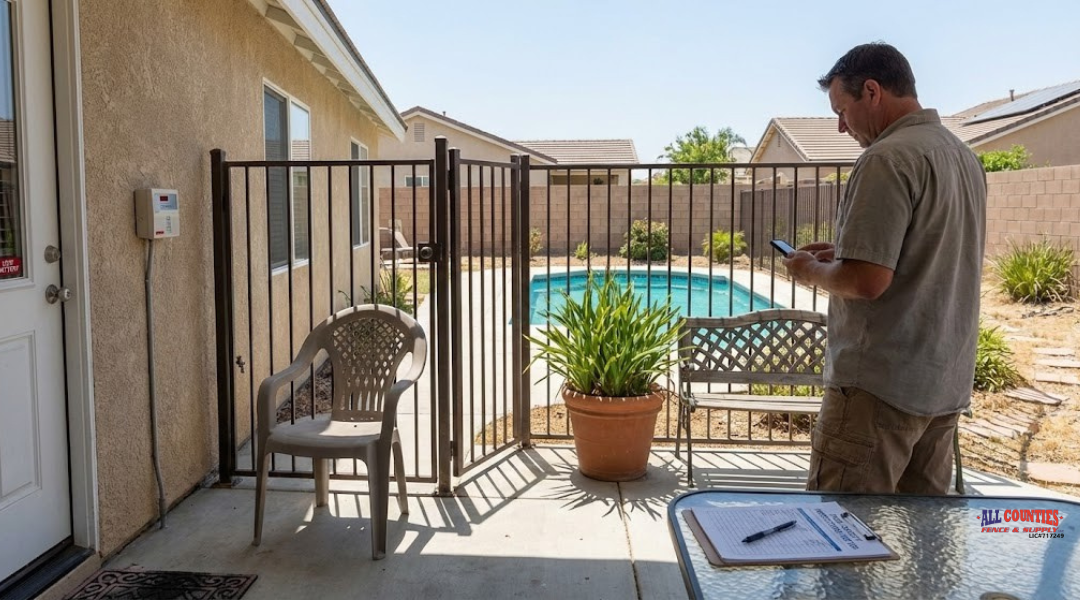
Evaluators focus on layered protection, meaning that every safeguard should back up another. Visual barriers, audible alerts, and mechanical controls serve different functions that overlap. This approach compensates for unexpected human error, equipment failure, and changing conditions such as weather or ground movement that can affect ground clearance or fence alignment.
You protect your pool area most effectively when gates remain functional, alarms stay active, and barriers meet current safety codes. Combined, these measures make it harder for a single mistake to turn into an accident.
Why Common Safety Add-Ons Often Fall Short
Even with proper fencing, many homeowners rely on devices and barriers that don’t always work as intended. Over time, small failures in setup, maintenance, or use can make these add-ons far less dependable during real emergencies.
Alarms That Are Disabled Or Ignored
Pool alarms can detect motion or water disturbance, but many lose effectiveness when batteries die or devices are turned off to stop false alerts. Repeated false alarms often cause users to disable the system entirely. This defeats their purpose and leaves the area unmonitored.
Weather exposure and corrosion also reduce sensor performance. You should test each alarm monthly, replace batteries as needed, and keep sensors free from debris and algae.
Different types offer varying reliability:
| Alarm Type | Main Weakness |
|---|---|
| Subsurface motion alarms | Sensitive to waves or wind |
| Gate alarms | Silenced or left disarmed |
| Door/window alarms | Fail if batteries or wires degrade |
A working alarm can alert you before tragedy occurs, but only if it stays active and maintained.
Gates That Meet Specs But Fail In Daily Use
A gate can meet every design code and still fail from poor upkeep or everyday wear. Self-closing hinges often lose tension, preventing latches from catching properly. When that happens, the gate can remain unlatched or open slightly—just enough for a child to squeeze through.
You should test gates weekly and repair warped or sagging sections immediately. Keep the latch at least 54 inches above ground so children cannot reach it.
Avoid placing climbable items like planters or chairs near the gate. Even a secure latch means little if a child can scale nearby objects.
| Common Gate Issues | Risk Level |
|---|---|
| Loose hinges | High |
| Rusted latch parts | Medium |
| Obstructed closure path | High |
Regular inspection matters more than initial compliance.
Interior Barriers That Create A False Sense Of Security
Interior barriers such as door locks or screen enclosures slow access but rarely stop a determined child. Many families assume a locked patio door is enough protection, yet most children who drown in home pools enter from the house.
Electronic locks can fail when batteries die, and sliding doors may not fully latch if tracks get dirty. Adding audible alarms on all pool-facing doors helps alert you to unsupervised entry.
Relying only on interior barriers often causes adults to relax supervision. These barriers are backup tools, not replacements for outdoor fencing or active monitoring. Use them as supporting layers—not the first or only defense.
Misunderstanding Code Compliance Vs Risk Reduction
Building codes set minimum safety requirements, not comprehensive protection. Meeting baseline standards doesn’t mean your pool area is truly safe. For example, a code-compliant fence at 48 inches tall might still allow small children to climb using decorative rails or nearby structures.
You should treat code rules as a starting point, then assess real-world behavior around your pool. Local codes often overlook conditions specific to your property, like sloped ground or direct access from riverside yards.
Risk reduction depends on how well safety systems work together, not just whether they meet technical requirements. Regular evaluations, professional inspections, and proper upgrades do more to protect lives than simply passing inspection.
Types Of Safety Layers Used Beyond The Pool Fence
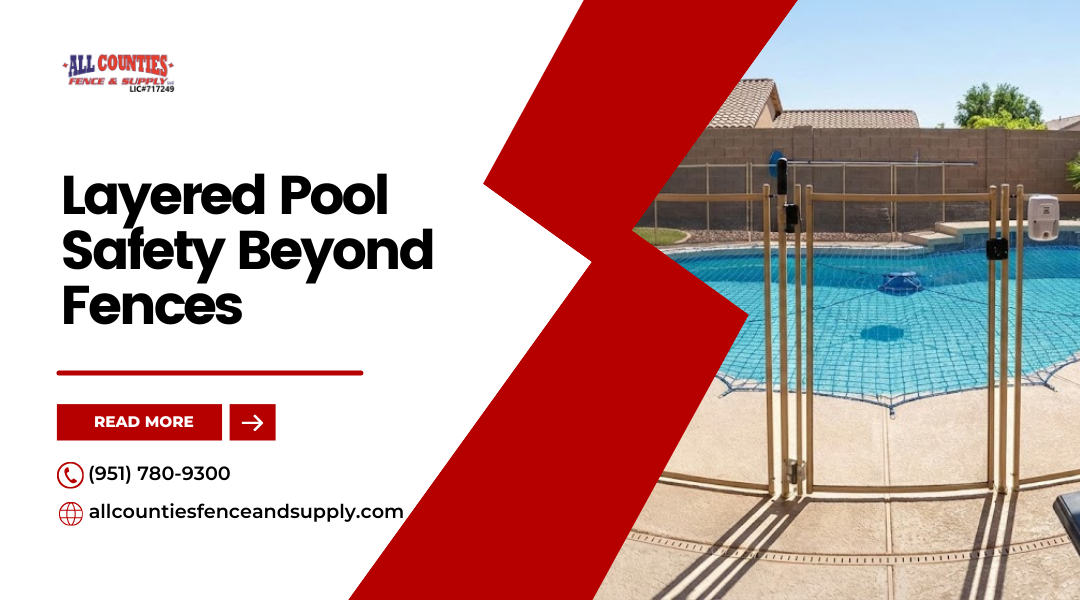
A layered pool safety system uses several protective measures that work together when one barrier fails. These include self-closing gates, alarms for doors and windows, and secondary covers or nets that restrict water access even when the main fence is open.
Self-Closing And Self-Latching Gate Systems
A self-closing, self-latching gate helps prevent a child or pet from entering the pool area when the gate is left ajar. Springs or hydraulic hinges automatically close the gate, and the latch engages on its own once shut. Many systems place latches high enough to stay out of a small child’s reach.
You can choose magnetic or mechanical latch types based on your preferred security and maintenance level. When installed properly on a removable mesh pool fence or metal enclosure, these gates create a consistent physical barrier that requires little daily attention.
Routine inspection matters. Check that hinges close smoothly and that the latch aligns correctly. A gate that drags or doesn’t close completely undermines the fence’s purpose. Replacing worn hardware or adjusting tension ensures your barrier continues to perform reliably year-round.
Door And Window Pool Alarms
Unsecured doors or windows leading to the pool can create unexpected access points. Installing door alarms and window sensors alerts you when a barrier is opened. Most alarms emit a loud tone, while some connect to smartphones for remote alerts.
Alarms vary by installation type:
| Type | Activation Method | Benefit |
|---|---|---|
| Magnetic contact | Triggered when opened | Simple, affordable |
| Pressure mat | Activated when stepped on | Detects entry even with door open |
| Smart system | Sends phone notification | Remote monitoring |
For family homes, high-mounted controls stop children from disabling the alarm. Regularly test batteries and sound levels to confirm reliability. Some local codes even require alarms for homes with direct pool access, so always check your regulations before installation.
Pool Covers And Secondary Physical Barriers
A safety cover or safety net supplements the fence and alarms by blocking contact with the water itself. Safety covers made of mesh or solid vinyl stretch tight over the pool, supporting limited weight when secured to anchors. A safety net uses a tight weave that prevents a child from slipping through while allowing water drainage.
These systems limit accidental submersion when the pool is not in use, particularly during off‑season months. Choose covers certified for safety, not only debris control, and follow manufacturer tension and anchoring instructions. Keep the surface clear of objects and regularly inspect for stretching or frays. A well-fitted secondary barrier reduces risk whenever direct supervision isn’t possible.
How Experienced Local Installers Like All Counties Fence & Supply Evaluate Layered Safety Effectiveness
Professional installers such as All Counties Fence & Supply assess how each barrier functions as part of a complete safety plan. They check gate alignment, latch positioning, and alarm coverage for openings around the home’s perimeter.
During evaluation, they often review:
- Barrier height and material strength
- Alarm placement and audibility
- Fence-to-deck transitions and climb resistance
They may also suggest upgrades like self-closing hinges with adjustable tension or integrating pool alarms compatible with home security systems. Expertise in local codes ensures the setup meets both safety standards and city requirements.
By coordinating fences, alarms, and covers, an experienced installer helps confirm that every protective layer works together to minimize unauthorized pool access and improve your family’s safety near the water.
Situations That Complicate Layered Pool Safety
Certain property layouts and living arrangements can weaken safety measures meant to keep your pool secure. Common challenges include multiple entry routes, shared property use, aging equipment, and the need to retrofit older riverside homes with modern systems. Addressing these complications early helps maintain a consistent and reliable safety plan.
Homes With Multiple Access Paths To The Pool
When your home has several doors, decks, or walkways leading to the pool, each one becomes a potential breach. Children often find side gates or basement doors that adults may overlook. Any unmonitored entrance reduces the strength of your safety layers.
You should map every direct and indirect route to the pool. Add door alarms and self-latching gates to each possible entry. For sliding doors and patios, use high latches or keypad locks that children cannot reach. Visual barriers like tall shrubs or privacy screens also reduce temptation for unsupervised access.
Test every alarm and gate regularly. Create a checklist that includes battery checks, latch resistance, and alarm volume. Treat the entire yard as a perimeter, not just the pool fence, and ensure that no route remains unsecured.
| Access Type | Common Weak Point | Recommended Safeguard |
|---|---|---|
| Side gate or walkway | Gate left unlatched | Self-closing hinge, audible alarm |
| Deck stairs | No gate at top/bottom | Install safety gate with spring latch |
| Sliding glass doors | Easy child access | Add chime alarm, high latch, or coded lock |
Short-Term Rentals Or Multi-Family Properties
When a property changes hands frequently or houses multiple families, consistent safety habits often get lost. One renter may remove a gate section for convenience, or different families may not know how to reset an alarm system. These small oversights increase risk.
You should post clear pool rules and safety instructions near every access point. Include diagrams showing how to reset alarms and where switches or covers are located. Consider tamper-resistant devices that cannot be disabled without tools.
If you own a rental, inspect the pool area between each stay. Replace missing equipment, test all alarms, and confirm that the fence is properly installed. Digital smart alarms that notify you remotely can help monitor compliance when you are off-site.
For shared pools, assign one responsible adult as a “safety coordinator.” Their role includes checking systems weekly and keeping maintenance logs so that everyone using the pool remains accountable.
Aging Hardware And Maintenance Gaps
Even strong safety systems fail if hardware wears out or maintenance lapses. Rusted gate hinges, weak springs, or drained batteries can turn layers of protection into false security. You need regular upkeep to ensure every part still works as intended.
Inspect gates, alarms, and locks monthly during swim season. Replace parts showing corrosion, loose screws, or poor alignment. Lubricate hinges and verify gates close automatically from at least 6 inches open.
Alarms require special attention. Replace batteries twice a year or set reminders during daylight savings changes. Test sensors by simulating openings or light impacts. Keep spare components nearby so replacements don’t get delayed.
Make a simple maintenance chart like the one below to stay organized:
| Component | Check Frequency | Typical Lifespan | Notes |
|---|---|---|---|
| Gate latch | Monthly | 5–7 years | Replace if slow to click |
| Pool alarm battery | Every 6 months | 1 year | Test volume and range |
| Safety cover straps | Annually | 8–10 years | Check tension and anchors |
Retrofits On Older Riverside Homes
Older riverside homes often lack modern pool safety features because they were built before current standards. You may face narrow decks, uneven surfaces, or limited space for installing compliant barriers.
Start by reviewing local pool codes and riverside property guidelines for setback distances and barrier heights. In restricted areas, use removable mesh fencing or surface-mounted alarms that do not require major structural work.
Retrofitting electrical alarms or lighting often means upgrading wiring to meet waterproofing requirements. Hire a licensed electrician to ensure each connection meets outdoor safety standards.
If permanent fencing is impossible due to soil conditions or easements, add multiple warning layers. Combine wearable child alarms, sensor mats, and door chimes so that no single system carries full responsibility.
Document every modification. Keep receipts, warranty details, and inspection records to prove compliance. Updating old homes takes planning, but steady improvements over time create a dependable safety system for your riverside property.
Closing Perspective: Thinking In Systems, Not Single Solutions
When you look at water safety through a systems lens, you see more than a fence or lock. Each piece—gates, barriers, alarms, supervision, and training—links together like parts of one system. A gap in one area can weaken the rest, so layers must interact and reinforce one another.
A systems approach helps you focus on how risks connect. For example, an alarm only works if family members respond quickly. A gate only protects if it closes automatically and is well‑maintained. Viewing these elements as a network of dependencies helps you maintain consistent protection rather than relying on one safeguard.
| Element | Function | Dependency |
|---|---|---|
| Pool fence | Physical separation | Needs proper height, latch integrity |
| Gate alarm | Alerts to entry | Requires power and awareness |
| Barriers near riverbank | Prevents unexpected access | Must align with terrain and local conditions |
| Supervision | Human response | Depends on presence and attention |
By thinking in systems, you can adapt safety measures to your changing environment—whether it’s a riverside home or a shared waterway. You identify weak points, adjust behaviors, and design responses that complement one another.
This mindset moves you from reactive fixes to proactive resilience. Instead of asking which single device will keep your family safe, you ask how the entire safety system can stay reliable under real conditions.