Planning a fence project in Riverside doesn’t have to drain your savings account. With the right approach, you can create a secure and attractive fence that fits your financial situation. The key is understanding local costs, choosing materials wisely, and knowing where you can save without compromising quality.
To plan a fence project on a budget in Riverside, you should expect to spend between $20 and $58 per linear foot depending on material choices, with most homeowners keeping projects under $6,000 by selecting cost-effective materials and understanding site-specific factors that affect installation costs. Your budget needs to account for more than just materials. You’ll face costs related to Riverside’s terrain, local permit requirements, and labor expenses that vary based on your property’s layout.
This guide walks you through the real costs of fencing in Riverside and shows you how to make smart decisions at each stage. You’ll learn how to set realistic budget limits, understand what drives costs up or down in your area, and make material choices that balance your immediate budget with long-term value. All Counties Fence & Supply has helped countless Riverside homeowners navigate these decisions, and we’ll share the patterns and tradeoffs we’ve observed over years of local installations.
Defining Budget Scope And Constraints
Your budget scope sets hard limits on what you can build and determines where compromises might be necessary. These constraints include physical boundaries, material choices, and whether you complete the fence all at once or in stages.
Property Lines And Measured Linear Footage
You need to know your exact property boundaries before planning any fence installation. Request a property survey from your county recorder’s office or hire a licensed surveyor if your property lines aren’t clearly marked. In Riverside, property disputes are common when homeowners assume fence locations without verification.
Measure the total linear footage along the areas you want to fence. Walk your property with a measuring tape or wheel and write down distances for each section. Include measurements around obstacles like trees, slopes, or existing structures.
Your linear footage directly controls material costs. A 150-foot fence line costs significantly less than 300 feet, so decide which areas truly need fencing. Front yards often require less fencing than backyards, and you might share costs with neighbors for shared property lines if they agree to participate.
Height, Style, And Material Boundaries
Riverside requires permits for fences over six feet tall, and front yard fences typically can’t exceed three feet in residential zones. Check with the Riverside Building and Safety Department before finalizing your plans. These height restrictions immediately limit your options and costs.
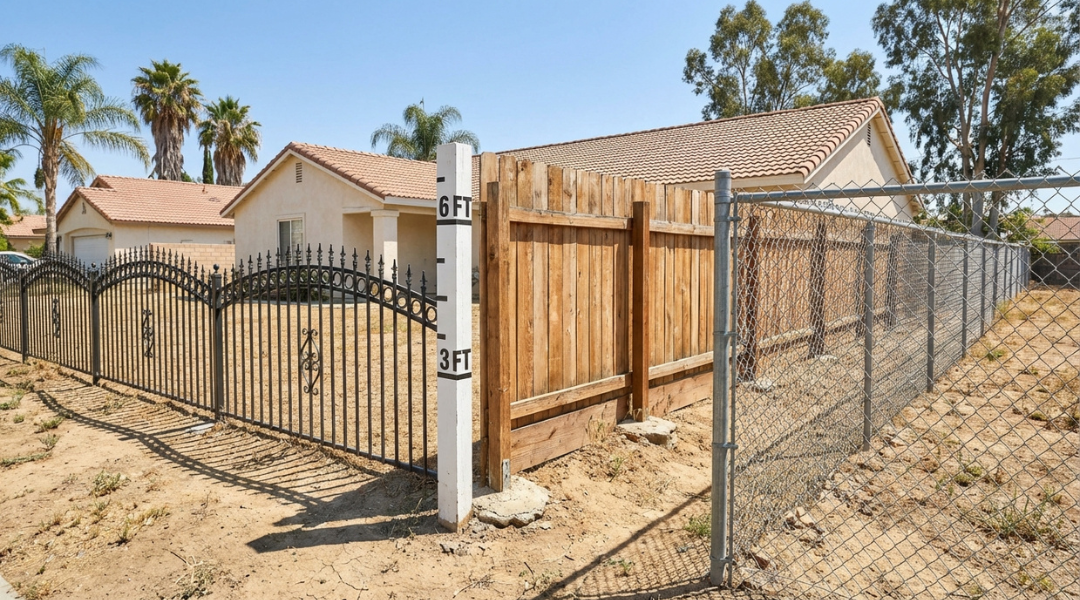
Fencing styles range from basic chain link at $8-12 per linear foot to decorative wrought iron at $30-50 per linear foot. Wood privacy fences fall in the middle at $15-25 per linear foot. Your budget determines which materials you can afford.
Material costs also include gates, posts, concrete, and hardware. A standard gate adds $200-600 to your total depending on width and material. Calculate these extras into your constraint limits from the start.
Phased Installation Versus Full Replacement
Installing your fence in phases spreads costs across multiple months or years. You might fence the backyard first for pet containment, then add side yards later when funds allow. This approach requires planning for consistent materials and style.
Phased installation adds costs for mobilization fees each time contractors return to your property. You’ll pay setup charges multiple times instead of once. However, this option makes large projects affordable when cash flow is limited.
Full replacement costs more upfront but saves money on repeated contractor visits and ensures uniform aging across all fence sections. You also complete permits and inspections once rather than filing multiple times. Consider your available funds and timeline when choosing between these approaches.
Cost Variables Specific To Riverside Sites
Riverside’s unique geography and regulations create specific cost factors that differ from other California cities. The region’s soil composition, hilly terrain, and local permitting processes all impact your fence installation cost in ways you need to plan for upfront.
Expansive Soils And Post Depth Requirements
Riverside sits in an area with expansive clay soils that swell when wet and shrink during dry periods. This soil movement puts extra stress on fence posts and can cause shifting or leaning over time if not properly addressed.
To prevent these issues, fence posts in Riverside typically need to be set deeper than standard installations. While a basic installation might use posts buried two feet deep, Riverside projects often require three feet or more. This means your installer will need to dig deeper holes and use more concrete to anchor each post securely.
The extra excavation work and additional concrete add to your labor and material costs. Rocky patches mixed in with the clay can make digging even more challenging, sometimes requiring specialized auger equipment. You’ll pay more per post, but this investment prevents costly repairs down the road when the ground shifts seasonally.
Sloped Lots And Stepped Panel Layouts
Many Riverside properties feature sloped terrain, especially in hillside neighborhoods. Installing a fence on a slope requires either a stepped or racked design, both of which increase complexity and cost compared to flat-ground installations.
Stepped panels create a staircase effect where each section remains level but sits at a different height. This method uses standard panels but requires precise measurements and more fence posts to accommodate the grade changes. Each additional post adds material and labor costs.
Racked panels follow the slope’s angle, creating a smooth diagonal line. This approach often needs custom-cut panels and specialized hardware. Your installer will spend more time ensuring proper alignment and stability on the incline, which translates to higher labor charges per linear foot.
Permit Norms And HOA Review Timing
Riverside County requires permits for most fences over 42 inches tall, with fees typically ranging from $200 to $500 depending on your specific jurisdiction. The application process takes two to four weeks for approval, so you need to factor this timing into your project schedule.
Many Riverside neighborhoods have active homeowner associations with their own fence requirements. These HOAs often mandate specific styles, colors, or heights beyond what the county requires. You’ll need to submit your plans to the HOA architectural review committee, which can add another two to six weeks before you get approval to start work.
Budget for potential design changes if your HOA requests modifications to your original plans. Starting the approval process early prevents delays and helps you avoid rush fees if you need expedited permit processing.
Material Selection Under Financial Limits
Choosing fence materials in Riverside means balancing cost with durability and purpose. Wood grades vary significantly in price and longevity, while vinyl options offer different reinforcement levels that affect both performance and budget. Chain-link remains the most affordable option, though hybrid approaches can improve aesthetics without major cost increases.
Wood Grades And Treatment Differences
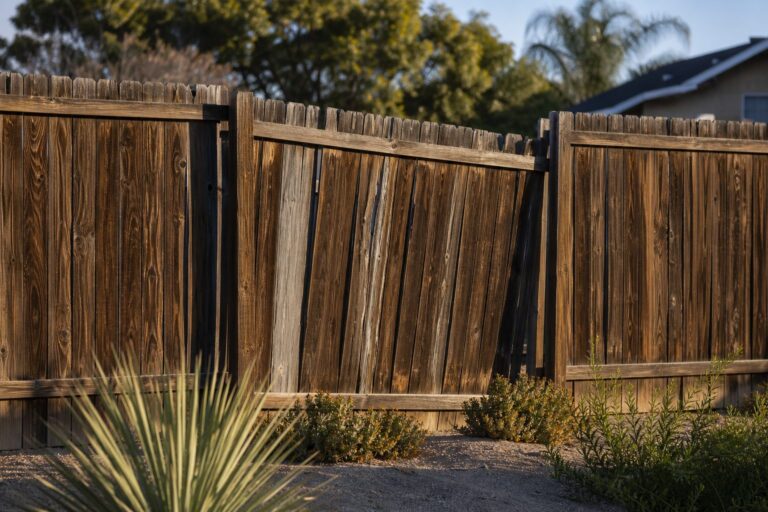
Wood fencing comes in distinct grades that directly impact your budget. No. 2 grade lumber costs 30-40% less than premium grades and works well for most residential projects. This grade includes sound knots and minor imperfections that don’t compromise structural integrity.
Pressure-treated pine costs $2-3 per linear foot and resists rot for 15-20 years in Riverside’s climate. Cedar naturally resists decay and costs $3-5 per linear foot, requiring no chemical treatment. For wood picket fence projects, cedar offers better longevity despite higher upfront costs.
Treatment options include:
- Pressure-treated (most affordable, chemically protected)
- Natural cedar (mid-range, naturally rot-resistant)
- Redwood (premium, excellent durability)
Wood privacy fence panels require thicker pickets than decorative styles. Budget for 1×6 or 1×8 boards rather than thinner options that may warp or split faster.
Vinyl Profiles And Reinforcement Options
Vinyl fencing ranges from $15-40 per linear foot depending on profile thickness and reinforcement. Standard vinyl fence profiles use 0.055-inch wall thickness, while reinforced options reach 0.085 inches for better wind resistance.
Vinyl privacy fence panels need internal aluminum reinforcement in Riverside’s wind conditions. This adds $3-5 per linear foot but prevents warping and sagging. Non-reinforced vinyl works for shorter decorative applications under 4 feet tall.
Vinyl profile options:
| Profile Type | Cost Range | Best Use |
|---|---|---|
| Hollow core | $15-22/ft | Low-traffic areas |
| Foam-filled | $22-30/ft | Standard residential |
| Aluminum-reinforced | $30-40/ft | High-wind areas, tall panels |
White vinyl costs less than color options. Textured finishes that mimic wood grain add 15-20% to material costs but require no painting or staining over time.
Chain-Link And Hybrid Install Approaches
Chain-link fence materials start at $8-12 per linear foot installed, making them the most budget-friendly option. Standard galvanized chain-link lasts 15-20 years, while vinyl-coated versions add $2-3 per foot and come in colors like black or green.
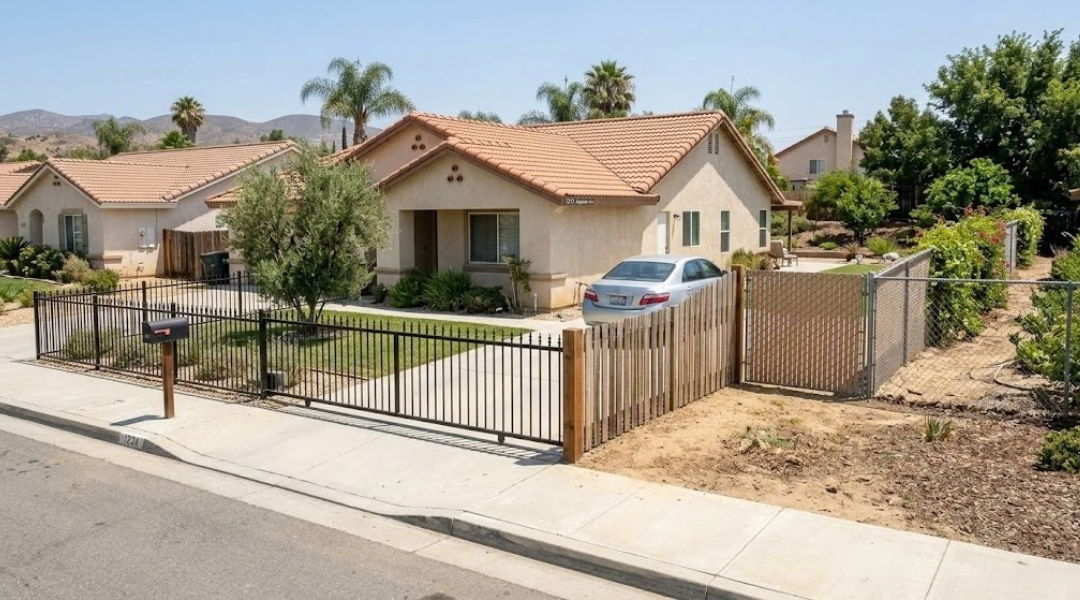
Aluminum fencing costs $20-30 per linear foot but offers a more finished appearance than chain-link. For budget projects, use aluminum for highly visible front sections and chain-link for side or rear boundaries.
Hybrid approaches combine fence types strategically. Install wood picket fence panels along street-facing areas for curb appeal, then transition to chain-link in back areas where privacy matters less. This cuts material costs by 25-35% compared to uniform wood privacy fence installation.
Add privacy slats to existing chain-link for $1-2 per linear foot. This creates visual screening without replacing the entire structure. Plant climbing vines along chain-link sections to achieve natural privacy within 1-2 growing seasons.
Budget Patterns Seen By All Counties Fence & Supply
All Counties Fence & Supply has identified three main patterns that affect project costs in Riverside. Property owners who reduce their fence scope strategically keep functionality intact, while unexpected changes during installation consistently drive up expenses, and timing decisions around labor availability create significant price differences.
Scope Reductions That Preserve Function
You can cut costs by reducing fence height in non-privacy areas from 6 feet to 4 feet while keeping backyard sections at full height. This approach saves 20-30% on materials without compromising security where it matters most.
Reducing total linear footage by fencing only the backyard instead of the entire property perimeter keeps your project functional. You’ll spend $1,500-3,000 instead of $4,000-8,000 for full perimeter coverage.
Switching from decorative caps and post finials to basic post tops saves $3-10 per post. On a 50-post project, this reduces costs by $150-500 without affecting fence performance or durability.
Cost-Effective Scope Adjustments:
- Install gates only where essential rather than at multiple access points
- Use simpler rail designs with fewer horizontal boards
- Skip unnecessary corner decorations and fancy brackets
- Choose standard panel sizes to avoid custom cutting fees
Mid-Project Changes That Increase Costs
Adding extra gates after materials are ordered costs $150-300 more than including them in your initial plan. Contractors need to make additional supply runs and adjust installation schedules.
Changing fence height mid-installation requires new post calculations and different panel sizes. You’ll pay 15-25% more for rush-ordered materials plus additional labor hours for adjustments.
Material upgrades during construction create the biggest budget problems. Switching from pressure-treated pine to cedar after posts are set adds $8-15 per linear foot and delays your timeline by 1-2 weeks.
Property line disputes discovered during installation stop work completely. You’ll pay for crew downtime at $50-75 per hour while surveys get completed and boundary issues resolve.
Labor Scheduling And Seasonal Pricing Effects
Scheduling your fence installation during winter months in Riverside reduces labor costs by 15-20% compared to peak spring demand. Contractors offer better rates when their calendars have openings.
Booking installation 4-6 weeks in advance gives you standard pricing. Rush jobs scheduled within 2 weeks cost 25-40% more due to crew rescheduling and overtime pay requirements.
You’ll save money by allowing flexible installation dates rather than demanding specific weeks. Contractors fill schedule gaps at discounted rates when you give them a 2-3 week window.
| Scheduling Factor | Standard Cost | Rush/Peak Cost | Savings |
|---|---|---|---|
| Winter installation | $2,500 | $3,000 | 20% |
| 6-week advance booking | $2,500 | $3,500 | 40% |
| Flexible dates | $2,500 | $3,125 | 25% |
Multi-property installations in the same neighborhood during one period reduce per-property costs by 10-15% through shared mobilization expenses.
Tradeoffs Between Savings And Longevity
Cheaper materials reduce your initial spending but create higher costs over time through repairs and replacements. The fence material you pick affects how much work you’ll do in future years and how your property looks to neighbors and buyers.
Upfront Reduction Versus Ten-Year Costs
Pressure-treated pine costs $2-$4 per linear foot and lasts 15-20 years in Riverside’s climate. Cedar runs $5-$8 per foot but extends to 20-30 years with minimal care.
Your 100-foot fence in pressure-treated pine costs $200-$400 initially. The same fence in cedar costs $500-$800. That $300-$400 difference seems large at purchase time.
Over 20 years, pressure-treated wood needs replacement once, doubling your total cost to $400-$800. Cedar keeps standing without replacement, keeping total costs at $500-$800.
The math changes when you add labor. Rebuilding a fence takes another 2-3 weekends of your time. Cedar’s higher upfront cost pays back through the years you skip rebuilding.
Maintenance Commitments And Future Repairs
Untreated pine needs staining every 2 years to prevent rot in Riverside’s sun exposure. Each restaining session costs $50-$75 in materials and takes a full weekend day.
Pressure-treated wood extends this to every 3 years. Cedar stretches maintenance to every 4-5 years. Composite fencing needs only occasional cleaning with a hose.
Budget $200-$300 over ten years for pressure-treated maintenance. Cedar drops this to $100-$150. Composite stays under $50 total.
Board replacement adds unexpected costs. Cheaper woods split and warp faster in Riverside’s temperature swings. You’ll replace 10-15% of boards within five years with untreated pine. Cedar typically needs no board replacement in that timeframe.
Visual Impact And Property Value Signals
Real estate agents in Riverside report that worn fencing reduces perceived home value by 3-5%. A deteriorating $400 fence on a $500,000 property signals $15,000-$25,000 in deferred maintenance to buyers.
Cedar’s natural appearance stays attractive as it ages to gray. Pressure-treated wood turns green or black without regular staining. Untreated pine shows weather damage within 18-24 months.
Your neighbors see your fence daily. A fence that looks cheap signals budget constraints. Professional-looking materials like cedar or well-maintained pressure-treated wood suggest property care.
Composite fencing maintains consistent color and texture for decades. This stability matters if you plan to sell within 10 years. The premium you pay returns through stronger buyer interest.