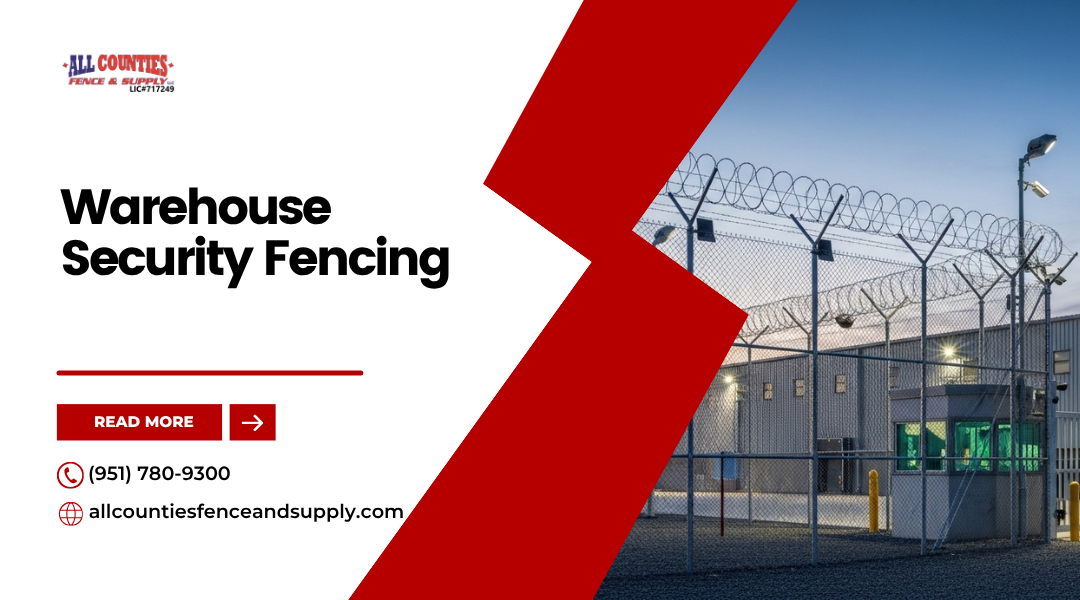
Securing a warehouse or distribution center in the Inland Empire takes careful planning and smart investment. You face challenges such as large open spaces, perimeter access points, and high-value goods that demand effective protection. The right security fencing system strengthens your facility’s defenses, reduces risk, and supports smooth daily operations.
In the Inland Empire’s growing logistics hub, fencing solutions must adapt to heavy vehicle traffic, hot weather, and strict property standards. You need durable materials and designs that balance toughness with accessibility. By matching fence design to operational needs, you create a perimeter that controls movement without slowing business.
Choosing a trusted local partner helps you stay compliant and protected. All Counties Fence & Supply in Riverside understands the industrial conditions shaping fence performance across San Bernardino and Riverside counties. Their experience in secure and efficient fence construction helps you achieve safety and control across your entire facility footprint.
Operational Context Of Industrial Perimeter Security
In the Inland Empire, industrial operations rely on practical and layered perimeter security to protect high-value assets, maintain safety, and ensure smooth logistics. The balance between commercial security needs, regulatory compliance, and daily business flow determines how fencing systems are designed and maintained across large-scale properties.
Facility Types And Risk Exposure Differences
Every property type in the industrial sector carries different perimeter risks. Warehouses holding consumer goods face frequent vehicle traffic, constant personnel movement, and high theft potential. Distribution centers, on the other hand, often process high-value shipments and operate around the clock, increasing their exposure to intrusion attempts and unauthorized access.
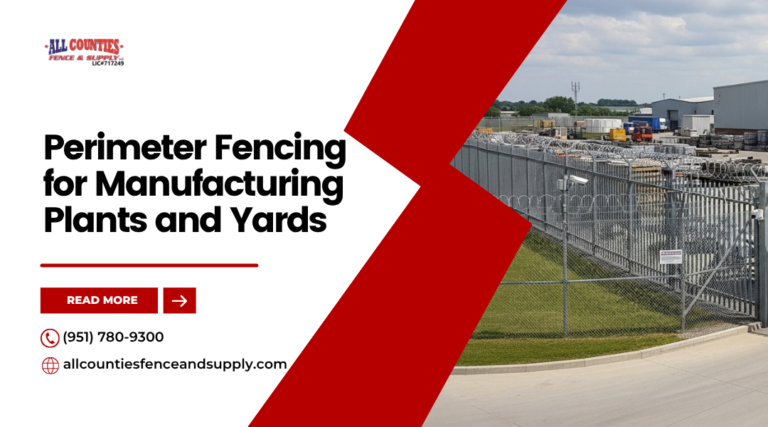
Industrial zones and manufacturing plants also require security tailored to their environment. Locations in busy transport corridors, such as those in Riverside or San Bernardino counties, must manage both external threats and internal logistics. Perimeter fencing at these sites often integrates barriers, surveillance, and controlled entry gates to reduce vulnerabilities.
A clear risk profile helps you decide how robust your fencing and commercial security systems should be. Assets with higher turnover or extended operating hours tend to justify advanced sensor systems, illuminated perimeters, and rapid-response measures.
When Standard Commercial Fencing Becomes Insufficient
Standard commercial fencing—such as basic chain-link enclosures—may not meet the security requirements of an industrial facility. As property size and operational complexity grow, so does the need for stronger materials, anti-climb features, and monitored access points.
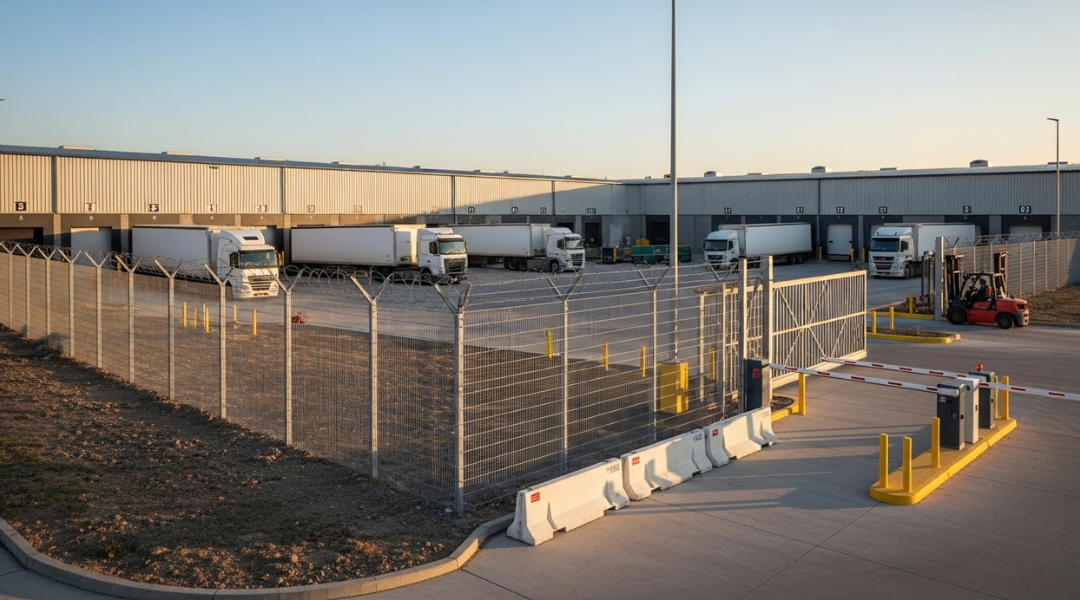
You may find that regular fencing fails to handle vehicle ramming, cutting, or scaling attempts. In such cases, anti-ram barriers, reinforced steel mesh, and electronically monitored detection systems become essential. These upgrades reduce dependency on manual patrols and improve early threat identification.
Fencing must also withstand heavy wear from logistics operations. Trucks, forklifts, and trailers frequently move near boundary lines, requiring durable posts and properly secured gate systems. A combination of physical resilience and integrated alarm technology provides long-term reliability in demanding conditions.
Where Perimeter Control Intersects With Logistics Flow
Smooth logistics flow depends on how well perimeter security design aligns with operational layout. Gate positioning, queue space, and guard post visibility all affect how efficiently you can manage both access and safety.
At distribution centers, truck gates and dock areas must support continuous traffic while enforcing identification and entry verification. Poorly configured gate systems can cause congestion and delay shipments. A controlled perimeter layout, supported by automated gates and electronic logging, helps maintain efficient traffic management.
Integrating perimeter systems with checkpoint procedures allows seamless coordination between security staff and logistics teams. You can use access control software, license plate recognition, and scheduled gate operations to reduce bottlenecks. The goal is to keep shipments moving while ensuring no vehicle or person enters without proper clearance.
Security Fencing Systems And Design Logic
Effective warehouse and distribution center security relies on more than just strong materials. It depends on how you design, layer, and integrate each element of your fence system to match local conditions, threat levels, and operational needs. A well-planned system in the Inland Empire must balance deterrence, visibility, and compliance with site and safety standards.
Material Selection Based On Threat And Scale
You should choose fencing materials based on property size, exposure to crime, and maintenance expectations. Chain link fencing offers cost-effective coverage and visibility, making it a common choice for large distribution centers. For higher security or stricter appearance standards, vinyl-coated chain link improves corrosion resistance and aesthetics.
In smaller or low-risk facilities, vinyl fences or wood fences can work when paired with surveillance or lighting. However, wood needs more upkeep and is less durable in industrial environments. Vinyl fencing lasts longer and requires less maintenance, but it offers less impact resistance than steel or welded mesh designs.
The table below summarizes common materials:
| Material Type | Durability | Maintenance | Visual Appeal | Typical Use Case |
|---|---|---|---|---|
| Chain Link | High | Low | Moderate | Large perimeters |
| Vinyl | Moderate | Very Low | High | Light commercial |
| Wood | Moderate | High | High | Low-risk zones |
Selecting a material that matches your threat level and maintenance capacity ensures consistent performance over time.
Integration With Access Control And Surveillance
Strong fencing works best when connected to access control and surveillance systems. You can link entry gates to keypads, card readers, or biometric systems to track and control who enters your property. For loading areas, automated gates with backup power keep operations moving even during power issues.
Adding CCTV cameras and motion sensors along the fence creates real-time visibility. Pairing these tools with monitoring software helps security teams detect breaches quickly. Many facilities in the Inland Empire now combine electric perimeter fencing with linked cameras and alarms for a layered defense that reduces manual patrol costs.
An integrated system makes it possible to analyze incidents, identify weak points, and adjust security policies based on data rather than guesswork.
Height, Anti-Climb Features, And Deterrence Layering
Fence height and design directly affect how well your perimeter deters intruders. For most warehouses, a height of 8 to 10 feet is standard, while high-risk facilities may require taller or dual-perimeter systems. Adding anti-climb features such as curved top rails, tight mesh spacing, or smooth vinyl panels reduces the chance of forced entry.
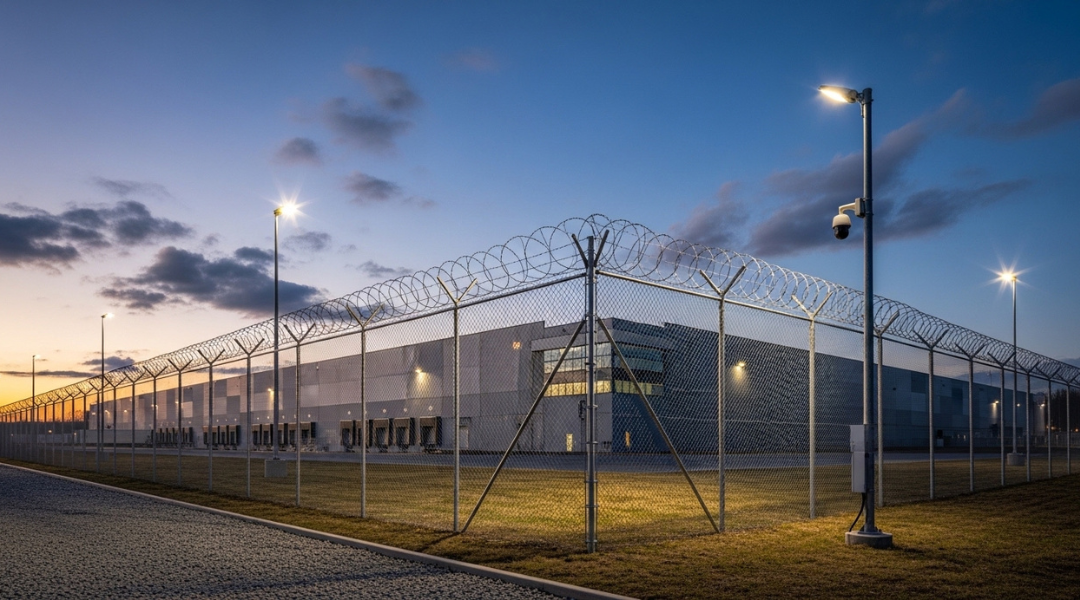
Layering security elements creates an added deterrent. For example, a chain link fence with an outward tilt can be paired with warning signage, lighting, and surveillance coverage to raise psychological and physical barriers. Some sites use electrified fences or vibration sensors that trigger alerts upon contact.
Using combinations of passive and active deterrents gives your property stronger protection while keeping daily operations efficient and compliant with safety standards.
Inland Empire Conditions Shaping Fence Performance
Fencing for warehouses and distribution centers in the Inland Empire must withstand strict local regulations, varied environmental pressures, and constant industrial movement. Your fence’s strength, compliance, and placement depend on how well these regional conditions are understood and addressed during design and installation.
Zoning, Code, And Industrial Compliance Considerations
You face a detailed set of zoning requirements in the Inland Empire, especially in industrial corridors within San Bernardino and Riverside counties. Local codes often regulate fence height, setback distances, gate automation, and integration with security systems. For example, perimeter fences near major logistics hubs may require visibility through chain-link or ornamental steel rather than opaque panels to align with safety and fire codes.
City planning departments often classify warehouse fencing as part of site security systems, meaning you must coordinate with local building and public works divisions. Conditional use permits may apply when fencing exceeds standard height limits or includes electronic access controls. Adhering to California Occupational Safety and Health Administration (Cal/OSHA) standards and municipal ordinances helps ensure any Inland Empire fence is safe, compliant, and resilient under daily operational demands.
| Typical Compliance Factors | Example Requirements |
|---|---|
| Maximum Height | 6–8 feet, depending on zone |
| Perimeter Clearance | Minimum 3–5 feet from property line |
| Material Restrictions | No barbed wire near public walkways |
| Electrical Automation | Subject to city inspection approval |
Environmental Stressors And Long-Span Durability
Hot, dry summers and increasing air pollution in the Inland Empire put constant stress on outdoor structures. Ultraviolet exposure, airborne particulates, and wind-driven dust can degrade coatings and corrode steel fencing over time. Choosing materials like galvanized or powder-coated steel reduces rust and extends surface life in logistics yards where high truck activity raises dust levels.
Rainfall is limited but can be intense when seasonal storms occur. Poor drainage near warehouse loading areas can lead to pooling around fence posts, weakening their foundations. You can reduce this risk by designing deeper concrete footings and ensuring graded surfaces that move water away from the fence line. In areas with higher smog exposure, you may also need coatings formulated to resist acid deposition common in the region’s industrial zones.
High-Traffic Corridors And Vulnerability Patterns
The Inland Empire sits at the core of Southern California’s logistics network, linking the ports of Los Angeles and Long Beach with major freeway and rail systems. Distribution centers here operate around the clock, creating a constant flow of heavy trucks and employee traffic. High-volume movement increases the chance of accidental vehicle impact, forcing you to choose barrier fencing that includes reinforced framing or safety bollards.
You should also expect more wear and intrusion risks along corridors close to I‑10, I‑15, and SR‑60. These areas experience higher incidents of trespassing and property theft due to easier access from major routes. Installing motion-activated lighting and intrusion detection wiring along your Inland Empire fence helps maintain security with minimal manual oversight.
In many industrial parks, shared property lines add complexity. To prevent conflicts, coordinate fence alignment with neighboring operations and document exact line placement. Durable finishes and visible warning signage further reduce liability and protect both assets and personnel in high-traffic environments.
Interpreting Tradeoffs In Cost, Security, And Access
Designing effective fencing for warehouses and distribution centers in the Inland Empire requires weighing how materials, visibility, and access systems affect both safety and cost. Your decisions define how easily operations flow while keeping intruders out and long-term expenses under control.
Balancing Visibility Versus Intrusion Resistance
You must consider how visible your property is from the outside compared to how protected it is from forced entry. Chain-link or welded wire fencing provides high visibility, allowing guards and cameras to monitor activity easily. However, open designs offer less physical resistance against cutting or climbing.
Solid barriers or privacy slats block sight lines and deter observation of valuable inventory or equipment. Yet, these reduce your ability to detect suspicious movement near the perimeter. Visibility demands differ between day and night operations; limited lighting can make opaque fencing risky without added surveillance.
| Fencing Type | Visibility Level | Resistance to Intrusion | Maintenance Need |
|---|---|---|---|
| Chain-link | High | Moderate | Low |
| Steel mesh | Moderate | High | Moderate |
| Solid panel | Low | Very high | High |
Balancing these features helps you maintain situational awareness while limiting exposure. The right mix depends on your site’s layout, lighting, and the potential threat level.
Throughput Efficiency Versus Perimeter Rigidity
Your warehouse throughput depends on smooth access for trucks, employees, and visitors. Overly rigid security fencing can slow this movement. More gates or automated access points increase traffic flow but also create additional entry risks that must be managed with monitoring systems.
Rigid perimeters with few openings reduce breach potential but can lead to congestion at peak shipping times. If drivers or third-party carriers face delays, transport costs rise. Integrating card readers or vehicle recognition can reduce friction without weakening perimeter control.
Think beyond physical barriers. Combining strong gates with real-time access tracking software allows you to protect sensitive areas without creating a bottleneck. This balance supports security while maintaining efficient loading and dispatch operations.
Short-Term Installation Savings Versus Lifecycle Costs
Lower-cost fencing materials and faster installations may appear budget-friendly upfront but often require more maintenance and earlier replacement. Galvanized steel or coated mesh lasts longer than basic uncoated metal, reducing rust and repair visits.
You should factor energy, labor, and downtime from future repairs into the total cost of ownership. Initial savings rarely outweigh recurring service expenses. In many Inland Empire sites, extreme sun exposure accelerates material wear, making durable finishes worth the investment.
A structured approach can help evaluate tradeoffs:
| Cost Aspect | Short-Term Focus | Long-Term Focus |
|---|---|---|
| Material | Basic galvanized wire | Powder-coated or stainless steel |
| Labor | Quick install | Skilled install with reinforced posts |
| Maintenance | Frequent spot repairs | Scheduled inspections, fewer replacements |
Choosing materials that last saves resources, minimizes downtime, and maintains a consistently secure perimeter.
How All Counties Fence & Supply Approaches Industrial Constraints
All Counties Fence & Supply focuses on practical security solutions that account for space limitations, regulatory rules, and environmental stress. Their process balances physical protection, ease of access, and business continuity for warehouse and distribution facilities under heavy demand across the Inland Empire.
Adapting Fence Systems To Mixed-Use Industrial Zones
Mixed-use industrial zones often include warehouses, logistics hubs, and adjoining commercial spaces. You must select fencing that separates these functions without affecting traffic circulation or violating local zoning codes. All Counties Fence & Supply assesses the site layout and adjusts fence height, material, and setback distance to meet both safety and compliance needs.
They often use chain-link, steel mesh, or iron systems for perimeter containment while reserving ornamental or vinyl fencing for entry areas visible from public roads. This approach matches appearance with function.
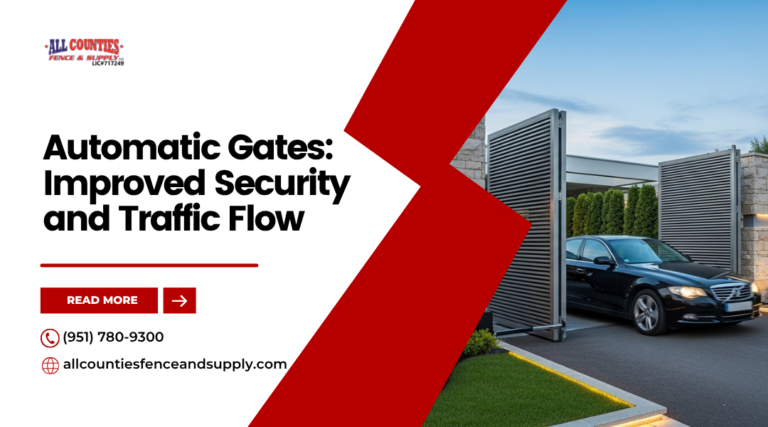
Zoning and fire access requirements shape gate installation planning. Automated sliding or bi-fold gates reduce obstruction in tight spaces and maintain emergency route clearance. By coordinating placement with city planning guidelines, you improve safety while maintaining flexibility for daily logistics.
| Zone Type | Common Fencing Solution | Purpose |
|---|---|---|
| Heavy Industrial | Chain-link with barbed wire | High-security perimeter |
| Light Industrial | Steel or composite panels | Controlled visibility |
| Mixed Commercial | Ornamental iron | Compliance and aesthetics |
Material And Installation Decisions Under Regional Demand Pressure
In the Inland Empire, rapid warehouse expansion and strong winds influence what materials perform best. You need fencing that can withstand exposure to heat and mechanical stress without frequent maintenance. All Counties Fence & Supply uses galvanized steel, powder-coated iron, and reinforced vinyl products selected for longevity and consistent supply availability.
Installation timing and labor scheduling matter under tight project deadlines. The company uses modular fence sections that allow incremental installation alongside construction work. This minimizes downtime for warehouse operations.
For gates, steel-frame swing or slide options are favored where forklift or truck routes experience high turnover. Reinforced hinges, anti-sag frames, and proper alignment ensure long-term use even under heavy vehicle traffic. Their crews plan mounting and anchoring around surface conditions such as asphalt yards or concrete pads.
Aligning Perimeter Design With Operational Continuity
Security fencing must protect assets without interrupting your movement of goods. All Counties Fence & Supply prioritizes entry control systems that manage volume efficiently while securing points of vulnerability. Automated gates with keypads, intercoms, or remote operators allow trucks to move through checkpoints without manual handling.
Perimeter lines are checked against workflow paths to avoid obstructing delivery zones, fire lanes, or employee access points. Fence installation teams coordinate with facility managers to stage equipment and manage phased construction while the site remains operational.
Durability contributes directly to operational continuity. Using corrosion-resistant alloys and treated anchoring systems reduces repair frequency and associated downtime. The goal is steady protection that performs under continuous use, keeping your distribution center functional while meeting regional security and compliance expectations.