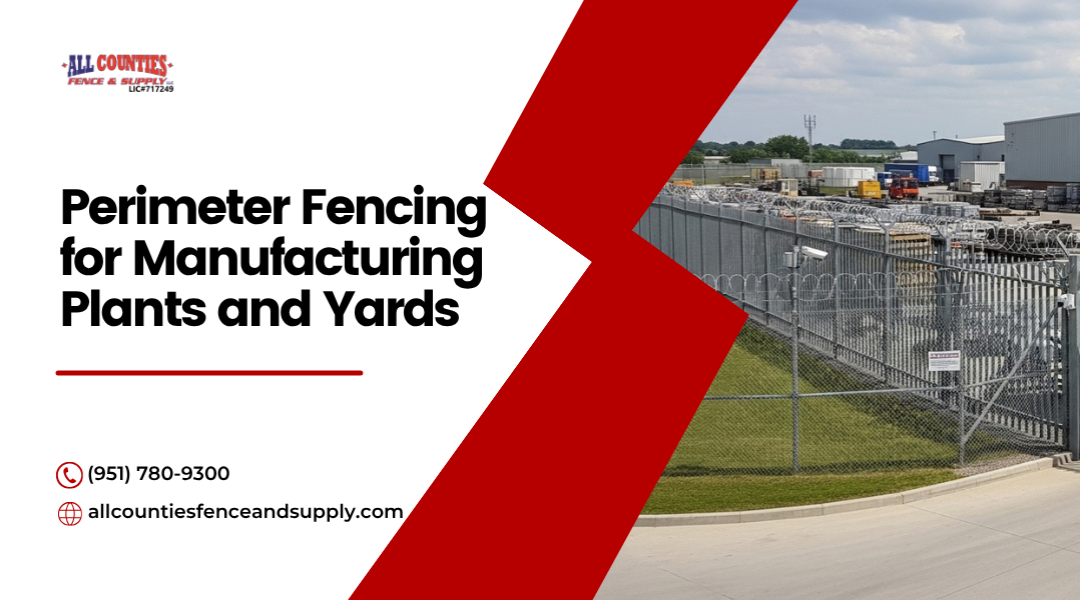
Securing your manufacturing plant or yard starts at the perimeter. You need a fencing system that does more than mark boundaries—it must protect assets, support site safety, and withstand constant industrial activity. The right perimeter fencing solution strengthens security, improves operations, and reduces long-term maintenance costs.
In industrial environments like Riverside, fencing must handle heavy loads, exposure to weather, and demanding workflows. You balance strength, access, and cost every time you select materials or layout a system. Steel palisade and welded mesh panels deliver strong protection, while chain link offers cost efficiency for large yards where visibility matters.
Understanding how fencing systems perform under real conditions helps you make informed decisions. With guidance from experienced professionals such as All Counties Fence & Supply, you can design a solution that meets both security and operational goals while staying aligned with site constraints and budget requirements.
Where Perimeter Fencing Applies In Industrial Operations
Perimeter fencing supports controlled access, protects valuable assets, and maintains compliance within high-risk environments. Site layout, exposure to external conditions, and operational flow determine where each type of industrial fencing performs best.
Manufacturing Versus Storage Yard Exposure Differences
Manufacturing plants and storage yards face different types of exposure. Inside manufacturing zones, fencing separates secure production areas from general access spaces to protect machinery, materials, and workers. You often need durable fencing materials like galvanized steel or coated mesh panels that resist chemicals, vibration, and heavy equipment movement.
In contrast, storage yards remain open to weather, vehicle traffic, and frequent loading activity. The fence must handle corrosion, impact, and dust while remaining stable over uneven ground. Chain link or steel palisade systems are common solutions because they provide long-term value with limited maintenance.
Environmental effects also matter. Manufacturing perimeters benefit from anti-climb features near sensitive process lines or hazardous zones, while yards may require higher fences or barbed wire to protect exposed stockpiles. A comparison can help clarify practical differences:
| Location Type | Common Risks | Recommended Fence Type |
|---|---|---|
| Manufacturing Zone | Equipment tampering, internal access violations | Mesh or palisade fencing |
| Outdoor Yard | Theft, vehicle intrusion, weather exposure | Chain link or welded wire fencing |
Internal Zoning Versus External Boundary Protection
You can use industrial fencing not only around your property but also within it. Internal fencing zones divide production lines, separate storage of hazardous materials, or control employee access. These barriers don’t always need extreme height; visibility and quick installation often matter more for internal layouts. Light mesh or panel fencing provides flexibility for reconfiguration as operations grow.
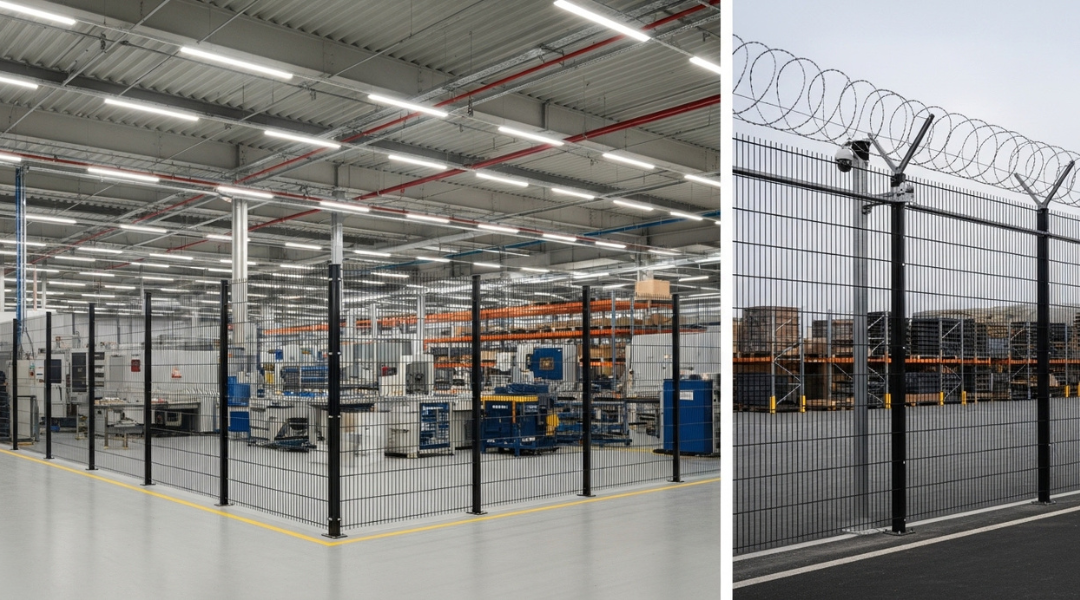
External boundaries present higher security demands. This perimeter marks the legal property line and deters intrusion. Taller, stronger materials—such as steel palisade or anti-climb mesh—help meet safety standards like ISO 1461 or BS EN 1090. Integrating lighting, CCTV, or access gates improves monitoring efficiency without blocking visibility for security teams.
Balancing both internal and external fencing helps maintain continuous protection without interrupting workflow. The internal fences manage safety inside, while external systems define and secure your site perimeter.
When Open-Yard Layouts Increase Perimeter Risk
Open-yard operations, including raw material storage or vehicle lots, bring higher perimeter risks. These areas lack walls or roofing, so your industrial fence acts as the primary barrier against intrusion, wildlife, and wind-blown debris. High visibility fencing allows monitoring from guard posts or cameras without sacrificing strength.
Because open yards cover wide areas, the fence must balance coverage cost and security performance. Taller fences, reinforced posts, and anti-cut mesh help reduce climbing and cutting attempts. In regions with extreme weather, hot-dip galvanized steel resists rust and abrasion more effectively than lighter metal wire.
You should also assess vehicle access points. Wide gates, frequent traffic, and temporary openings often become breach points. Using controlled entry systems—such as automated gates, bollards, or lockable sections—strengthens these weak spots. Regular inspection and tension checks ensure the fence stays aligned and maintains protection over time.
Structural Systems And Material Performance Under Load
When designing perimeter safety fencing for manufacturing plants and yards, structural strength and material performance determine long-term reliability. Differences in load resistance, foundation design, and material elasticity affect how each fencing type withstands operational stress, weather exposure, and accidental impact.
Chain-Link, Steel, And Composite System Roles
Chain-link, steel, and composite fences serve different structural and security needs. Chain-link fencing uses interwoven steel wire that flexes slightly under force, reducing damage from mild impacts. It works well for large perimeters that require visibility and moderate protection.
Steel fencing systems, such as welded mesh or palisade designs, resist high loads and remain stable under heavy pressure or strong winds. They are favored for sites with vehicle activity, storage yards, or equipment zones. Steel’s tensile strength typically exceeds 400–550 MPa, making it suitable for industrial safety fencing in demanding settings.
Composite fencing systems use reinforced polymers or metal–plastic hybrids to achieve corrosion resistance and low maintenance. They are lighter and often used where chemical exposure or extreme moisture could weaken metal options. While not as rigid as steel, they offer reliable stability when reinforced with metal posts or frames.
Impact Resistance And Equipment-Related Stress Factors
Industrial environments expose fences to physical stress from machinery movement, forklifts, and loading operations. A well‑engineered safety fencing system must distribute this stress evenly through the posts and mesh sections.
Key stress sources include:
- Lateral impact: contact from vehicles or shifting materials
- Wind pressure: repeated loads on wide stretches of fencing
- Ground vibration: from nearby heavy equipment or traffic
Steel and welded mesh structures handle direct impacts more effectively due to high yield strength and rigid joint connections. Chain-link designs may deform slightly but recover without structural failure if properly tensioned. For high‑risk zones, anti‑climb mesh or double‑post supports strengthen impact resistance while allowing partial flexibility at connection points.
Routine inspection helps you detect loosening bolts, bent posts, or mesh fatigue early. Reinforcing base plates and using tamper‑resistant fasteners further limits damage from repetitive loads.
Fence Height, Footing Depth, And Structural Stability
Load distribution depends on both fence height and foundation design. Taller fences catch more wind, creating bending forces that increase strain on posts and footings. You should match height and spacing with expected wind conditions and local building codes.
A typical industrial fence between 2–3.5 meters in height requires footings extended at least 600–900 mm below grade in firm soil. For soft or water‑logged ground, deeper foundations or concrete grade beams improve stability.
The footing-to-height ratio is a practical rule for planning:
| Fence Height (m) | Minimum Footing Depth (mm) | Typical Post Spacing (m) |
|---|---|---|
| 2.0 | 600 | 2.4–3.0 |
| 2.5 | 750 | 2.0–2.7 |
| 3.0+ | 900+ | 1.8–2.4 |
You gain structural integrity by anchoring posts in concrete and ensuring uniform post alignment. When dealing with perimeter safety fencing near moving machinery, use reinforced corner posts and cross bracing for additional resistance against torsional forces.
Riverside Industrial Conditions Affecting Fence Longevity
Riverside industrial settings expose perimeter fencing to moisture, shifting soils, and high sunlight levels that can shorten service life. You need to consider environmental stress, soil movement, and regional rules when choosing materials and installation methods for maximum durability.
Soil Conditions And Anchoring Considerations
Riverside terrain often has soft, unstable, or high-moisture soil, which affects fence stability. Saturated ground can loosen posts and increase corrosion at the base. When installing perimeter or electric fencing, you should use deep-set concrete footings or pile-driven supports to prevent tilting or collapse.
It helps to assess the soil type before construction:
| Soil Type | Typical Challenge | Recommended Measure |
|---|---|---|
| Sandy | Poor grip and erosion | Use deeper anchoring rods |
| Clay | Shifting and water retention | Add drainage gravel layers |
| Silt or Loam | Uneven compaction | Reinforce with cross-bracing |
Use galvanized or epoxy-coated steel to resist moisture-related rust. In high-water areas, consider raised bases that keep wiring and components clear of standing water, reducing electrical hazards.
Heat, UV Exposure, And Material Degradation Rates
High UV levels and heat reflection from industrial surfaces can accelerate material degradation. Coated steel and aluminum fencing perform better under sun exposure than untreated options. Vinyl and composite fences may fade or warp without UV-resistant additives.
You can extend service life by choosing UV-stabilized coatings or powder finishes. For electric systems, protect insulators from sunlight and heat buildup to maintain voltage performance. Regular inspection can reveal early signs of cracking, fading, or brittle wiring components.
Keep surfaces clean to prevent dust buildup, which can trap heat. Installing partial shade panels or light-colored finishes also helps reduce temperature stress on metal.
Regulatory Expectations Across Industrial Zones
Riverside industrial zones often enforce local fencing and electrical safety standards to protect both workers and nearby communities. These may include minimum height, grounding requirements for electric fencing, corrosion resistance specifications, and floodplain compliance.
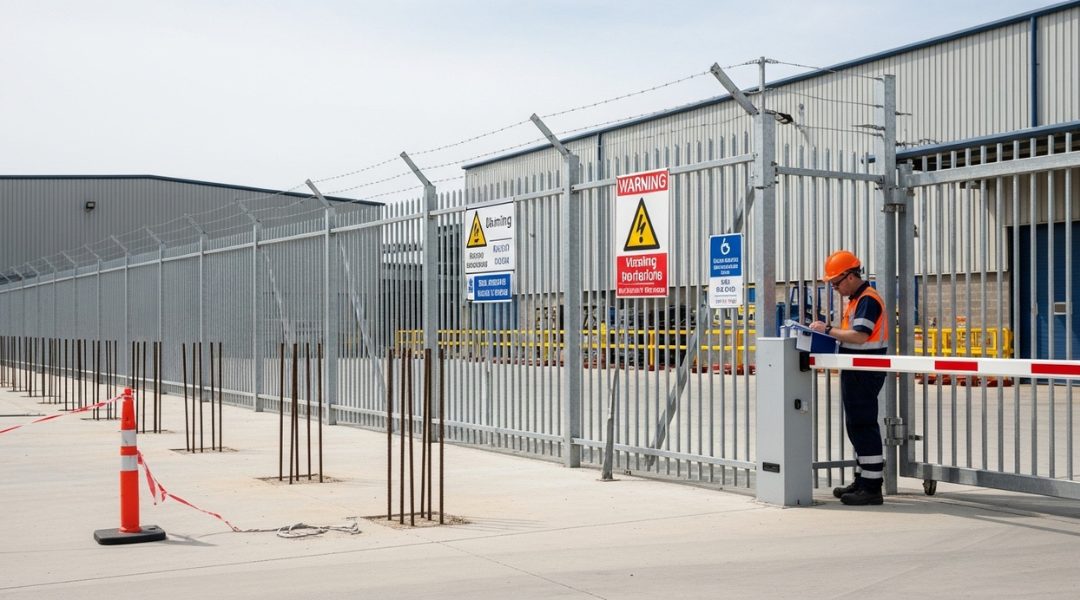
You should verify regulations from agencies overseeing industrial safety and environmental protection before installation. Many zones require certified materials and periodic inspections to confirm that perimeter structures remain intact during seasonal changes.
Maintaining proper documentation, such as installation schematics and material records, can simplify future audits. Following these expectations ensures the fence remains both compliant and structurally sound under long-term industrial use.
Interpreting Security, Access, And Cost Tradeoffs
Balancing security, accessibility, and cost requires a practical understanding of how each factor affects the others. You must consider how perimeter security systems influence day-to-day operations, how much visibility your staff needs for safety and monitoring, and how installation decisions impact long-term expenses and maintenance needs.
Controlled Access Versus Operational Throughput Demands
Manufacturing plants depend on efficient movement of goods and personnel. At the same time, you need secure access control that prevents unauthorized entry. Balancing these needs often involves choosing the right gate systems, vehicle barriers, and integrated badge or keypad entry points.
High-security fencing with limited access gates can slow vehicles and trucks during shifts or deliveries. To avoid bottlenecks, you can design segmented access zones, allowing staff and logistics traffic to flow separately. Adding electronic locking or automatic lifts can also reduce delays.
For facilities with high throughput, consider access control integration with scheduling software or RFID systems. These technologies reduce manual checks while keeping the perimeter secure. In lower-risk areas, simpler chain-link or mesh fencing may be enough if paired with controlled entry gates.
| Security Need | Access Control Option | Impact on Throughput |
|---|---|---|
| High | Electronic gates, biometric access | May slow entry slightly |
| Moderate | Keycard or RFID readers | Balanced performance |
| Low | Manual locks or simple gates | Quick access, lower security |
Visibility Requirements Versus Intrusion Deterrence
Visibility helps you monitor activity, but solid barriers can better deter intruders. Finding the right level of transparency in your perimeter security solutions is key. Mesh or welded panel fences provide good line-of-sight for cameras and guards, while still offering a physical barrier.
Opaque barriers such as steel palisade fencing restrict views but signal strength and prevent scaling. If surveillance is a priority, clear-view mesh allows monitoring without sacrificing integrity. Lighting and CCTV coverage can compensate for visibility lost in more closed fencing types.
You should also account for location-specific risks. Industrial sites in busy urban zones benefit from controlled visibility to protect privacy, while open yards may prefer visibility for deterrence and faster response to intrusions.
Installation Cost Versus Long-Term Maintenance Burden
Installation cost often shapes your initial fencing choice, but maintenance determines total ownership over time. Galvanized steel and powder-coated panels cost more upfront yet offer decades of service with limited upkeep. In contrast, chain-link or PVC-coated fencing is less expensive to install but can corrode or deform faster under industrial wear.
When choosing materials and design, think about the environment around your site. Coastal plants need corrosion-resistant coatings, while chemical facilities may require tougher finishes. Spending more on durable materials can reduce future repairs and disruptions.
| Fence Type | Initial Cost | Maintenance Level | Expected Lifespan |
|---|---|---|---|
| Steel Palisade | High | Low | 20+ years |
| Mesh Panel | Medium | Low | 15–20 years |
| Chain Link | Low | Medium | 10–15 years |
Routine inspections and cleaning help maintain structural integrity. Small preventive efforts, such as tightening fixings or treating rust early, will protect your investment and extend the performance of your perimeter security system.
All Counties Fence & Supply Perspective On Industrial Constraints
Every manufacturing site faces unique perimeter challenges shaped by heavy equipment use, large open yards, and mixed operational zones. Effective fencing depends on how well it adapts to complex layouts, secures broad areas without frequent maintenance, and aligns with daily workflow patterns.
Adapting Fencing Systems To Mixed Manufacturing Environments
You often manage spaces where production, storage, and vehicle access overlap. Each area needs a fence that matches its risk level and operational flow. Modular fencing systems give you flexibility by allowing quick reconfiguration as facilities expand or convert work zones.
All Counties Fence & Supply uses modular sections that handle varied terrain and integrate gates or removable panels where needed. This makes it easier for you to separate hazardous materials storage from main operations without disrupting efficiency.
When conditions call for custom fencing solutions, the company designs hybrid systems using chain link, welded mesh, or reinforced steel panels. This approach keeps costs manageable while addressing unique load or clearance requirements. Compliance with safety and fire access standards remains a central design factor, ensuring safe evacuation and inspection routes.
Balancing Durability With Large-Scale Yard Coverage
Industrial yards cover significant acreage, so your fencing choice must endure weather, machinery vibration, and long-term wear. All Counties Fence & Supply focuses on structural strength through heavier posts, deeper foundations, and galvanized frameworks that prevent sagging across long runs.
| Factor | Industrial Standard | Effect on Lifespan |
|---|---|---|
| Post depth | 30–36 inches | Reduces leaning and movement |
| Wire gauge | 9–11 gauge | Increases resistance to impact |
| Coating | Hot-dip galvanized or powder | Prevents rust and corrosion |
You gain lower lifetime maintenance costs when materials match environmental demands. Fence sections for inland facilities often use galvanized steel, while coastal or chemical plants may require powder-coated or composite materials that resist corrosion. Planning for maintenance access—like removable segments along service roads—keeps long-term upkeep simple and predictable.
Aligning Perimeter Design With Equipment Movement Patterns
Efficient workflow depends on how well your fencing aligns with heavy equipment routes and material transfers. Poorly placed barriers lead to congestion and damage. All Counties Fence & Supply studies traffic flow maps and turning radiuses to locate gates and access points that support forklifts, trucks, and cranes.
Wide cantilever or sliding gates maintain security while enabling vehicle entry without overhead obstructions. You can combine electronic access systems or card readers to control entry during specific shifts.
In areas with constant equipment motion, reinforced corner posts and flexible gate mounts reduce impact damage. Protective bollards near gates extend fence life and safeguard vehicles. Careful spacing of fence lines and entry points ensures you maintain safety without slowing operations.