Owning a home in a Riverside community often means working within the structure of a homeowners association (HOA). These groups keep neighborhoods looking uniform and protect property values, but they also set clear rules about what you can build—including your fence. You must follow your HOA’s fence rules to avoid fines, delays, or being forced to tear down non‑approved work.
Each HOA in Riverside operates under its own Covenants, Conditions, and Restrictions (CC&Rs), but most share common goals: safety, consistency, and aesthetic balance across the community. You’ll deal with limits on height, color, and material, plus an approval process through an architectural review committee before any work begins. These layers of rules work alongside city regulations and the state’s Davis‑Stirling Act, shaping what’s possible on your property.
Understanding these rules helps you plan smarter and keeps your project on track. As you’ll see ahead, knowing how to interpret these HOA guidelines—and applying them effectively with All Counties Fence & Supply—can make the difference between a smooth installation and an expensive setback.
Regulatory Layers Governing HOA Fence Decisions
Your fencing plans must follow several layers of regulation, including state housing law, city building codes, and homeowners association (HOA) standards. Each layer serves a different function but works together to control what materials, heights, and styles you can install within your property lines.
CC&Rs, Architectural Guidelines, and Municipal Overlap
When you purchase a home in a common interest development run by an HOA, you automatically agree to the Covenants, Conditions, and Restrictions (CC&Rs). This document, required under the Davis-Stirling Common Interest Development Act, outlines your obligations to the HOA, including how you can modify your property exterior. In most communities, the HOA operates as a nonprofit mutual benefit corporation that enforces these rules through its board and an architectural review committee.
City and county governments set baseline codes that regulate fence safety, height limits, and required permits. The Department of Real Estate oversees compliance for HOAs and ensures governing documents meet legal standards.
An HOA’s architectural guidelines often go beyond basic code. They may require certain materials like cedar, vinyl, or decorative metal and prohibit unfinished or chain-link fences. Expect to submit a site plan, material samples, and finish details for approval. You must meet both the municipal code and the HOA design rules before construction starts.
When HOA Authority Supersedes City Allowances
Your city permit does not override HOA restrictions. The general rule is simple: the more restrictive standard applies. If Riverside’s local code allows an eight-foot backyard fence but your HOA limits fences to six feet, you must follow the six-foot rule.
Some HOAs impose limits for uniform community appearance, not for safety reasons. The Davis-Stirling Act still gives associations authority to control aesthetics and shared property interests. These standards are enforceable if they are clearly stated in your CC&Rs and applied consistently.
In rare cases, state or federal law limits that authority. HOAs cannot block accessibility accommodations or safety barriers that building codes require. However, if a city allows a fence style that your HOA’s regulations forbid, you cannot build it without a written variance from your board.
| Regulation Source | Governs | Example Limitation |
|---|---|---|
| City Building Code | Safety, setbacks, permits | Max height 8 ft in rear yard |
| HOA CC&Rs | Materials, color, aesthetics | Must use cedar; natural tones only |
| State Law (Davis-Stirling Act) | Legal framework for HOAs | Requires consistent rule enforcement |
Common Design Restrictions Across Riverside HOAs
Riverside HOAs often set detailed fence standards to maintain a consistent neighborhood appearance. These rules typically address fence height, materials, and placement limits that balance homeowner privacy with the community’s visual harmony.
Height Limits, Material Controls, and Color Palettes
Most HOA fence guidelines in Riverside neighborhoods limit fence height to 6 feet in backyards and 3 to 4 feet in front yards. These limits align with local city codes and are meant to preserve sightlines. Taller fences may require written approval from the HOA board.
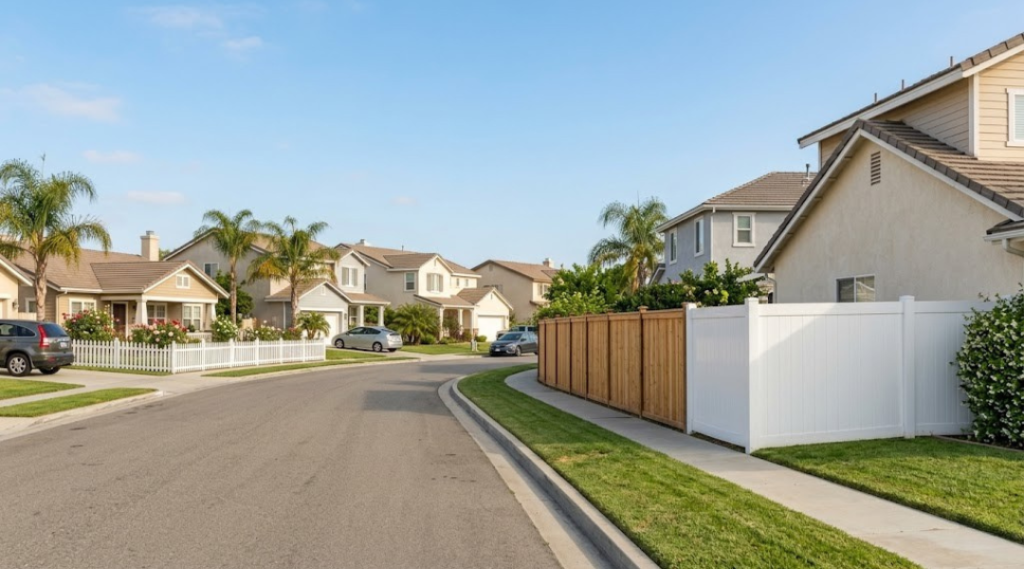
Approved materials usually include wood, vinyl, metal, or wrought iron, while chain-link and unfinished concrete are often prohibited. Some HOAs limit the use of solid wood fences and instead encourage good-neighbor or semi-open styles.
Color control is another key feature. Associations may require neutral shades such as beige, brown, or white that match the home’s exterior or community palette. Bright or reflective finishes are usually disallowed. Before you build, it’s best to confirm both the fence style and color samples with the architecture review committee to avoid costly corrections or formal violation notices.
Visibility Rules for Front Yards and Corner Lots
Visibility rules protect public safety and preserve curb appeal. You must keep fences in front yards low enough not to block views of sidewalks, driveways, or neighboring homes. For corner lots, most HOAs and city zoning codes impose clear sight triangles, meaning no fence or picket fence section can rise above a set height—often 3 feet within 10–15 feet of an intersection.
Many associations also regulate see-through designs like wrought iron or open picket fences near corners to maintain visibility for drivers and pedestrians. Solid or tall fences in these areas may need setback adjustments or design modifications. Always review both HOA fence rules and city requirements before planning any corner or perimeter fencing to ensure compliance and maintain your property’s safety and look.
Interpreting Approval Processes and Compliance Timelines
In Riverside communities, fence projects often move through structured review cycles that determine whether construction can begin. The process involves written applications, official approvals, and adherence to compliance timelines that protect both community design standards and your property rights.
Architectural Review Submissions and Revision Cycles
You usually begin by submitting a formal architectural application to your HOA’s Architectural Review Committee (ARC). This committee checks whether your fence plans match the design standards set in the community’s Covenants, Conditions, and Restrictions (CC&Rs). A typical review period lasts 30–45 days, depending on meeting schedules and the thoroughness of your submission.
Include each required item—site plan, height details, materials, and paint colors. Incomplete or unclear documentation causes delays and possible rejection. The ARC may request additional drawings or material samples during its evaluation.
If you receive conditional approval, make the requested changes before resubmitting. Most boards allow one or two revision cycles before issuing a final decision. Save all correspondence and keep written confirmation of approval, as it protects you if a dispute resolution process becomes necessary later.
| Step | Typical Duration | Responsible Party |
|---|---|---|
| Submission Verification | 1–3 business days | HOA or property manager |
| ARC Review | 2–4 weeks | Architectural Review Committee |
| Board Decision | 1–2 weeks | HOA Board of Directors |
Enforcement Patterns and Violation Consequences
Once construction begins, your compliance responsibilities continue. HOAs in Riverside commonly conduct follow-up inspections to confirm that the finished fence matches the approved plans. If a fence deviates from its approved design or encroaches on restricted space, the HOA may issue a violation notice.
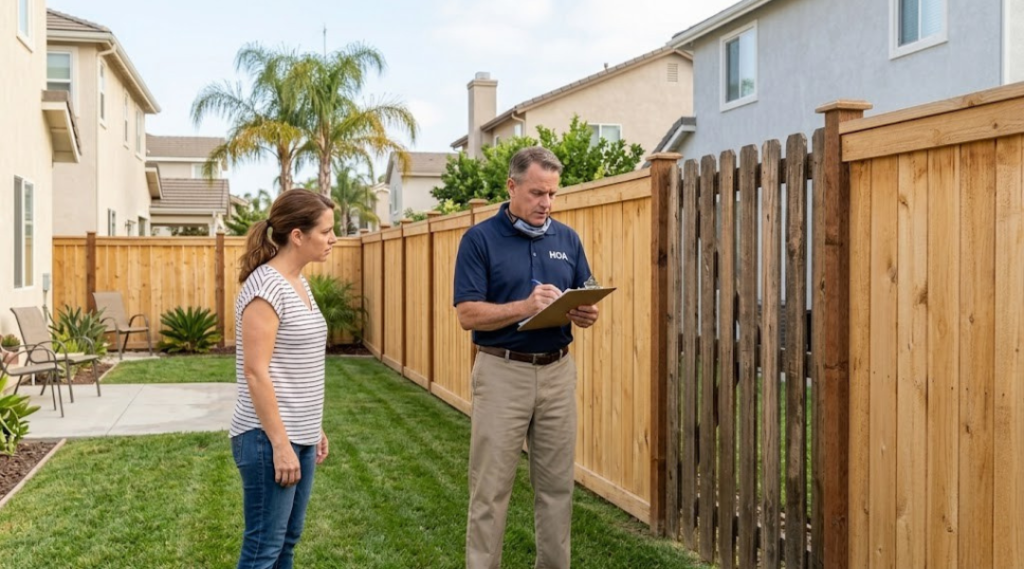
Penalties range from formal warnings to fines or mandatory fence removal. In serious cases, the HOA can charge the cost of correction to you after written notice. Ongoing fence maintenance is also a common condition of approval, meaning you must keep the structure clean, painted, and structurally sound.
If you disagree with an enforcement action, most HOAs provide an internal appeal or hearing process before fines become final. Engaging promptly and documenting repairs or upkeep helps you show good faith and often avoids further escalation.
Applying HOA Constraints in All Counties Fence & Supply Context
Your fence project must balance HOA standards with supplier options, county codes, and durable materials. This involves turning rules into practical designs and resolving gaps between written guidelines and on-site needs.
Translating Guidelines Into Buildable Fence Specifications
At All Counties Fence & Supply, you start by aligning HOA requirements with material and installation standards. Most Riverside communities approve vinyl, cedar, or ornamental iron, while composite or horizontal designs may need special review. You should match color and style to neighborhood themes—white vinyl and natural wood tones are often safe choices.
Create a comparison table to streamline approval:
| Specification | HOA Standard Example | Buildable Specification |
|---|---|---|
| Height | 6 ft backyard limit | 6 ft vinyl privacy with top rail |
| Material | “Wood or vinyl” | Cedar board-on-board panels |
| Color | “Neutral tone” | Light tan or white finish |
Include detailed manufacturer data, fence layout plans, and installation timelines in your submission. Clear documentation shows the HOA committee that your proposal meets both regulatory and aesthetic goals. Adjust early in planning so the fence you order fits approved parameters rather than requiring post-approval changes.
Navigating Inconsistencies Between Written Rules and Site Realities
HOA documents sometimes leave gaps or conflict with actual property conditions. You may find the lot slopes, utilities limit post placement, or a neighboring fence sets a different precedent. Before you build, verify property lines, easements, and elevation differences through a site inspection.
If HOA rules don’t cover your specific case, request written clarification or a variance. Many Riverside HOAs allow adjustments when supported by accurate site data and photos. Keep every communication documented.
When county code and HOA language differ, follow the stricter requirement. For example, if your HOA allows a 7‑foot rear fence but the city code caps at 6 feet, reduce height to remain compliant. Resolving these issues before construction prevents delay, fines, and forced modifications.
Tradeoffs Between Uniformity, Property Value, and Personal Preference
In many Riverside communities, HOA rules seek to balance consistent neighborhood aesthetics with individual homeowner interests. These standards help maintain property values but can sometimes conflict with homeowners’ needs for practicality, privacy, and cost control.
When Standardization Limits Functional Improvements
You may find HOA fence standards restrictive when trying to improve your property’s function or durability. Many associations require uniform fence materials such as wood slats or vinyl panels, limiting choices like metal or composite materials that offer longer life or easier maintenance. These restrictions aim to keep the community visually cohesive but can increase replacement costs over time.
Functional upgrades also face limits. For example, taller fences for better privacy or sound reduction often exceed height rules. Even color choices may need prior approval to match the community design palette. In most Riverside HOAs, violating these uniformity rules can delay project approval or trigger fines.
| Common Restriction | Purpose | Impact on Homeowner |
|---|---|---|
| Fence height limit | Preserve sightlines | Reduces privacy options |
| Material restrictions | Keep visual uniformity | May increase costs |
| Color control | Maintain design consistency | Limits personal style |
Standardization protects shared property values but sometimes reduces flexibility for practical improvements. You must balance these tradeoffs before committing to a design.
Long-Term Implications of Non-Compliant Modifications
Making unapproved fence changes can seem harmless but often carries lasting consequences. Many HOAs in Riverside issue violation notices, daily fines, or legal action if fences fail to meet approved guidelines. If the issue remains unresolved, you may need to remove or replace the fence at your own expense.
Non-compliance can also affect property resale. Buyers and real estate agents often review HOA compliance during escrow. A violation record may delay closing or require costly corrections. Over time, such disputes can lower buyer confidence and make your property less competitive in the market.
Even small deviations—like using alternate hardware or adjusting height by a few inches—can draw official attention. Keeping documentation of approvals and permits helps avoid these long-term risks while keeping your property aligned with community expectations.