A well-specified commercial fence does more than mark property lines—it defines how your facility functions, protects assets, and meets compliance standards. A clear, detailed specification checklist helps you make consistent, code-compliant decisions from design through installation. When security, access control, and visual appeal all matter, knowing what belongs in that checklist keeps projects efficient and reduces costly revisions later.
As an architect or facility manager, you balance appearance, safety, and regulatory demands every day. A structured approach to fence specification guides you in selecting the right materials, system type, and performance standards for each site condition. It also ensures that your team and contractors work from the same requirements, preventing misunderstandings that can delay schedules or compromise safety.
Through this guide, you’ll explore how to define the right scope for different commercial site types, interpret specifications under local Riverside conditions, and apply practical checklist logic trusted by professionals and suppliers like All Counties Fence & Supply. Each section builds a common framework for smarter, more consistent fence design across every project.
Defining Applicability Across Commercial Site Types
Each commercial site type presents unique design expectations and regulatory demands that affect how you select, specify, and install a fence system. Structural strength, visual integration, and security level must align with operational needs, safety codes, and site-specific risk factors.
Institutional, Industrial, and Mixed-Use Distinctions
Institutional sites such as schools, hospitals, and government campuses often prioritize controlled access and public safety over heavy fortification. A security fence here may rely on ornamental metal or welded wire panels to maintain visibility while preventing unauthorized entry. Height limits and accessibility standards often restrict elements like barbed wire, making clear zoning and gate control more critical.
Industrial facilities place more weight on protection and durability. You may specify chain link or palisade-style perimeter fencing with reinforced posts or anti-climb mesh. These systems often exceed 8 feet in height and may integrate barbed or razor wire for deterrence. Performance and compliance with OSHA or local codes drive most selections rather than aesthetics.
Mixed-use and retail developments place emphasis on aesthetic cohesion. In these environments, privacy screening, consistent finishes, and pedestrian-friendly gates matter most. The fence becomes part of site branding and must comply with municipal design guidelines while still providing boundary definition and access control.
| Site Type | Typical Focus | Common Fence Features |
|---|---|---|
| Institutional | Safety, controlled access | Durable, visible, no barbed wire |
| Industrial | Security, durability | High strength, anti-climb, barbed wire allowed |
| Mixed-Use | Aesthetics, access control | Decorative, privacy panels, moderated height |
When Perimeter Security Shifts Specification Priorities
When the security perimeter defines your project’s core function, performance standards take precedence over visual preferences. In these cases, you must evaluate potential threats, access frequency, and surveillance coverage before selecting a system. Height, material gauge, and post foundations become specification priorities, not optional details.
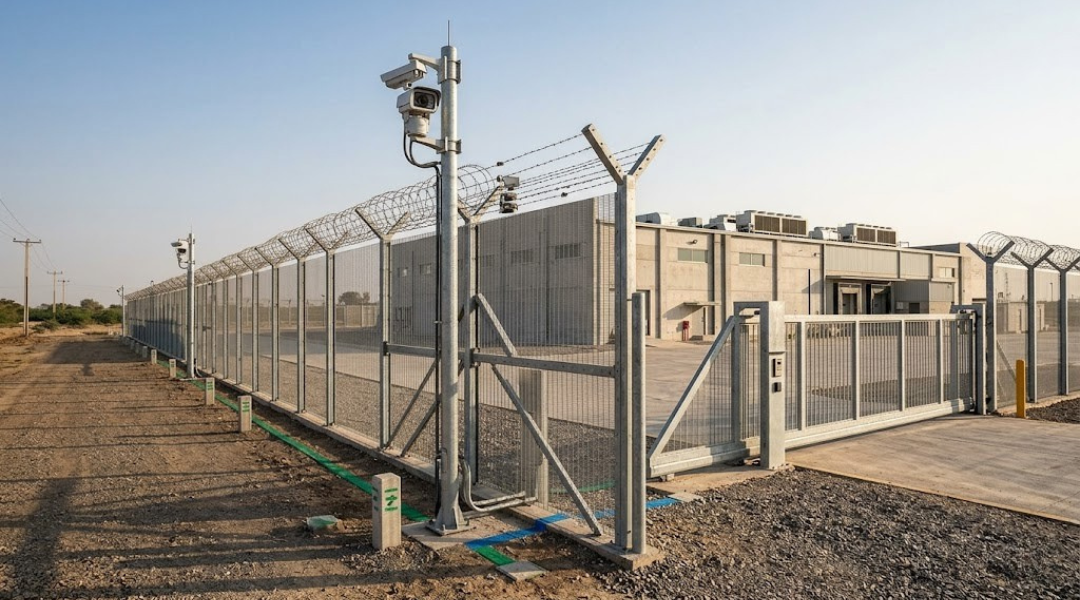
In high-risk locations such as logistics centers or data facilities, security fencing merges with monitoring systems. You might coordinate conduit paths for cameras, sensors, or controlled gates. Fences often include anti-climb mesh, crash-rated components, or clear “no-landscape” buffer zones for easier visibility.
As threat levels increase, the specification also changes in tone—from decorative boundary to protective infrastructure. Your focus shifts toward compliance with federal or defense guidelines, ensuring that every element, from gate hardware to finish coating, supports long-term reliability and security performance.
Scope Boundaries in Fence System Specifications
In a commercial fencing project, the specification must define where structural boundaries end and where operational systems begin. Clear scope limits reduce confusion during bidding and ensure reliable performance across construction, access control, and facility maintenance.
Structural Elements Versus Access Control Systems
You should separate physical fence components from electronic or mechanical access systems within the specification. Structural elements—such as posts, rails, mesh panels, and footings—belong to the fencing contractor. Access control systems—like gate operators, card readers, and safety sensors—usually fall under electrical or security trades.
This distinction prevents overlap in responsibilities. For example, you may specify that swing gates and their hinges are furnished by the fence contractor, but motors and wiring are installed by the access control team. Inconsistent language often leads to delay and warranty conflicts when integration points fail.
Your documentation should define handoff points, such as conduit placement, lighting near gate areas, and alignment tolerances for entry hardware. Include a coordination note that requires both teams to verify gate placement, turning radius, and power access before installation begins. Clear role definitions make future maintenance easier and reduce cost disputes later.
Temporary Installations Versus Permanent Infrastructure
Project drawings and specifications must also distinguish between temporary fences used for construction safety and permanent infrastructure meant for long-term property security. Each system has different design intent, materials, and life spans.
Temporary barriers generally use lighter posts and base supports, often without foundations. You might select them for short-term hazard control or crowd guidance. Permanent fencing uses embedded posts, heavier materials, and coatings designed for decades of exposure.
When writing your fence specification, list lifespan expectations and maintenance responsibilities in a table such as:
| Type | Expected Life | Removal Required | Maintenance Level |
|---|---|---|---|
| Temporary | < 1 year | Yes | Minimal |
| Permanent | 20+ years | No | Routine cleaning and inspection |
By defining which category applies at each boundary, you create a clear, enforceable basis for construction, inspection, and long-term facility management.
Material Performance Standards and Compliance Factors
You must balance structural strength, material durability, and legal requirements when specifying commercial fences. The right materials and standards ensure the fence meets performance expectations while staying compliant with building and safety codes.
Load Resistance, Corrosion Ratings, and Lifecycle Metrics
Your fence design must withstand site-specific loads such as wind pressure, impact, and weight from gates or attachments. Structural integrity depends on proper load resistance classification based on fence height, span length, and post spacing. ASTM standards—such as those for chain-link and welded wire mesh—outline performance tests for tension, weld strength, and material thickness.
Steel Selection
| Material | Key Strength Feature | Common Use |
|---|---|---|
| Galvanized steel | Zinc coating for corrosion resistance | Industrial perimeters |
| Aluminum | Lightweight, non-rusting | Decorative or low-impact sites |
| Welded wire mesh | Rigid panel strength | Security and facility enclosures |
Corrosion protection directly affects lifecycle costs. You can extend service life by selecting metals with high corrosion ratings or using coatings such as hot-dip galvanization or polyester powder finishes. Track expected lifecycles in project documentation to evaluate replacements and maintenance intervals.
Regulatory Codes Influencing Commercial Fence Design
Regulatory frameworks define acceptable materials, height limits, and safety clearances. Commercial fences often fall under the International Building Code (IBC) and International Residential Code (IRC) for structural loads and property line considerations. ASTM and ANSI standards specify test methods for materials and coatings to confirm performance claims.
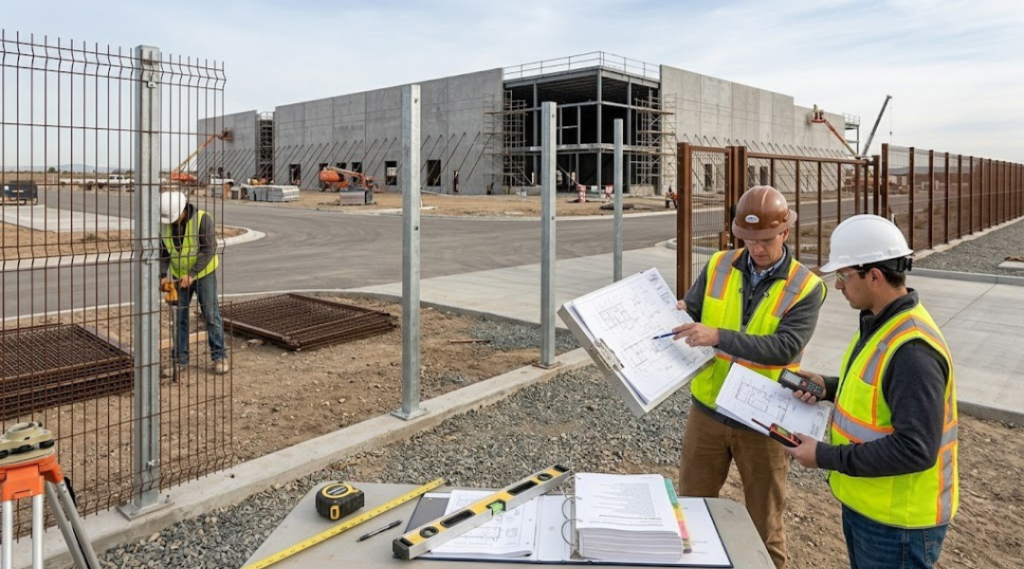
Code compliance also includes security and accessibility. Facilities such as detention centers, athletic complexes, and industrial yards must meet specialized ASTM F2656 or local zoning rules for impact resistance and perimeter security. When specifying a fence, review local permitting requirements alongside federal standards to avoid rework or delays. Keeping detailed compliance records supports approval and eases future maintenance or modification reviews.
Interpreting Specifications in Riverside Project Conditions
You face distinct environmental and regulatory factors when specifying commercial fences in Riverside County. Soil movement, dry climate, and local construction codes all shape how materials perform and how inspectors assess compliance at each stage of approval.
Climate Exposure and Soil Interaction Considerations
Riverside’s semi-arid climate and wide temperature swings place stress on coated metals, sealants, and concrete foundations. Prolonged sun exposure can accelerate fading or reduce coating performance, especially on darker finishes. You should select UV-resistant powder coatings and require documentation to confirm compliance with ASTM corrosion standards.
Soils in the county often vary between sandy alluvium and clay-based types, which influence footing depth and post stability. Clay expands with moisture, while sandy soil needs broader footings to resist pullout. In hillside or drainage-prone sites, include geotechnical input to validate foundation design and confirm grading plans align with as-built elevations.
Use this checklist during design coordination:
| Condition | Recommended Response |
|---|---|
| Expansive clay | Increase footing depth and include drain rock |
| High-solar exposure | Specify UV-stable coatings |
| Sloped terrain | Step or rake fence panels per grade |
These small adjustments improve long-term fence stability and reduce failures found during final inspection.
Municipal Codes and Inspection Expectations
Riverside County enforces Building and Safety Department requirements consistent with adopted state codes. You must verify fence placement, maximum height, and material restrictions before permit submission. Typical limits are 6 feet in commercial zones unless enhanced security or screening justifies greater height.
Plan review staff may request drawings showing clear zones, post spacing, and gate swing directions. During construction, inspectors confirm footing depths, post alignment, and compliance with electrical routing for automated gates. Keep documentation such as manufacturer data sheets and coating certifications on-site for easy verification.
Final inspection confirms that fence installation matches approved plans and complies with accessibility and visibility standards near intersections and fire routes. Addressing these code and inspection items early helps you avoid costly revisions or delays during project closeout.
Applying Specification Logic in All Counties Fence & Supply Context
You need to align fence design decisions with performance objectives, cost efficiency, and local installation practices. Your specification process should connect product data, site conditions, and long-term maintenance strategies into one practical framework for execution.
Translating Design Intent Into Install-Ready Systems
You translate architectural intent into usable specifications by defining clear, measurable criteria for materials, finishes, and performance. Every fence system—from chain link to ornamental steel—should include details for height, post spacing, wire gauge, coating type, and gate hardware to ensure consistent quality.
Start with your design goals, then verify they match ASTM, UL, or local county standards. Align fence selection with UFC 4-022-03 security guidance when applicable, especially for high-security or restricted sites. Clear documentation helps installers interpret intent correctly without needing design changes during construction.
Use structured specification formats such as Division 32 31 13 – Chain Link Fences and Gates. These formats list key requirements like material class, protective coating, and connection methods. They also specify acceptance testing and warranty details.
Your specification logic should always support field practicality. Providing install-ready shop drawings and field coordination notes reduces confusion and improves accountability between manufacturer, contractor, and maintenance staff.
Balancing Durability, Cost Constraints, and Maintenance Cycles
Managing life-cycle performance means choosing materials and finishes that resist corrosion, wear, and local climate effects. You balance initial cost against expected service life and maintenance frequency.
| Material Type | Typical Lifespan | Maintenance Needs | Cost Level |
|---|---|---|---|
| Galvanized Steel | 20–30 yrs | Low | Moderate |
| Vinyl-Coated Chain Link | 25–35 yrs | Low | Moderate-High |
| Aluminum Ornamental | 30–40 yrs | Very Low | High |
| Powder-Coated Iron | 20–25 yrs | Moderate | High |
Use this comparison to guide trade-offs. A lower upfront cost often means higher upkeep later, especially in coastal or industrial zones.
Incorporate maintenance intervals into your specification tables to forecast repainting, tensioning, or component replacement. When you include this data, procurement teams can plan and budget more accurately.
Prioritize fence components that are field-repairable using standard tools and parts available from local suppliers. This approach keeps All Counties Fence & Supply projects consistent and manageable over many years while minimizing total ownership cost.